One of the most critical and seldom realized aspects of food production and storage is moisture control. Too much humidity can create havoc, affecting food quality through changes in texture and taste or by allowing mold and bacteria to grow, which, upon spoilage of the product, brings financial losses to the manufacturer or vendor. This guide discusses the much stronger capabilities of dehumidifiers to speed up food quality, environment safety, and operation efficiency in the food industry.
For the food manufacturer, distributor, or storage manager, knowing how to keep humidity levels in check might be what opens the door to better product longevity and compliance standards. Read on to gather expert insights and best practices that have been entwined with critical importance for dehumidification in your business.
Understanding Dehumidifiers
A dehumidifier is a device capable of reducing and controlling air humidity by extracting excess moisture. This happens by bringing in moist air, extracting moisture by the process of condensation, and then allowing drier air to pass back into the environment. This prevents moisture-related problems—cases of mold, mildew, and spoilage—situating dehumidifiers as prime players in food processing and storage. Adequate control of humidity guarantees product quality, shelf-life, and safety standard conformance.
What is a Dehumidifier?
A dehumidifier is an electrical appliance that decreases and regulates humidity levels of the air. By removing excess water, it establishes a comfortable and healthier indoor environment. It draws the moist air, passes the air over cold coils where water vapor condenses into liquid form, and releases the dry air back to the room. According to recent statistics, the dehumidifier became famous to tackle mold growth, allergens, and musty odors in-house and workspace environments. Today’s models offer smarter options such as humidity sensors, energy-saving modes, and home automation syncing, all rendering dehumidifiers a little bit more efficient and highly convenient. These appliances allow anyone residing in moist climates or facing moisture problems at home to have a perfect helper.
How Dehumidification Works
There is an excess moisture in the air which must be gone to keep an optimal humidity level in an indoor environment. It mostly involves the air conditioners and desiccants to carry and bear water vapor. The following steps and components are involved in the actual dehumidification process:
- Air Intake
An intake fan draws in warm, moist air from the surrounding environment.
- Cooling Coils
The wet air passes over cold evaporator coils. As it cools, the moisture condenses into water droplets.
- Water Collection
The condensed water is stored in a reservoir; it could also drain away through a hose. Some models alert you when the water tank is full.
- Reheating and Air Discharge
The drier air is heated once again and released into the room to maintain a comfortable temperature while significantly lowering the level of humidity in the room.
- Humidity Sensors and Controls
Advanced dehumidifiers are furnished with humidity sensors that monitor and automatically adjust operations to prevent over-dehumidification and remain balanced and comfortable to the human senses.
While they can be used by themselves and will efficiently remove moisture from air, the combined effect will always provide for a healthier environment.
Types of Dehumidifiers
🌡️ Refrigerant Dehumidifiers
Being the most common type of dehumidifiers, they are good for warm, humid climates. It draws moist air over chilled coils where moisture condenses and gets collected in a tank or simply drained away. They are very effective if ambient temperatures are above 65°F (18°C).
💧 Desiccant Dehumidifiers
Desiccant dehumidifiers take advantage of moisture-absorbing materials, silica gel for instance, to get out moisture from the air. It is best suited to work in cool climates or in low-temperature areas such as basements or garages. They are lightweight and quiet, thus suitable for residential and commercial applications.
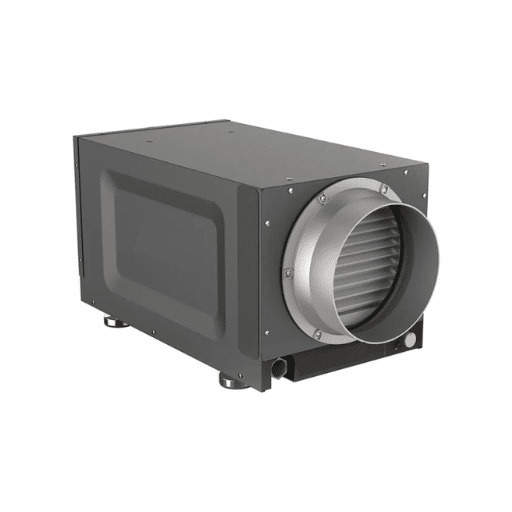
🏠 Whole-House Dehumidifiers
A whole-house dehumidifier is designed for large areas and integrates with HVAC in an entire building to control humidity levels across all floors. They are the most efficient for keeping indoor air conditions consistent and useful in regions with high humidity all year round.
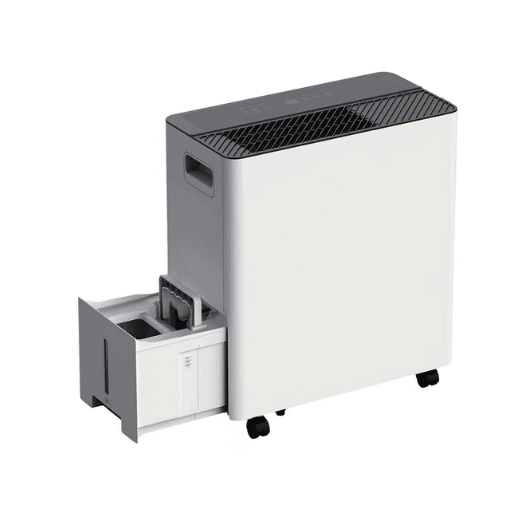
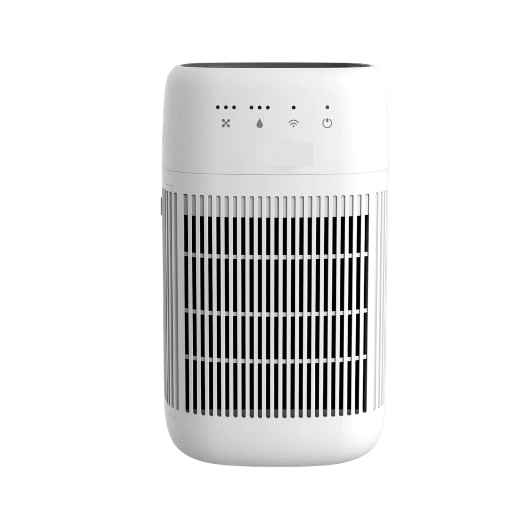
📦 Portable Dehumidifier
Small portable dehumidifiers are handy devices useful for smaller space applications or awkward humidity pockets such as bathrooms and closets. With the possibility of moving the device around, one need not open doors or windows for treatment of local humidity. They are very cheap in price and are very popular in residential applications.
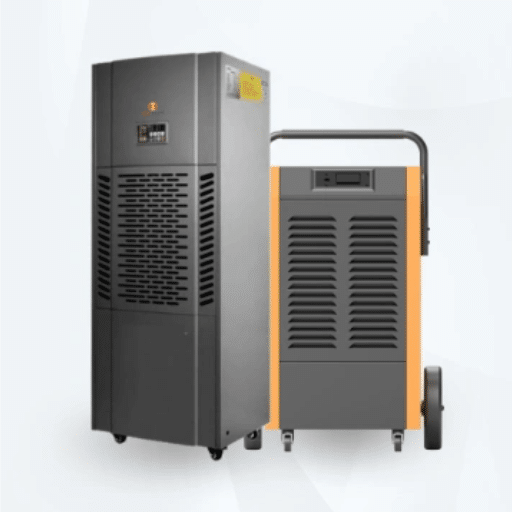
🏭 Industrial Dehumidifiers
Industrial dehumidifiers can be viewed as the heavy cousins operating large-scale conditions such as warehouses, factories, or water damage restoration. Capable of operating with good capacity and excellent durability, the industrial dehumidifiers can snag large quantities of moisture quickly and efficiently under harsh environments.
The Importance of Moisture Control in Food Storage
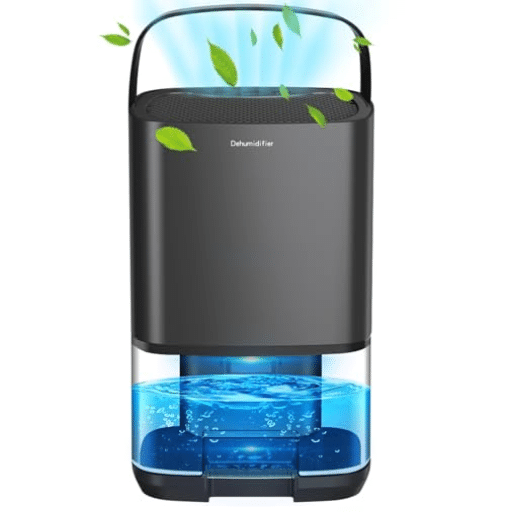
Proper moisture control is critical to maintain the quality, safety, and longevity of food products while in storage. Watering processes may in some cases expedite the growth of mold, microbial activity, spoilage, and degradation of food, while drying processes would cause the food to dry out or lose quality. By restricting the amount of moisture in the air, producers, distributors, and consumers can ensure that food remains fresh, safe, and consumable for an extended period.
Key Reasons Why Moisture Control is Essential
- Preventing Mold Growth: High humidity levels create ideal conditions for mold and fungi to develop on stored food products, such as grains, nuts, and fresh produce. All these contaminants lower the food quality and also may secrete mycotoxins that pose a health hazard to consumers.
- Reducing Microbial Activity: The excess of moisture helps in the functioning and multiplication of those bacteria, yeasts, and other microorganisms that cause spoilage. Crafting an environment with less humidity restrains the activities of the microbes, thereby keeping food safe and reducing food wastage.
- Maintaining Nutritive Value: Humidity conditions affects the nutritive contents of the food. For example, vitamins and proteins may be broken down in high moisture, or dry foods may lose their nutritional contents during drying.
- Avoiding Physical Damage: The fluctuations in moisture content may bring about physical alterations in food such as clumping, caking, or cracking. High humidity causes powdered or granulated foods to clump together, whereas foods that are brittle in dry conditions might become soft in moist conditions.
- Shelf Life Extension: Maintaining a certain humidity level will help foods to remain in good condition for longer times, hence weakening or lowering the rate of rotting. In both homes and commercial storage units, such humidity control enables good inventory management.
Food producers and consumers, through abuse or control of moisture, may considerably increase the lifespan of the food, avoid economic losses, and encourage sustainable food practices.
Why Humidity Matters in Food Safety
The maintenance of correct humidity levels is crucial to food safety and food quality. One optimum moisture condition for the growth of unwanted microbes is an optimum moisture condition for the product to become softer, whereas higher drying means higher shelf life.
⚠️ Important: Careful humidity control is imperative to food safety during production, storage, and transportation.
Impact of Moisture on Food Quality
Texture Degradation
Too much moisture can also alter food texture, for instance, moisture would make crispy stuff like chips or crackers become soggy. On the other hand, moisture deficiency is what hardens soft foods: bread can witness up to a 12% loss of water weight if exposed to extremely dry surroundings.
Flavor Changes
Moisture imbalance leads to flavor retention. High humidity can enhance microbial activity, thus changing the flavors undesirably; low humidity can dry out the oils and compounds that not only impart flavor but also enhance their potency, making them 20% less potent.
Nutritional Loss
High-humidity situations promote nutrients such as vitamins—were degrading—their presence allowed vitamin C and B-complex vitamins to deteriorate fast. This inaccuracy in moisture conditions has been recorded once to cause a 30% nutrient loss in perishables for foods that would have gone on for so many months.
Microbial Growth
Dropping more moisture leads to bacteria, yeast, and mold—the kind that spoil your food fast. For example, some people have indicated that mold can set in just barely within 48 hours of relative humidity being higher than 70 percent.
Shelf Life Reduction
Improper moisture levels shorten the shelf life of food products. For example, in a high humidity environment, cereals may absorb moisture, reducing their shelf life by 25%, while dried products such as pasta and spices may harden or clump.
Maintaining moisture content during storage and processing is vital to ensuring the best food quality and maximizing its useability over time.
Benefits of Using a Dehumidifier for Food
🛡️ Prevents Mold Growth
A dehumidifier helps establish an environment with lower moisture content; thus, mold formation on food products is obviously minimized. By maintaining relative humidity below 60%, it makes the environment adamantly unfriendly to mold growth.
⏳ Maintains Shelf Life
By maintaining an optimal range of humidity, food products do not get additional moisture. Studies have shown that a relative humidity below 50% will increase the shelf life of dried food up to 30%.
📉 Lowering Product Loss
Through excess humidity, products get spoiled, clump, or harden, especially for staples such as flour, pasta, and spices. A dehumidifier can almost certainly reduce these types of loss, curing for overall product loss and inventory maintenance in storage units.
✨ Improves Food Texture and Quality
In case of moisture-sensitive products like chocolates or chips, humidity control keeps texture and crunch intact. When we protect food quality, they would be more attractive to customers, causing fewer complaints.
⚙️ Optimizes Food Processing
High moisture indicates high humidity that can slow a production line due to sticking, clumping, or degradation of machinery or products. A dehumidifier ensures a stable condition of the environment whereby production lines can run efficiently with less time lost due to moisture problems.
Exploring Desiccants in Food Applications
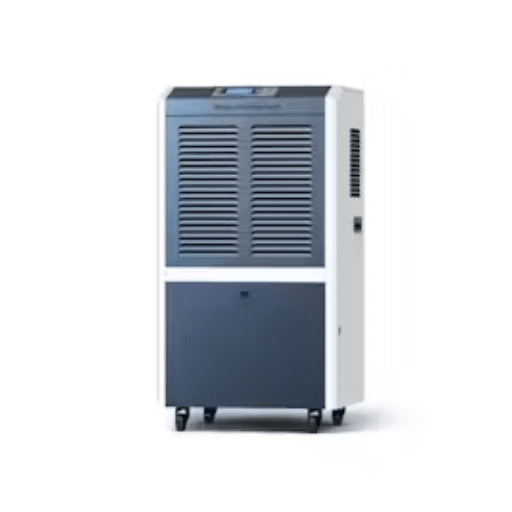
In the food industry, desiccants find their use in maintaining the food’s quality and enhancing shelf life through moisture control. Below is a list of the important desiccants used in the food industry, along with referring to their usages and benefits:
Silica Gel
Considered to be among the most common desiccants, silica gel acts by absorbing moisture and preventing the foods from getting damp. It is used in packaging for snacks, cereals, and vitamin tablets. It is non-toxic and therefore safe for indirect contact with food.
Calcium Chloride
The high moisture absorptive capacity of calcium chloride is perfect for protecting dry products such as powders or spices. Its ability to absorb moisture even in high-humidity conditions makes it attractive for bulk storage.
Activated Carbon
This desiccant dries and deodorizes the environment, benefitting goods that require careful air treatment, i.e., coffee, tea, and herbs. Activated carbon keeps the products fresh and preserves their aroma.
Molecular Sieves
Molecular sieves are highly efficient for situations that require a strict control of moisture. They are considered for packaging medical food supplements and processed foods requiring precise environmental conditions.
Clay Desiccants
Being natural, the clay desiccants are eco-friendly and inexpensive. Great whenever emphasis is laid on sustainability, such as with organic or all-natural food products.
These desiccants are chosen dependent upon food, packaging demands, and environmental factors to assist with keeping the food products fresh, safe, and attractive to consumers.
What are Desiccants?
These substances work to absorb moisture from the atmosphere and achieve an essentially dry atmosphere. They are used, especially for industrial, commercial, and food storage processes, to control humidity. Desiccants may absorb water into their crystal lattice physically by adsorption or may engage in a chemical reaction with the water molecules, thereby chemically absorbing the moisture. Common varieties include silica gel, activated alumina, molecular sieves, and calcium chloride. The materials are then sealed in smaller pouches or applied within a system to help prevent spoilage and corrosion and the growth of mold, mostly in food packaging, pharmaceuticals, and electronics. The importance of desiccants in maintaining correct humidity is huge in underpinning product storage and shelf life.
Types of Food Grade Desiccants
Food-grade desiccants are specialized products that work to maintain low humidity levels to protect food items from moisture-induced damage. We mention below five common kinds of food-grade desiccants with details:
Silica Gel
Silica gel stands tall among desiccants for its really good moisture absorption ability. It is non-toxic, chemically inert, and mostly comes in small sachets placed inside food packaging to protect items such as snacks, dried fruits, or spices against moisture.
Calcium Chloride
Calcium chloride is known for its stronger moisture trapping capabilities and is highly efficient in humidity control. It is used in packaging where long-term protection is needed, such as in long-term storage for food.
Montmorillonite Clay
This natural kind of desiccant is obtained from bentonite clay which is specially processed for food-adjusted applications. It is non-toxic, eco-friendly, and often used for protecting dry goods, like grains and seeds.
Molecular Sieves
If you think about it: Molecular sieves, produced synthetically from zeolite, are extremely efficient in adsorbing moisture even in environments with low humidity. The exact pore arrangement makes them suitable for food products requiring critical moisture control, such as powdered ingredients.
Activated Carbon Desiccants
They grab moisture out of the atmosphere and cancel odors inside the packaging of food. They are often used alongside other desiccants in order to best keep tea, coffee, and other aromatic food products fresh.
Appropriate food-grade desiccant selection on the part of manufacturers will guarantee end products that are top-quality and fresh to the consumer.
Silica Gel Desiccant: A Popular Choice
Paradoxically, the silica gels are among the most active substances in retaining moisture, drying packaging, and preserving products. These desiccants are an amorphous form of silicon dioxide or silica capable of holding up to 40% of their weight in moisture from the air. The minute granules or beads of silica gel form a very high surface area, thus maximizing moisture absorption.
Five Main Benefits of Silica Gel Desiccants:
- ✓
Highly Effective Moisture Absorption: Silica gel adsorbs moisture in good amounts and is, therefore, very effective in controlling the humidity levels inside sealed packages. - ✓
Reusability: Some varieties of silica gel desiccants can be regenerated and reused by drying through heat, which makes them friendly to the environment. - ✓
Safe for Food Applications: The food-grade types of silica gel are almost non-toxic and do not impart any odors or flavors to the foods, thereby affecting the product’s integrity. Silica gel can be food-grade, according to the regulatory requirements, and is usually applied with indicating beads to enable monitoring. - ✓
Wide Range of Uses: It is most commonly used for preserving dried fruits, nuts, spices, and other moisture-sensitive products. - ✓
Ultimate Protection: When embedded in food packaging, silica-gel desiccants provide ultimate protection from moisture, whereas extended shelf life and quality are insured to consumers.
Its reliability and versatility earn it a favorite choice among industries.
Choosing the Right Dehumidifier for Food Storage

Freezing the optimum temperature and atmosphere for food storage is a matter of picking the right dehumidifier for the job. Here is a list of considerations while choosing from among many:
Key Factors to Consider
📊 Capacity
Capacity should be selected according to the size of the storage area and its moisture ascertain. Larger areas and those with higher relative humidity require dehumidifiers with higher moisture extraction capacity.
⚡ Energy Efficiency
As for energy efficiency, a special consideration should be given with regard to operating costs and environmental impact. The manufacturer can identify energy-saving models, simple by informing the public through its registration with ENERGY STAR.
🎚️ Humidity Control Settings
The proper functioning of humidity control settings should provide both low adaptability for good drying purposes and high adaptiveness for specific food products, so that the working environment can be tailored for a certain storage need.
🌬️ Airflow and Noise Levels
The drawings specify airflow and unit placement for proper dehumidification of the entire storage area. Low noise levels are an added advantage if silence is important to the operation of the facilities.
🔧 Maintenance and Durability
The type of dehumidifier that would be chosen should be easy to clean and maintain with components made of durable materials capable of withstanding continuous operation in harsh environs.
When a careful consideration of those factors is done, food storage can remain effective for these companies and individuals, minimizing waste and maintaining quality.
Detailed Specifications Guide
Capacity and Coverage
The capacity of the dehumidifier needs to correspond to the storage area; for example, a 50-pint model will suit small to medium spaces of about 1,000 sq. ft., while those for bigger facilities may stipulate an extraction rate of more than 70 pints per day.
Humidity Control Range
Specifically, this should offer humidity adjustment between 30% and 50% since this range is best for keeping food fresh and preventing mold growth.
Energy Efficiency
Though originally an investment, these models can pay off by significantly reducing electricity bills in the long run. These dehumidifiers, which are considered Energy Star-certified, are made to use less power while still offering maximum performance.
Airflow and Noise Levels
This is a great way to control the airflow-noise levels for the room while setting the fan speed. Unfortunately, this is, in some cases, essential for sensitive applications.
Durability and Maintenance
A sturdy design with corrosion-resistant components is required for extended periods of service, especially in humid environments. On the other hand, easy access to filtering elements or the inner parts that need cleaning are very important for easy maintenance.
Desiccant Dehumidifiers vs. Mechanical Dehumidifiers
Quick Summary: Desiccant dehumidifiers excel in low-temperature environments and achieving very low humidity levels, while mechanical (refrigerant) dehumidifiers are more energy-efficient and effective in warmer conditions.
Key Features of Food Safe Dehumidifiers
Food safe dehumidifiers have several features optimized for ideal performance in operations where food is processed or stored. The mainstream features are as follows:
🎯 Precise Humidity Control
Food safe dehumidifiers maintain a constant, low relative humidity (RH) level to prevent mold, bacteria, and spoilage. Depending on the model, these units can achieve RH levels as low as 20-30%.
🔬 Non-Contaminating Materials
Made with food-grade materials, these dehumidifiers ensure that neither air nor surfaces get contaminated. An ideal dehumidifier qualifies as NSF or FDA approved.
⚡ Energy Efficiency
Using advanced technology, the food safe dehumidifier-based moisture removal applications use the least amount of energy, which means lower energy costs in the long run.
🛡️ Corrosion Resistant Coating
Many models feature a corrosion-resistant finish that is fit for installation in moist locations or where high moisture comes into play, and their sturdiness is assured even in very hard industrial environments.
💪 High Moisture Extraction Capacity
These machines surely remove a considerable amount of moisture per 24 hours. Thus, they could be ideal in massive food storage facilities or food production lines where control of environmental conditions matter.
Applications of Dehumidifiers in the Food Industry
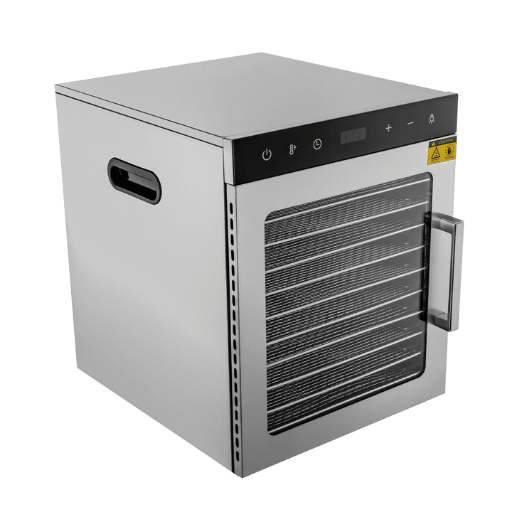
Dehumidifiers are important for sustaining food quality, hygiene, and processes in different food sectors. Five major applications of dehumidifiers in the food industry include:
🏭 Perishable Warehouse
Storage of perishable items under a controlled environment with optimum humidity levels is crucial. Dehumidifiers help take up excess moisture, thus preventing mold growth and consequently improving shelf life.
🥛 Production Lines for Hygroscopic Products
Such products include powdered milk, sugar, and spices and are highly hygroscopic, thereby easily clumping or degrading in a humid atmosphere. Dehumidifiers provide dry air in production and packaging to ensure that the product maintains its integrity and quality.
🍫 Chocolate Processing
Controlling humidity is an essential factor in chocolate production, for sugar bloom arises when moisture touches the sugar on the surface. Dehumidifiers assist in precipitating environmental conditions for the proper manufacture of smooth and high-grade chocolate.
🌾 Drying and Curing Processes
Some products, such as cured meats or dried fruits, require certain humidity values to dry and cure properly. Dehumidifiers maintain the conditions constant, therefore promoting the efficiency of the process as well as its quality.
❄️ Preventing Condensation in Cold Storage
Dehumidifiers and dry air keep bacterial growth on the damp walls within cold storage facilities at bay. Dehumidifiers help to absorb moisture in the air, thereby ensuring the hygienic standards and compromising safety standards.
In addition to improving the effectiveness of these applications for product quality, they also keep food industry operations cost-effective and efficient.
Food Processing and Production
The dehumidifier is very important for controlling humidity and hence food safety and quality. This is a set of key areas that require dehumidification:
🥛 Powder Food Production
High humidity makes powdered foods, such as milk powder, coffee, or spices, agglomerate or harden. Thus, dehumidifiers prevent moisture from interfering and thus, affect the consistency and flow of these powders.
☀️ Drying Processes
In food drying, the control of the relative humidity is important to maintain optimal drying time and to avoid spoilage. Dehumidifiers can thus assist in reducing the drying time without compromising product quality.
📦 Packaging and Storage
Moisture attacks foil packaging, weakening its seals; it wet paper packaging and glues: materials. Dehumidifiers control the humidity, thus compromising hydration and preventing the integrity of packaging.
🍫 Chocolate and Sugar Confectionery
Humidity control is of utmost importance when dealing with chocolate and sugar. Excessive humidity can render sugar grains to crystallize while Chocolate can undergo an unattractive bloom in myriad ways, jugulating the texture and appearance. Dehumidifiers are used to keep an ideal atmosphere during production.
🥩 Meat and Seafood Processing
Excess moisture in meat and seafood-processing areas can create opportunities for bacterial contamination. Dehumidifiers keep out moisture while maintaining humidity levels so that processing environments remain safe and hygienic.
Storage Facilities and Warehousing
Humidity control is of utmost importance in storage buildings and warehouses. Any moist air in the environment will cause further corrosion, mold, and deterioration of the product. A dehumidifier is an important tool in humidity control to maintain optimum conditions for preserving and protecting the goods.
Critical Storage Applications:
- 📱
Electronics Storage: High humidity causes corrosion in sensitive electronic components, thus resulting in malfunction or shortened life. - 💊
Pharmaceutical Warehouses: Most drugs have stringent requirements for storage conditions to help retain potency. Moisture in excess will interfere with those processes. - 🍎
Food Storage: High humidity can lead to spoilage of perishable goods such as grains, fruits, and packaged foods. - 🪑
Furniture Warehouses: Wood furniture will warp, crack, or mold if humidity is not controlled. - 📄
Paper and Archive Storage: Slow deterioration due to time is an aspect of these documents, books, and paper materials in cases where they do not have a proper storage environment with regulated humidity.
Home Use: Keeping Food Fresh
💡 Practical Tips for Home Food Preservation
With home food preservation, managing humidity and storage conditions is essential. Use airtight containers for dry food to avoid moisture pickup, while keeping your refrigerator temperature just right to prevent spoilage. Consider coordinating a dehumidifier in spots of the house with excess humidity, like in the pantry, to increase shelf life for perishable items. These simple steps can significantly extend the freshness and quality of your stored foods.
References
📚 Taylor & Francis Online
Description: Explores advanced adsorptive materials for air dehumidification in food drying applications.
📚 Wiley Online Library
Description: Discusses the cooling with the dehumidification process and its applications in the food industry.
📚 ScienceDirect
Title: Heat pump dehumidifier drying of food
Description: Reviews the potential of heat pump dehumidifier dryers for food drying, comparing them with traditional hot-air dryers.
Frequently Asked Questions (FAQ)
❓ What is a moisture absorber dehumidifier for food?
A moisture absorber dehumidifier for food is a device designed to control humidity levels in food storage areas. It helps prevent excess moisture, which can lead to spoilage and degradation of food quality. These dehumidifiers utilize desiccant materials, such as silica gel or calcium chloride, to absorb moisture from the air, ensuring that your food remains fresh and safe for consumption.
❓ How do humidity control devices help in food storage?
Humidity control devices, like moisture absorbers and dehumidifiers, are essential for maintaining optimal conditions in food storage. Reducing humidity levels they help prevent condensation and mold growth, which can compromise food safety and quality. This is particularly important in environments where food is processed or stored for long periods.
❓ Are silica gel packets a safe desiccant for food?
Yes, silica gel packets are considered a safe desiccant for food. They are commonly used as food safe desiccants to absorb moisture and protect food from spoilage. When using silica gel packets, it’s important to ensure they are labeled as food grade to avoid any potential contaminants.
❓ What types of absorbers for food storage are available?
There are various types of absorbers for food storage, including silica gel desiccant packets, premium silica gel canisters, and large desiccant packs. Each type serves to absorb moisture effectively, with options available for different storage needs and sizes. Rechargeable moisture absorbers are also popular, as they can be used repeatedly after drying out.
❓ How can I use desiccant packs for storage effectively?
To use desiccant packs for storage effectively, place them in airtight containers or bags with food items. Ensure that the desiccant packs are compatible with the type of food being stored and are within the recommended usage guidelines. Regularly check and replace or recharge the packs to maintain optimal moisture control.
❓ Can a dehydrator replace a dehumidifier for food storage?
While a dehydrator and a dehumidifier serve different purposes, a dehydrator can aid in moisture removal from food directly, while a dehumidifier is designed to manage humidity levels in the storage environment. Using both in tandem can enhance food preservation, especially in humid conditions.
❓ What are the benefits of using food-grade moisture absorbers?
Food-grade moisture absorbers provide several benefits, including extended shelf life of food products, prevention of mold and mildew, and maintenance of overall product quality. These absorbers are specifically designed to be safe for food contact, ensuring that they do not introduce harmful substances into food storage areas.
❓ How do indicating beads reusable moisture absorbers work?
Indicating beads reusable moisture absorbers contain color-changing beads that signal when the desiccant is saturated and needs to be recharged. This feature helps users easily monitor the effectiveness of the moisture absorber. When the beads change color, it indicates that the moisture-absorbing capacity is diminished, prompting the user to recharge the product for continued effectiveness.
❓ What is the role of temperature control in moisture absorption?
Temperature control plays a crucial role in moisture absorption as warmer air can hold more moisture, which can lead to higher humidity levels. Maintaining a stable temperature in food storage areas can enhance the effectiveness of moisture absorbers and dehumidifiers, preventing condensation and protecting food quality.