Moisture problems that occur in crawl spaces and basements create various issues that include both structural damage and health hazards that arise from mold and mildew. The existence of dampness together with musty smells and visible mold requires you to discover the root cause, which an under-house dehumidifier can solve. This blog post provides essential information about under house dehumidifiers which specifically protect crawl spaces and basements. The article explains why these devices are essential for maintaining a dry and healthy home and provides information about selecting a device and shows how it protects your property from moisture-related damage. Prepare yourself to change your area into a more pleasant and durable section of your residential space.
Introduction

Home dehumidifiers function as necessary tools because they prevent moisture accumulation in both crawl spaces and basements which experience ongoing damp conditions. The excess moisture present in these areas creates conditions that enable mold to develop while also damaging the structure and reducing indoor air quality which harms your health and shortens your home’s lifespan. The devices work to maintain perfect humidity levels which protect your property from moisture damage while creating a secure and healthy space for people who live there.
The Importance of Moisture Control in Crawl Spaces and Basements
The structural integrity of your home requires proper moisture management in both crawl spaces and basement areas because this practice protects the building from damage and extends its lifespan. The excessive moisture present in these areas creates problems which result in costly damages and unsafe conditions. The following list presents five essential reasons that demonstrate the critical importance of moisture management:
1Prevention of Mold Growth
Mildew and mold thrive in humid environments. The materials sustain damage from these substances which also create respiratory problems and allergies together with other health issues.
2Protection Against Structural Damage
The continuous exposure to moisture causes your home foundation and framing system to undergo degradation. The water damage causes wood to rot, metal to rust, and concrete to crack, which together damage the structural foundation of your property.
3Improved Indoor Air Quality
Your house generates about 50 percent of its indoor air from the crawl space and basement area. The system uses humidity control to block the movement of damp, musty air that contains moisture and travels through your entire home. This process creates a cleaner atmosphere for better health results.
4Energy Efficiency
High indoor moisture levels require HVAC systems to operate at maximum capacity to maintain proper temperature control. The reduction of humidity results in decreased energy use which leads to reduced utility expenses.
5Prevention of Pest Infestations
Pests, which include termites and cockroaches and rodents, are attracted to environments that contain dampness. The process of effective moisture management creates dry environments which stop pests from entering and establishing their homes inside your residence.
Homeowners who address these issues can protect their homes from moisture-related damage while creating safer, healthier spaces for their families.
Understanding the Risks of High Humidity
Extreme cold weather combined with high humidity creates hazardous conditions that harm both human health and public facilities. Respiratory problems and allergic reactions from indoor mold growth typically begin when indoor humidity exceeds 60%. The Environmental Protection Agency (EPA) reports that mold appears on surfaces that remain damp for extended periods in bathrooms, basements, and unventilated areas.
Building structures are damaged by excessive bathroom humidity. The building requires costly repairs due to warped wooden materials, peeling paint, and corroding metal components. The research shows that continuous high humidity leads to rapid building material deterioration which results in shorter building lifespans.
High indoor humidity levels cause health problems, structural damage, and discomfort. The body uses sweat to cool itself, but high humidity slows sweat evaporation, making people feel hotter. The combination of 90°F temperature and 80% humidity creates a heat index that makes the temperature feel like 113°F. Heat exhaustion and heat stroke become more likely when people stay in these conditions for extended periods.
Indoor air quality depends on humidity levels because high humidity supports the growth of dust mites and other airborne allergens. The Asthma and Allergy Foundation of America (AAFA) explains that dust mites require humidity above 70% to survive, which can trigger allergy and asthma attacks in people sensitive to these allergens.
The primary method for reducing these identified hazards involves indoor humidity control. The experts recommend using dehumidifiers to control indoor humidity, maintaining proper air circulation at 30%-50%. Regular monitoring and maintenance will help protect your property and safeguard your health from the harmful effects of excessive dampness.
Why Standard Dehumidifiers Aren’t Sufficient

Standard dehumidifiers reduce indoor humidity, but they do not meet the complete humidity-control needs of modern homes and large spaces. The typical model does not have the capability to control high-humidity conditions during extended times when humidity levels exceed 70% in specific locations. The standard dehumidifier operates within a range of 1,000 to 3,000 square feet and achieves a daily water removal capacity of 20 to 50 pints which varies with different sizes and models. The units cannot maintain proper humidity control in tropical climates and in basement and attic spaces, which experience persistent humidity issues.
Energy efficiency serves as another restriction. Dehumidifiers used in standard settings exhibit operational limitations that increase energy consumption over their service life. The system requires users to perform regular maintenance tasks, which include both water tank emptying and filter cleaning duties, that create difficulty for users. Smart dehumidifiers and high-capacity units offer advanced capabilities, featuring continuous water drainage systems, energy-saving modes, and smart home system integration, enabling simple humidity level control.
Standard dehumidifiers do not provide effective solutions for handling allergens such as dust mites and mold spores. Research shows that humidity control problems create conditions that enable allergen development in microenvironments within these environments, whereas typical models function only to a limited degree. The assessment of specific household requirements needs proper evaluation because households should obtain specialized systems which guarantee complete indoor air quality management together with effective moisture regulation.
Limitations of Conventional Dehumidifiers
The primary limitation of standard dehumidifiers is their inability to maintain consistent humidity control across different room sizes. Standard dehumidifiers function effectively in spaces that range from small to medium size but they struggle to handle areas that exceed those dimensions or have unconventional measurements. Energy Star discovered through their study that many traditional systems become ineffective when used in low-temperature settings because frost forms on their coils which causes operational problems and leads to higher power needs.
Conventional models usually do not include advanced filtration systems which creates a barrier for them to effectively capture tiny particles and allergens. The American Lung Association reports that airborne particles, including dust mites and mold spores, are primary causes of respiratory problems, yet standard dehumidifiers eliminate excessive moisture without addressing these harmful pollutants. The devices provide only limited air-quality improvements because they lack HEPA and activated carbon filters.
Traditional dehumidifiers create two main operational drawbacks. The U.S. Department of Energy reports that older dehumidifier models, which are less energy-efficient, use almost twice as much electricity as current energy-efficient models. Households that operate dehumidifiers throughout the day in humid regions experience increased energy costs, together with a higher environmental impact.
Home automation systems present problems for consumers because traditional systems lack compatibility with smart home technology. Today’s users prefer IoT (Internet of Things) devices because these systems provide two key functions: monitoring current conditions and automatically adjusting settings, while also allowing them to control devices from their smartphones. Conventional dehumidifiers fail to meet current requirements due to their lack of these essential features. The limitations of the existing system create a need for improved systems that meet the contemporary needs of household facilities.
Specific Needs for Crawl Space and Basement Applications
The dehumidification systems require unique design solutions because crawl spaces and basements present unique environmental challenges which demand their own dehumidification systems. The areas maintain high humidity because their proximity to the ground restricts airflow. Excessive moisture leads to mold development which results in musty smells and damages structural components. The research findings indicate that basement and crawl space conditions require a relative humidity range of 30-50 percent for optimal conditions.
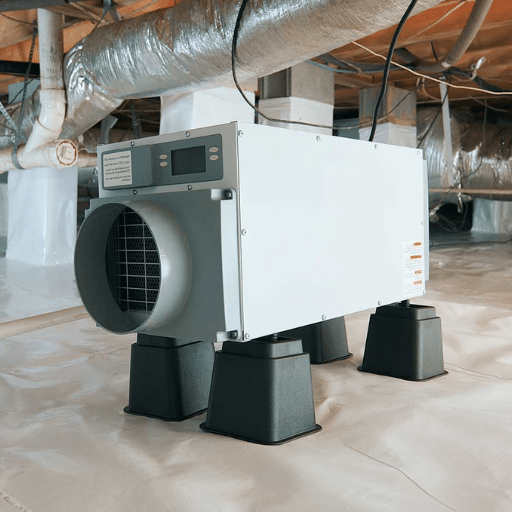
The most important factor to evaluate in this situation is the dehumidifier’s dimensions and operational capabilities. The dehumidifier for crawl spaces should handle 55-70 pints of moisture per day, depending on the space size and humidity level. The system needs compact designs which allow it to operate in areas with low ceiling height that people often use for crawl spaces.
The advanced features, which provide smart monitoring capabilities, combine with remote control functions to enable consumers to monitor their devices using their smartphones. The modern dehumidifiers with built-in Wi-Fi capabilities allow users to adjust humidity levels in real time without direct contact with the unit which benefits areas that are difficult to reach. The energy-efficient technology in the units helps reduce operational costs, as research indicates that dehumidification energy consumption reduction results in annual electricity bill savings of up to 30 percent.
The systems require proper drainage systems as their fundamental requirement. The automatic water-removal system must operate via a built-in pump to run continuously in wet conditions. The construction materials require anti-corrosion coatings that protect against the challenging crawl space and basement environments, ensuring extended product durability and reliable performance.
Key Features to Look for in a Crawl Space Dehumidifier
High Moisture Removal Capacity
The crawl space dehumidifier must remove all daily moisture from the crawl space. The top dehumidifier models achieve their optimal performance through their ability to remove between 50 and 100 pints of moisture each day which they use to maintain proper humidity control in damp environments.
Compact Design
The equipment must operate within the limited space of crawl spaces. The dehumidifier requires a compact design that enables it to operate in tight spaces while maintaining its full range of performance.
Energy Efficiency
Select equipment that has energy-efficient certifications that include Energy Star ratings. The operational life of energy-efficient models results in lower energy consumption and reduced operating costs.
Automatic Humidity Control
The advanced models contain sensors that automatically monitor and control humidity levels to maintain optimal conditions. The automated system operates without human input, following its established operational schedule.
Durable and Corrosion-Resistant Build
Basements and crawl spaces create dangerous environments which put equipment at risk for damage. The high-quality materials used in dehumidifiers, which include stainless steel and anti-corrosion coatings, create products that maintain their moisture resistance while providing long-lasting durability and dependable performance.
BTU and Capacity Requirements
The selection process for a dehumidifier requires understanding how BTU specifications and capacity measurements work, as these factors determine which dehumidifier will effectively meet the requirements of the specific space. The BTU indicates the energy required to remove moisture from the air while the capacity represents the total moisture a dehumidifier can extract within a 24-hour period.
Dehumidifier Sizing According to Room Size
The table below provides general dehumidifier selection guidelines which relate to both your current moisture situation and the size of your area.
Additional Factors Affecting Capacity Needs
- Climate Conditions: Local climate conditions, along with existing humidity levels in humid areas, determine the required dehumidifier capacity to meet the space’s needs. A humid crawl space requires stronger dehumidification equipment to operate effectively.
- Ventilation: Ventilation systems with poor airflow will require installing a large-capacity unit to enable effective space drying.
- Space Type: The specific space type defines the exact dehumidification requirements for living rooms and bedrooms, as opposed to flood-prone basement areas.
New dehumidifier models released in the market now include energy-efficient features that have become standard across modern devices. Energy Star-rated products achieve energy savings of 15% when compared to their non-rated equivalents which makes them environmentally friendly and financially beneficial for users.
The assessment process requires you to analyze your space because it uses these guidelines to help you select the dehumidifier which needs specific BTU and capacity requirements to achieve its most effective operation.
Optimal Operating Temperature Range
Dehumidifiers achieve their maximum performance when they operate between two specific temperature thresholds, which extend from 41°F (5°C) to 95°F (35°C). The unit will lose efficiency because frost develops on the coils when temperatures drop below 41°F. Many dehumidifiers operate at high temperatures, but their performance declines when the ambient temperature exceeds 95°F. Modern dehumidifiers include advanced defrost systems which enable operation in cold temperatures because basements experience temperature changes between hot and cold. Automatic defrost units stop ice from forming on coils which lets the system run without interruption. Some models use high-efficiency compressors and specific components that enable them to operate reliably at low temperatures.
Energy Star-certified dehumidifiers from various manufacturers provide their product specifications online which show that most of their products operate best between 44°F and 89°F. The devices with adjustable humidistats enable users to control humidity within a space according to the specific environmental conditions which exist between two different temperature extremes. The manufacturer’s operating temperature guidelines should be reviewed when selecting a dehumidifier, as they help determine the device’s optimal performance and lifespan for your specific application.
Drainage Options: Gravity vs. Pump Systems
The process of selecting a drainage system for dehumidifiers leads to two main options which include gravity drainage and pump systems as the primary methods. The two drainage methods offer different benefits, making it necessary for users to choose between them in specific situations.
Gravity Drainage
The system uses gravity to drain water by allowing it to flow out through its natural downward path. The method enables continuous operation by eliminating the need to drain water tanks throughout the day. The dehumidifier performs best when installed near a floor drain, allowing the drainage hose to run downward through the area.
Advantages
- The system operates without energy needs for drainage which creates energy-efficient operations.
- The system requires minimal maintenance because it uses few components that can fail.
- The system works best in basements and utility rooms where users can reach existing drainage systems.
Limitations
- The system needs a downhill slope to function properly which restricts its installation options.
- The system works only in areas with available floor drains.
- According to recent data, gravity-draining dehumidifiers are preferred in over 60% of moderate-to-high-humidity residential applications where passive water disposal suffices, provided a nearby drain is available.
Pump Systems
Pump systems use active methods to move collected water through a hose pipe. The dehumidifier can operate in locations without gravity drainage because it must pump water to higher elevations within its system.
Advantages
- The system allows users to position equipment in spaces without accessible drainage points.
- The system enables water to be pumped to higher elevations and over longer distances.
- The system works effectively in difficult areas which include attics and crawl spaces.
Limitations
- Pumps cause higher energy expenditures for businesses because they need extra electricity to function.
- The system requires users to perform routine maintenance to keep the pump system operational.
- The system works better because of innovations in pump technology which enhance performance and dependability. Dehumidifiers with built-in pump systems use a vertical water transport system that reaches 15 feet to drain water in multi-story buildings and recreational vehicles.
Choosing the Right Option
The choice between gravity drainage and a pump system ultimately depends on your space’s specific requirements. Users in areas with straightforward access to floor drains may benefit from the simplicity and low energy use of gravity drainage. The system is most effective for users facing complex drainage challenges in areas without floor drains. The system enables users to achieve the best operational results while maintaining their dehumidifier in an effective way.
The Benefits of Installing a Dedicated Dehumidifier

The installation of a dedicated dehumidifier in indoor spaces provides multiple advantages which create an environment that supports better health and enhanced comfort for people who use the space. The following five advantages should be examined for their importance:
✓ Improved Air Quality
A dehumidifier decreases humidity levels which stops mold and mildew and dust mites from developing because these pests trigger allergic reactions and respiratory problems. Indoor air quality shows significant improvement through various studies which established that maintaining humidity between 30 and 50 percent leads to better air quality results.
✓ Protection for Your Home
Excessive humidity creates damage to all types of building materials including furniture and electronic devices. The dehumidifier protects your home interior and its contents because it maintains optimal moisture levels which extend their lifespan.
✓ Energy Efficiency
A dehumidifier provides humidity control which improves the operational performance of your HVAC system. The air with reduced humidity creates a cooler sensation which decreases the workload on air conditioning units during summer and leads to lower energy expenses. Research indicates that optimal humidity levels can reduce overall energy use by 10-15%.
✓ Enhanced Comfort
High humidity levels create sticky conditions which result in uncomfortable weather. The installation of a dedicated dehumidifier creates a drier living environment, which makes spaces more comfortable, especially in damp areas like basements, bathrooms, and kitchens.
✓ Prevention of Musty Odors
Ongoing moisture problems cause enclosed areas to develop musty odors. The dehumidifier works to reduce humidity levels which stops bad odors from forming while it keeps your home air supply continuously fresh.
Preventing Mold and Mildew Growth
Mold and mildew need high humidity to grow; conditions develop when humidity reaches 60% or higher. Excess moisture in the environment enables these fungi to grow, causing structural damage to homes and health problems, including allergies, respiratory difficulties, and asthma attacks. The key to preventing mold and mildew is to effectively regulate indoor humidity. The Environmental Protection Agency (EPA) recommends maintaining humidity between 30% and 50%, as dehumidifiers are an effective way to achieve this range. These devices function by removing additional moisture from the indoor air which produces conditions that prevent mold and mildew growth. Households that use dehumidifiers experience fewer allergy symptoms, and visible mold problems decrease significantly over time.
Proper ventilation in high-moisture areas like bathrooms, kitchens, and laundry rooms plays an important role in mold prevention. The risk reduction process involves three steps which include using exhaust fans to seal leaks as well as conducting routine cleaning in areas that tend to accumulate moisture. Combining these methods with dehumidifier use creates a living environment that promotes better health while remaining free of mold.
Maintaining Structural Integrity of Your Home
Your home needs structural repairs because these work to defend your home’s safety, maintain its operational lifespan, and safeguard its property value. Homeowners prioritize foundation protection because they understand that moisture and soil erosion present threats to this critical home component. Studies show that 60% of American homes experience foundation damage due to water-related issues. Homeowners need to install gutters and downspouts, and create soil grading systems that direct water away from the foundation to ensure proper property drainage.
Homeowners should conduct roof inspections because they are a fundamental part of building maintenance. Data show that home insurance claims are driven by roof problems, including missing shingles, leaks, and storm damage. Regular inspections and timely repairs can prevent these problems from escalating. Sealing gaps and cracks in windows, doors, and walls improves energy efficiency and reduces the risk of pest infestations, which can cause substantial building deterioration over time.
Wooden structures, such as beams or floors, require monitoring to detect termite activity and rot damage. Termites cause approximately $5 billion in annual damages throughout the United States. Homeowners should combine preventive treatments with annual examinations to minimize this danger. The risk of wood decay decreases when wood is used with strong materials and suitable ventilation systems.
Homeowners can maintain their home structural integrity by using both proactive maintenance methods and professional inspection services. The combination of moisture meters and thermal imaging cameras, together with specialized professionals who conduct regular assessments, allows for early detection of minor problems that would require expensive repairs.
Energy Efficiency: Choosing Energy Star-rated Units
The process of improving energy efficiency in homes needs Energy Star-certified equipment as its fundamental requirement. The Environmental Protection Agency (EPA) operates Energy Star which assists customers in finding products that fulfill the program’s stringent energy efficiency requirements. The products include equipment that manufacturers use to consume less energy, leading to lower energy costs and reduced environmental impact.
Energy Star-certified windows can help homeowners save between $101 and $583 each year, according to Energy Star.gov data, which highlights the benefits of replacing single-pane windows. Energy Star-certified refrigerators achieve approximately 10% energy savings compared to non-certified models. Energy Star-compliant modern HVAC units deliver 15% higher efficiency than typical HVAC systems, resulting in significant reductions in heating and cooling costs. Energy Star systems enable households to achieve an average annual savings of $200 on their energy expenses according to EPA data.
Choosing Energy Star products offers financial benefits and environmental advantages. The program has achieved substantial environmental improvements by successfully decreasing greenhouse gas emissions. Through its Energy Star products, the program has avoided more than 4 billion metric tons of greenhouse gas emissions, equivalent to the carbon absorption capacity of billions of trees.
The blue Energy Star label on equipment serves as a verification badge which proves that products have undergone thorough testing to meet Environmental Protection Agency (EPA) standards. Choosing Energy Star products helps customers achieve cost savings while supporting a sustainable future that uses energy efficiently.
Maintenance Tips for Long-Term Efficiency

The performance of your energy-efficient products requires ongoing maintenance to achieve their highest operational efficiency which will last throughout their lifetime. The following five essential tips will help you maintain your appliances for an extended period and maximize their operational efficiency.
1. Clean or Replace Filters Regularly
The HVAC systems, air purifiers, and refrigerator filters require replacement or cleaning in accordance with the manufacturer’s guidelines. A clogged filter can reduce efficiency by up to 15 percent, as it forces the system to use more energy than necessary.
2. Check for Leaks
Ducts, faucets, and seals require regular inspections to detect any possible leaks. A small faucet leak can waste up to 3,000 gallons of water annually which results in increased utility costs and energy wastage.
3. Defrost Freezers
Frost build-up creates excessive strain on your refrigerator and freezer which pushes them to operate at maximum capacity. The regular defrosting process helps maintain proper airflow which leads to optimal energy performance throughout the equipment.
4. Clean Coils and Vents
Dust and dirt on the back or underside of refrigerators, freezers, and air conditioning units reduce their heat-transfer performance. The operation of condenser coils improves after their cleaning which leads to reduced energy usage.
5. Schedule Professional Maintenance
The HVAC systems and major appliances require annual inspections and tuning services which should be conducted by professionals. Regular servicing can identify potential issues early, improve overall efficiency, and extend the lifespan of your appliances.
The maintenance practices you implement for your equipment maintenance will help your operations run smoothly while decreasing your energy expenses and environmental footprint.
Regular Cleaning and Filter Replacement
Your HVAC system will achieve maximum performance and extend its operating life through regular cleaning and scheduled filter replacement. The current research demonstrates that HVAC systems experience a 15% decrease in efficiency when operating with blocked or unclean filters which results in increased electricity usage because the system must work harder to function. The system experiences increased wear because of this which results in higher energy expenditures.
The inspection of air conditioning units and furnaces requires monthly filter checks, with filter replacements every 1 to 3 months, depending on system usage, pet presence, and current air quality conditions. HEPA (High-Efficiency Particulate Air) filters can trap up to 99.97% of particles as small as 0.3 microns which results in better air quality but requires more frequent maintenance because they have higher filtering capacity.
Cleaning appliance components through the process of cleaning refrigerator coils, dryer lint filters, and dishwasher filters will result in improved appliance performance. A clean refrigerator coil enables the unit to operate with 25% less energy consumption while cleaning the dryer lint trap after every load helps to decrease fire hazards and enhance dryer performance. The combination of these essential cleaning methods and filter maintenance practices will enable your appliances and systems to operate at their optimal performance which will result in reduced repair costs and lower energy consumption for your personal benefit and to protect the environment.
Monitoring Humidity Levels
Moisture in your home needs to be monitored because it directly affects the creation of comfortable, secure indoor environments. High humidity creates conditions that enable mold growth and dust mite proliferation, reducing air quality. Very low humidity can cause skin irritation and respiratory problems, and damage wooden furniture and flooring.
The Environmental Protection Agency (EPA) recommends maintaining indoor humidity between 30% and 50% for optimal conditions. Maintaining humidity within this range offers dual benefits: it improves comfort and helps protect your home from health risks and structural damage. The hygrometer is an effective tool for humidity monitoring, delivering accurate readings at an affordable price.
Dehumidifiers and air conditioners, together with appropriate ventilation systems, serve as effective solutions for humidity control during summer’s high-moisture periods. The dry months require a humidifier to sustain suitable moisture levels which establish comfortable indoor conditions. The combination of these methods, together with ongoing monitoring, enables you to create a customized indoor space that meets your particular requirements.
Seasonal Maintenance Checks
I schedule my HVAC system inspection, air filter maintenance, and window and door seal inspection for seasonal maintenance. My indoor environment remains comfortable and healthy year-round by using a humidifier and a dehumidifier to maintain optimal humidity.
References
Further Investigation of Energy and Performance Impacts of Whole-House Dehumidifier Duct Configurations
Source: University of Central Florida
Investigation of Energy Impacts of Whole-House Ducted Dehumidifier Location
Source: University of Central Florida
Optimizing Energy Efficiency and Improved Dehumidification Performance of Variable Capacity Air Conditioning Systems
Source: Florida Solar Energy Center
Frequently Asked Questions (FAQ)
How do I install a crawl space dehumidifier safely?
The installation process commences with two tasks which involve measuring the complete crawl space and assessing current moisture conditions in the area. The installation requires selecting a dehumidifier system that fits the space requirements, including the Santa Fe Compact 70 compact model or the professional-grade LGR units. The dehumidifier must be installed on a stable base to prevent water buildup, and a condensate pump or hose must be connected for drainage. The system needs vent seals together with crawl space encapsulation to create airtight barriers that stop unwanted airflow which brings in additional moisture. An HVAC professional should be consulted to handle duct and complete house integration requirements. The procedures must verify electrical connections during testing of defrost functions, as well as Wi-Fi system controls and drainage systems, before the work is completed. Most manufacturers require professional installation for customers installing all home systems or commercial dehumidifiers that use pumps, to maintain warranty protection.
What size crawlspace dehumidifier do I need to prevent mold growth?
Selecting a crawl space dehumidifier requires three measurements: total area, humidity level requirements, and daily moisture removal capacity, expressed in pints or ppm. The space requires a dehumidification unit rated for over 70 ppd capacity due to musty odors, along with prior water damage and wood-rot issues. LGR and high-capacity refrigerant devices use advanced technology to remove higher moisture levels even under cool operating conditions. The dehumidifier works with encapsulation to reduce load demand while enhancing indoor air quality. The user needs to check energy use and all dehumidifier functions, which include defrosting and condensate pump features, together with wi-fi monitoring, to achieve their intended humidity levels while stopping mold development.
Is the Santa Fe Compact70 a good option for a small crawlspace or attic?
The Santa Fe Compact70 is a compact dehumidification solution that operates effectively in small to medium-sized spaces when used with proper crawl space closure and venting methods. The dehumidification system operates as a 70-pint unit which meets AHAM standards while providing effective moisture control in areas that experience high humidity and musty odors. The outdoor environment requires LGR technology or higher-PPD-rated models due to cold weather conditions, while the Santa Fe compact series and commercial-grade products provide suitable solutions for complete building needs. The user needs to examine the product’s functions, including condensate pump compatibility, Wi-Fi control features, and energy-efficient ratings, to identify a solution that meets their specific requirements.
Should I choose an Aprilaire crawl-space dehumidifier, such as the e070 or e080?
Aprilaire models such as the Aprilaire e070, Aprilaire e080, and Aprilaire e080w offer robust dehumidification for crawl spaces and basements or crawl spaces integrated into whole-home systems. The e070 and e080 systems enable effective moisture management through their built-in wi-fi tracking system and professional-grade capabilities which some models include. The combination of an Aprilaire system with crawl space encapsulation decreases energy requirements while boosting efficiency. The Aprilaire Healthy Air Line provides dual air-quality benefits that enhance indoor climate control. The process of comparing PPD scores and condensate pump capabilities should occur during heavy moisture conditions, as undersized equipment will struggle to maintain indoor humidity control while preventing mold growth and water damage.
How many pints per day do I need — 50, 70 pint, or 80 pints?
Select a pint dehumidifier according to your room size and the level of moisture in your area. The 70-pint and 80-pint dehumidifier models perform well in basements, large rooms, and crawl spaces with medium moisture levels. The 120-pint and 180-pint commercial dehumidifier units are better options for areas with severe moisture and water damage. The AHAM pint ratings test dehumidifiers under warm humid conditions; LGR dehumidifiers and commercial models function better in cool crawlspace areas. The evaluation process requires assessing operational range, energy-saving performance, and system requirements, including condensate pump, defrost, and Wi-Fi remote monitoring capabilities.
When should I choose a commercial dehumidifier with a pump over a residential unit?
The commercial dehumidifier with pump is best suited for applications that require dehumidification across large areas, remove 120 pints or 180 ppd of water per day, prevent ongoing water damage, and dehumidify entire house spaces. The commercial-grade units and models like the Alorair Sentinel HD35p or Oasis105 are built for continuous operation, higher airflow, and larger coverage areas. The built-in condensate pump makes it easier to drain water from spaces which are located below ground level. The evaluation process requires assessing operational range, energy-saving performance, and system requirements, including condensate pump, defrost, and Wi-Fi remote monitoring capabilities.
Can wi-fi enabled units like the e070w wi-fi dehumidifier improve humidity control?
The e070w Wi-Fi dehumidifier lets users control RH levels, receive notifications, and adjust device settings remotely, enabling RH control in crawl spaces and vacation homes that are difficult to access. The remote control system prevents mold growth and water damage by maintaining moisture levels through scheduled adjustments. The Wi-Fi feature improves the dehumidification process but proper installation and encapsulation procedures and accurate capacity sizing between pint and ppd need to be established for effective home and crawl space dehumidification.
How do defrost and LGR technology affect performance in cold crawlspaces?
The defrost cycles protect refrigerant dehumidifiers from freezing at low temperatures, while LGR technology enables continuous moisture extraction by operating at low temperatures. The combination of LGR technology with efficient defrost systems serves as the optimal choice for cold crawlspace and basement environments which experience temperature drops throughout the day. The selection of dehumidifiers for cold, damp areas should prioritize LGR dehumidifiers and compact systems with defrost capabilities, and use commercial-grade equipment to maintain proper performance and protect wood from rot and mold growth.
Can a whole-house or attic dehumidifier replace a crawl-space dehumidifier?
The use of whole-home and attic dehumidifiers can help control indoor humidity throughout the house, but they do not replace dedicated crawl-space dehumidifiers, which are necessary when crawl spaces experience excessive moisture. The crawl space dehumidifier with a pump system is an effective solution for condensation problems caused by insufficient air movement and excessive moisture, which can lead to mold growth and structural water damage. The combination of whole-home dehumidification, HVAC integration, and crawl space encapsulation provides the most effective solution for maintaining air quality and controlling moisture over extended periods. To receive warranty protection, you must follow the manufacturer’s guidelines, including the 5-year limited warranty and professional installation requirements.