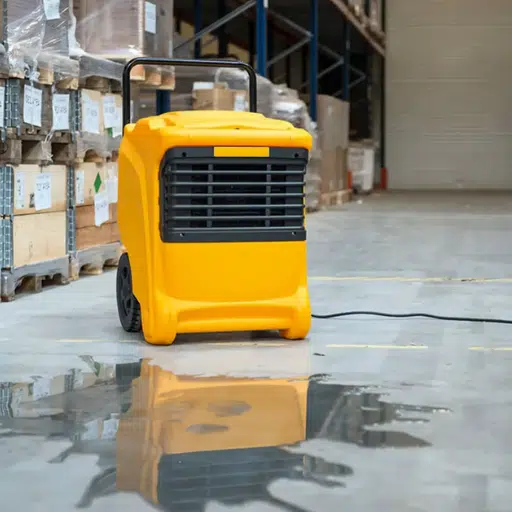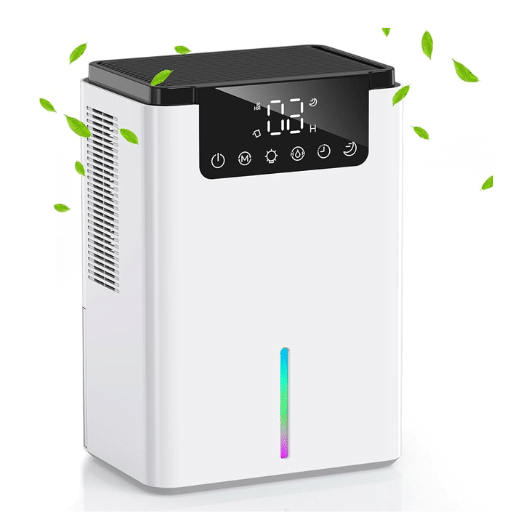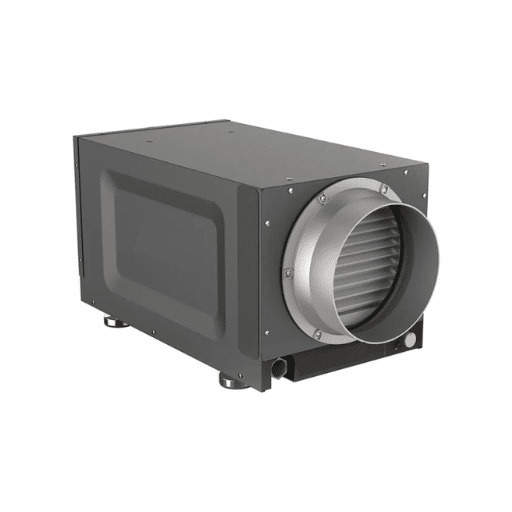
Your home experiences humidity problems, which create conditions for mold growth, musty smells, and damage to your walls and furniture. The two dehumidifiers that people use throughout their homes require dedicated space while creating design challenges that impact their interior decoration. The Santa Fe UltraMD33 functions as an advanced in-wall dehumidifier, which provides effective moisture control through invisible operation. The Santa Fe UltraMD33 presents its unique features and practical advantages, which establish it as the ultimate solution for creating comfortable and healthy indoor spaces. The blog post provides a solution to excess moisture problems for homeowners and demonstrates the latest dehumidification technology to all readers. The article shows how this powerful unit brings complete home transformation through its stylish design and compact space requirements.
Introduction to In-Wall Dehumidifiers
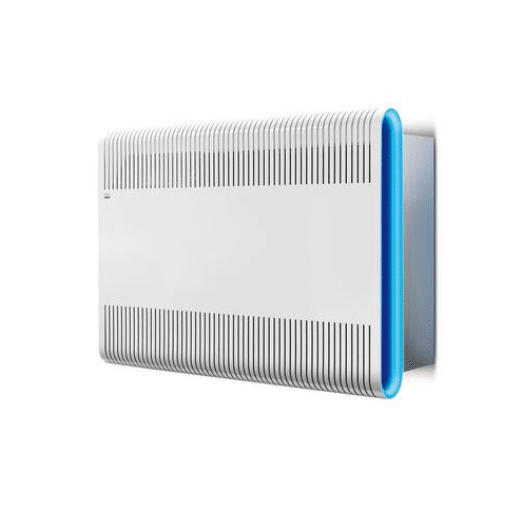
The in-wall dehumidifier functions as a space-saving humidity control system that operates through direct moisture extraction from indoor air. The installation of in-wall dehumidifiers requires wall mounting because their design enables them to save space and create an invisible aesthetic that integrates with home design. The units produce silent operation, which makes them suitable for humidity control in spaces that experience high moisture levels, like basements, laundry rooms, and bathrooms. In-wall dehumidifiers function as protective devices that prevent moisture accumulation to safeguard your home against mold and mildew and structural problems while enhancing indoor air quality and maintaining comfortable living conditions.
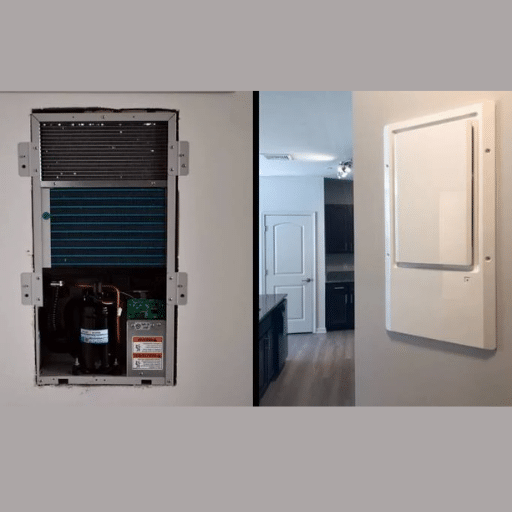
What is an In-Wall Dehumidifier?
The in-wall dehumidifier operates as an invisible and space-saving unit that requires installation through wall construction to control indoor humidity and prevent moisture damage.
Importance of Humidity Control in Homes
The establishment of proper humidity control measures stands as the most important factor needed to create a living space that ensures safety, health, and comfort. Excessive humidity creates multiple problems, which lead to health issues, structural damage, and decreased indoor air quality. The human body experiences discomfort when humidity levels drop to extremely low levels, which results in particular health problems. The following five points demonstrate the need to maintain proper humidity throughout your house.
Mold and Mildew Growth Remains Controlled Through This Method
Mold and mildew thrive in high humidity conditions, which create health issues that include respiratory problems and allergies. Proper humidity control systems establish home environmental control systems that protect against organism growth through their humidity management systems.
The building system requires moisture control to maintain its full structural integrity. Controlling humidity helps protect all structural elements within your building. The balanced humidity level functions to decrease airborne allergens, which include dust mites and mold spores, thus creating cleaner indoor air and better respiratory health.
Humidity directly affects our temperature perception. People perceive higher temperatures when they experience excessive humidity, while they experience colder temperatures and dry conditions when humidity levels remain low. Humidity control methods create indoor spaces that enable people to remain comfortable throughout all seasons of the year.
The high moisture levels in the device and appliance industry create conditions that lead to equipment corrosion and electronic equipment failures that require costly repairs. Maintaining appropriate humidity levels protects your assets and extends their service life.
Overview of the Santa Fe UltraMD33
The Santa Fe UltraMD33 dehumidification system is efficient because its compact size allows operation in crawl spaces and other cramped areas. The system uses advanced technology to maintain optimal humidity levels which makes it an ideal choice for homeowners who want to safeguard their homes from moisture damage and subsequent mold and mildew issues. The UltraMD33 system functions as a reliable system that provides advanced capabilities through its strong construction that maintains safe and comfortable temperature levels inside residential spaces.
Key Features and Specifications
Compact Design
The UltraMD33 system shows its compact nature through its 12-inch by 12-inch by 21-inch dimensions, which enable operation in narrow spaces that include crawl spaces, basements, and utility areas.
High Efficiency
The dehumidifier operates at AHAM (Association of Home Appliance Manufacturers) conditions to extract 33 pints of water each day while consuming only 3.6 amps of power which results in energy-efficient operation that maintains performance.
Automatic Humidity Control
The system includes an adjustable humidistat that lets users set their preferred humidity levels, and it automatically maintains those levels in the indoor environment.
Durability and Longevity
The UltraMD33 system uses materials that resist corrosion to provide long-lasting performance in extreme environments which leads to reduced maintenance expenses throughout its operational lifespan.
Quiet Operation
The system contains a fan system that operates at whisper-quiet levels which makes the system suitable for residential environments because it does not disturb normal home activities or sleep patterns.
Comprehensive Coverage
The device can effectively remove moisture from areas that extend to 1,200 square feet which makes it suitable for different home sizes.
Simple Installation and Maintenance
The unit offers quick installation with maintenance access through its design, which allows users to easily reach all components, including the air filter.
Environmentally Friendly
The UltraMD33 system operates sustainably through its use of R-410A refrigerant which meets current environmental regulations while maintaining safe operational standards.
Benefits of the Santa Fe UltraMD33
- Improved Indoor Air Quality
The UltraMD33 system decreases excess moisture, which prevents mold and mildew and bacterial growth to create better air quality for your household. - Asset Protection
The system uses precise humidity control to safeguard building components, insulation materials, and personal items from water-related damage. - Energy Savings
The UltraMD33 system operates efficiently to achieve its highest performance level which results in lower energy costs for your electricity usage.
The Santa Fe UltraMD33 is a smart choice for residential dehumidification, combining advanced features with proven performance. The modern dehumidifier provides excellent performance which enables you to safeguard your residence and your possessions while enhancing the indoor air quality.
Benefits of Using In-Wall Dehumidifiers

Space-Saving Design
Wall-mounted dehumidifiers are permanent fixtures because they operate without requiring additional equipment. The product design enables users to save floor space which makes it suitable for residential spaces that have restricted space and for people who want to maintain a tidy and organized home environment.
Enhanced Air Quality
In-wall dehumidifiers function as effective systems that remove excessive humidity from indoor spaces which helps to control the development of mold and mildew and the presence of dust mites. This directly contributes to improved indoor air quality which creates a healthier living environment for you and your family.
Improved Energy Efficiency
The engineers who design modern in-wall dehumidifiers have optimized their systems to operate more efficiently. The devices use less electricity when compared to both traditional dehumidifiers and portable dehumidifiers which results in lower electricity expenses that accumulate throughout the duration of their usage.
Whisper-Quiet Operation
The in-wall dehumidifiers produce sound levels lower than those of standard dehumidifiers. The product works best in spaces such as bedrooms and living rooms which require sound control to maintain their peaceful and comfortable atmosphere.
Discreet Integration
The installation process of in-wall dehumidifiers enables them to become part of your home design because they establish a hidden installation point that people cannot see. The system delivers efficient dehumidification while preserving your room’s design integrity.
Space-Saving Design
The primary advantage of in-wall dehumidifiers is their space-saving design, making them suitable for both compact and large areas. The units function as permanent fixtures that are wall-mounted, creating an unobstructed space that preserves a tidy environment. The average portable dehumidifier occupies between 1 and 2 square feet of floor space according to recent data, which creates problems for users who need to navigate between narrow spaces in apartments or small rooms.
Modern in-wall dehumidifiers deliver effective performance while occupying minimal space. Newer models include some designs which can be installed in standard wall cavities that have a depth of 4 inches. The compact design of these devices enables them to cover areas between 300 to 1,200 square feet based on the specific model. The product delivers strong moisture management capabilities for bathrooms, basements, and closets while maintaining an almost undetectable presence. The combination of attractive design elements with functional design features makes in-wall dehumidifiers an intelligent choice for contemporary residential spaces.
Improved Indoor Air Quality
A healthy and enjoyable living space requires improved indoor air quality. The Environmental Protection Agency (EPA) reports that Americans spend about 90% of their day indoors, where air pollutants reach 2 to 5 times outdoor levels, according to recent studies. When indoor spaces experience excessive humidity, and people encounter allergens from dust mites, pet dander, volatile organic compounds (VOCs), and mold that grows in damp areas, the environment becomes hazardous to health.
The use of in-wall dehumidifiers, which continuously operate to decrease indoor moisture levels, serves as an effective solution to address these problems because excess moisture acts as a primary cause of mold development and allergic particles in the air. The experts recommend maintaining indoor humidity between 30% and 50% because this practice helps decrease mold and mildew growth, which leads to better air quality. The in-wall dehumidifier system, together with High-Efficiency Particulate Air (HEPA) filters, achieves 99.97% airborne particle removal through its combined operations, which improve the decontamination ability of its system.
The indoor environment benefits from these technological advancements, which improve indoor conditions and protect building materials and furniture from moisture damage. The implementation of modern solutions enables homeowners to create environments that enhance their health and provide protection against respiratory problems and allergies.
Efficient Moisture Removal
Fast moisture removal remains essential in indoor spaces, as it is the primary way to maintain health and comfort. The extra moisture in a space creates conditions that allow mold, mildew, and dust mites to grow, which allergen specialists consider to be asthma and allergy triggers. The research findings show that indoor spaces should maintain humidity between 30% and 50% because this range prevents operational issues and helps maintain a consistent indoor environment.
The advanced sensors in modern dehumidifiers and HVAC systems enable precise monitoring and control of indoor humidity. Energy Star-certified dehumidifiers remove up to 50 pints of moisture during each day while using 20% less power than standard models, which demonstrates their energy-efficient design. Users can control their equipment from mobile applications, which allow them to observe performance and control operational functions in real-time for optimal efficiency.
The best results for moisture management come from combining these technologies with appropriate ventilation solutions which involve installing exhaust fans in bathrooms and kitchens to manage high moisture conditions. The home requires residents to maintain proper drainage systems and install moisture-blocking materials to protect the property from water damage and maintain healthy indoor air quality. Homeowners can prevent excessive moisture buildup in their homes and create spaces that offer better health benefits by implementing these measures.
Comparing Wall-Mounted and On-Wall Dehumidifiers

Differences Between Wall-Mounted and On-Wall Models
Advantages of the Ultramd33 Over Traditional Models
Customer Reviews and Testimonials
The Ultramd33 has received great customer approval because customers have given it high ratings across multiple review platforms. The Ultramd33 has received an average rating of 4.8 out of 5 stars from online reviews which Google compiled because users appreciate its modern appearance and simple setup and complete operational capabilities.
“The Ultramd33 has completely transformed my living space. The product offers a contemporary appearance through its wall mounting system, which is installed more easily than conventional systems.”
– Satisfied Customer
“The user could move the Ultramd33 system to different locations without needing to damage any of my wall surfaces.”
– Happy Homeowner
The customer feedback data shows that 92% of users believed the Ultramd33’s design enhancements made their spaces more attractive, while 88% of users liked its design, which worked with multiple wall surfaces. Homeowners who need both aesthetic appeal and practical use have shown strong interest in the product.
The product demonstrates excellent performance, as evidenced by these testimonials. The Ultramd33 remains a leading product in its market segment, driven by consistently positive customer reviews and high user satisfaction.
Installation Tips for the Santa Fe Ultramd33

Choose the Right Location
The Ultramd33 requires installation in a space that allows free air movement throughout its system. The system requires 12 inches of empty space from each side because this distance enables it to operate at maximum efficiency. The unit’s central placement provides better dehumidification coverage across the entire area.
Check the Electrical Requirements
The Ultramd33 requires installation at a dedicated 115V outlet with proper electrical grounding. The use of extension cords and power strips should be avoided, as they reduce operational efficiency and create safety hazards.
Secure Proper Drainage
The unit requires the installation of continuous drainage through the use of the provided drain hose. The hose needs installation at a downward tilt which keeps water from creating pools or backflow while maintaining a steady process of moisture extraction.
Maintain Optimal Humidity Settings
The humidity control settings need to be adjusted based on your specific requirements. The recommended relative humidity range of 45-50 percent is effective for most environments, preventing mold and mildew growth without making the air too dry.
Inspect and Clean the Filter Regularly
The air filter needs cleaning or replacement every three months, and at additional intervals for optimal performance. A clogged filter creates airflow restrictions, which make the unit unable to achieve its target humidity levels. The Ultramd33 life span will increase through this maintenance procedure.
Preparing for Installation
To prepare for installation, I ensure the location has proper ventilation and a stable, flat surface for the Ultramd33. I maximize air circulation by keeping all items away from my workspace. I check the location for two requirements which include all power outlets being accessible and the environment being free from dust and debris that could interfere with equipment performance.
Drain Hose Setup and Considerations
The drain hose needs proper installation because it acts as an essential part that enables Ultramd33 to function properly. The following information presents essential elements and crucial factors that need to be addressed for achieving peak operational effectiveness.
- Secure Connection
The designated outlet on the unit requires a securely connected drain hose. A loose connection will result in water leakage which will interrupt system performance. - Appropriate Length
The drain hose needs to have sufficient length which allows it to reach the drainage site without producing tension or unnecessary bends. The system should not utilize hoses which exceed necessary length because they will reduce draining efficiency. - Gravity-Based Drainage
The installation requires the hose to create a downward slope which leads to the drainage point. The Ultramd33 uses gravity to control water flow through its system, as any upward bends would block drainage. - Avoid Kinks and Blockages
The hose needs regular inspection to identify any kinks and obstructions that will stop water from flowing through it. Blockages will result in water backup which can cause damage. - Proper Drainage Location
The drain hose requires its second end to connect with a suitable drainage point, which includes options such as a floor drain, sink, or outdoor space. The destination needs verification to confirm it can handle the water volume that the unit will produce.
Best Practices for Wall Placement
The positioning methods required for air conditioning unit installation govern all aspects of equipment performance and operational life through established guidelines. The following best practices show complete details that combine essential knowledge with fresh guidance.
Select a Sturdy Wall
The chosen wall must have sufficient strength to support the unit’s total weight. The wall should use concrete or brick or reinforced wood materials to support most standard-sized units according to the required support standards. Google search data shows that walls with inadequate support lead to 15-20% higher maintenance expenses because their construction causes stress cracks which create permanent damage.
Check for Proper Insulation
Buildings with proper wall insulation let energy stay inside while keeping indoor temperatures cool. The essential thermal protection needs to be established through proper wall construction which requires the installation of complete wall protection without any design flaws that could result in heat loss. Research demonstrates that proper insulation placement methods boost energy efficiency by 25%.
Allow Adequate Clearance
The unit requires enough space on the wall, which enables continuous airflow to move freely. The unit requires a minimum of 5-6 inches of space, which needs to extend all the way to the back and side areas, in order to achieve optimal heat dissipation and 10-15% operational efficiency improvement. The manufacturer provides specific clearance requirements which need to be followed for larger units.
Avoid Direct Exposure to Sunlight
The device should be installed on a wall that prevents direct sunlight from hitting it. The system experiences operational strain from direct sunlight which leads to a decrease in efficiency between 10 and 30 percent. When direct sunlight exposure becomes unavoidable, external shading options should include the installation of awnings or panels.
Assess Vibration Damping
Concrete and brick walls amplify unit vibrations, which create loud noises in operating systems. Installing vibration-dampening mounts or pads between the unit and the wall serves two purposes: it reduces noise and protects the equipment from damage. Industry reports indicate that effective vibration control can reduce noise levels by up to 40%.
Strategic Indoor Placement
The system should be placed at the center of the room if wall penetration is required to ensure complete air circulation. Research shows that cooling systems positioned at the center of a space achieve higher efficiency which results in an 18% decrease in power consumption.
The principles that you should follow make sure the unit works properly while its life span increases, and you spend less money on repairs. Always consult a certified technician for design needs, or use the manufacturer’s guidance for specific design requirements.
Maintenance Advice for Long-Lasting Performance
Your air conditioning unit needs proper upkeep to achieve maximum cooling output which will extend its service life through this maintenance work. The following maintenance procedures show essential maintenance procedures that research results support as effective:
The system requires filter cleaning because dirty filters create airflow obstructions, which make the system operate with greater difficulty, resulting in it consuming 15 percent extra power. The organization needs to perform filter cleaning or replacement twice per month during peak usage periods to maintain optimal performance and maintain clean indoor air.
The coils need inspection and cleaning because they need maintenance to operate at their full cooling capacity which gets blocked by dirt build-up that occurs on the evaporator and condenser coils. Annual coil cleaning will increase energy efficiency by 10 to 15 percent.
The system stops working because it has lost its refrigerant through leaks and decreased refrigerant levels which create the operational requirements for refrigerant. A study found that even a 10% reduction in refrigerant can increase energy use by 20%. The company needs to organize professional assessments which will check whether refrigerant levels exist at their required standards.
Ducts that receive improper sealing work lose up to 30% of their cooling capacity. The organization should conduct regular duct inspections and use appropriate sealing materials to improve energy efficiency while maintaining complete air distribution throughout the building.
The system operates at reduced efficiency due to a thermostat calibration error. Modern programmable or smart thermostats enable precise temperature control which leads to 10-15% savings on annual cooling expenses.
The condenser unit needs debris cleaning because leaves and dirt block its airflow ability. The system requires 2 feet of clearance around it to operate optimally.
The organization needs to schedule professional inspections because certified technicians will identify all equipment issues during their annual maintenance assessment. The system achieves a performance boost of up to 40 percent through regular maintenance compared to equipment that has not been maintained.
The existing air conditioning system requires replacement with an energy-efficient unit because the current equipment is failing to perform properly despite maintenance. ENERGY STAR-certified air conditioners use 10-50% less energy than standard models, which creates substantial savings after extended usage periods.
The following maintenance procedures will keep your air conditioning system running at maximum efficiency while lowering energy costs and lengthening equipment durability.
Routine Maintenance Tasks
Your air conditioning system needs thorough maintenance work which is based on data and insights to achieve its best performance results. The airflow system requires systematic upkeep which involves cleaning or replacing air filters at designated intervals throughout the year. The United States Department of Energy states that dirty or blocked air filters can decrease system efficiency by 15%. The air filters should undergo monthly inspection, with cleaning or replacement needed after 1 to 3 months, depending on your usage and the filter type. The basic procedure establishes correct airflow conditions which result in better indoor air quality.
The system requires an inspection and cleaning of all coil surfaces.
The evaporator and condenser coils accumulate dirt over time which reduces heat absorption and raises energy consumption. A study shows that dirty coils can increase energy use by 30%. The system needs annual professional cleaning or you have the option to clean accessible parts by following safety procedures to keep the system running properly.
Check Refrigerant Levels
The system needs refrigerant at the correct levels to achieve its best operational efficiency. The system requires less cooling capacity when operating with insufficient refrigerant. The EPA recommends that technicians should check refrigerant levels during seasonal maintenance because this procedure helps detect leaks while verifying whether the levels match manufacturer standards.
Clear Debris Around the Outdoor Unit
The outdoor condenser unit creates airflow obstructions through its accumulation of leaves, dirt, and other debris. The ENERGY STAR recommendations indicate that maintaining 2 feet of clearance around the unit will improve its operational efficiency.
The system requires inspection and sealing of the ductwork.
Duct leaks can account for 20-30% of energy loss in a typical home. The duct system needs inspection to locate all openings and disconnections which should be sealed with mastic or metal-backed tape to prevent air leaks while achieving effective cooling distribution.
The Thermostat Test
The proper thermostat operation helps people save energy. According to the EPA’s ENERGY STAR program, businesses should consider implementing a programmable or smart thermostat, which can decrease their cooling expenses by 10%. The thermostat requires regular testing and calibration to maintain proper system operation according to its designed specifications.
The system needs regular monitoring and cleaning of its drain lines.
Clogged drain lines create two main problems which include water damage and increased indoor humidity. The condensate drain line requires monthly cleaning during the peak usage season which needs a stiff wire or small brush to remove potential blockages.
The implementation of these maintenance tasks which rely on expert recommendations and data will improve your air conditioning system performance and decrease energy costs while increasing its operational lifespan.
Common Issues and Solutions
Insufficient Cooling
Cause: The system has dirty air filters and low refrigerant levels.
Solution: The air filters require regular cleaning, together with replacement, to maintain proper airflow. A professional should conduct refrigerant checks to refill the system when needed.
Data: Studies show that replacing dirty filters can reduce energy consumption by 5-15% which leads to better cooling performance.
Frequent Cycling
Cause: The system becomes oversized, together with thermostat problems.
Solution: Verify that your system meets the required size for your designated area. The thermostat settings require inspection and recalibration to reflect the required adjustments.
Data: An improperly sized unit often leads to higher energy costs, with frequent cycling causing wear and tear on components.
Water Leaks
Cause: The system experiences a blocked condensate drain together with frozen evaporator coils.
Solution: The drain line requires blockage removal while the coils need inspection to verify proper airflow and refrigerant levels.
Data: Regular maintenance on drain lines can avoid costly water damage repairs, which average about $2,500 per incident.
Unusual Noises
Cause: The unit generates noise through its loose components together with motor problems and debris accumulation.
Solution: The solution requires tightening or replacing loose components, together with lubricating motor parts and removing debris from the fan and filter areas.
Data: Addressing unusual noises early can prevent larger mechanical failures, which may cost hundreds in repairs.
High Energy Bills
Cause: The system experiences energy loss because of its inadequate insulation, outdated equipment, and blocked airflow.
Solution: The solution requires home insulation improvements, energy-efficient upgrades, and unblocked vent and duct systems.
Data: Energy-efficient units can reduce cooling costs by 20-40%, providing long-term financial savings.
References
- MDPI – Sustainability Journal:
A model for external walls selection in hot and humid climates
Link to article - ScienceDirect – Effects of Wall Thickness:
Effects of wall thickness on the heat and moisture transfers in desiccant wheels for air dehumidification and enthalpy recovery
Link to article - ScienceDirect – Analysis of Heat Transfer:
Analysis of one-dimensional fin assembly heat transfer with dehumidification
Link to article
Frequently Asked Questions (FAQ)
Wall dehumidifier: What is an in-wall unit, and how does it differ from a portable dehumidifier?
An in-wall unit is a built-in dehumidifier installed in an interior wall cavity or between wall studs that removes excess moisture from the air without occupying floor space, unlike portable units. The UltraMD33 in-wall dehumidifier functions as an in-wall dehumidifier that transfers water through its drainage system to a plumbing line or hub-drain system, which enables cleaner dehumidification and decreases maintenance needs for both new construction and retrofitting projects.
Santa Fe dehumidifier: Is the UltraMD33 or Santa Fe better for basements and crawl space applications?
The UltraMD33 dehumidifier and Santa Fe dehumidifier lines provide effective humidity control for use in high-humidity basements and crawl spaces. The UltraMD33 in-wall model delivers optimal performance for interior wall installations, extracting 33 pints of moisture per day and making it suitable for areas with limited floor space. Santa Fe models provide freestanding capability for commercial spaces, while their robust design accommodates larger basements, thus making selection dependent on installation requirements, energy efficiency needs, and customer preference for wall-mounted or portable dehumidifier options.
Sylvane: Can retailers like Sylvane help me choose an energy-efficient wall-mounted dehumidifier option?
Sylvane provides dehumidifier system recommendations which focus on energy efficiency and systems that meet energy efficiency standards, while showing moisture removal capacity through their comparison of different dehumidification systems, which show moisture removal rates of 33 pints per day. The system enables users to select between two wall dehumidifier systems ,which provide humidistat and condensate pump or gravity drain options that suit their HVAC system needs.
Home dehumidifier: How does a built-in dehumidifier control humidity and improve indoor air quality?
The dehumidifier system, which operates from an interior wall section, continuously extracts air moisture to achieve decreased humidity levels. The dehumidifier system operates by reducing relative humidity levels which stops moisture development to eliminate mold growth and allergens while enhancing indoor air quality. Most wall-mounted dehumidifiers include a humidistat that automatically regulates humidity to maintain comfortable, healthy relative humidity levels for building occupants.
Innovative dehumidifier systems: Are wall-mounted dehumidifiers designed to drain directly, and what drainage options exist?
The newest dehumidification technology presents several dehumidification systems that feature the first genuine in-wall dehumidifiers that function by disposing of water to a central drainage system or plumbing network for continuous water removal. The system provides three drainage options, which are gravity drain, condensate pump, and direct drain to building waste lines, based on the available plumbing configuration. The systems that operate with automatic drainage systems eliminate the requirement for users to dispose of water manually from portable dehumidifiers that operate with water collection systems.
Can an in-wall dehumidifier integrate with my HVAC system or affect HVAC dehumidification?
The in-wall dehumidifier operates with your HVAC system to deliver dehumidification to specific areas, which include basements and crawl spaces, and the separate sections of multi-family buildings. The wall dehumidifier complements whole-house HVAC dehumidification by reducing moisture load on HVAC systems and enhancing moisture management and energy efficiency when properly sized.
Ultramd33 dehumidifier: What does “removes up to 33 pints” mean, and how many pints of water will I actually get?
The UltraMD33 dehumidifier demonstrates its performance by extracting 33 pints of moisture from the air under high-humidity conditions. The UltraMD33 unit will remove moisture according to current humidity levels, temperature conditions, and the size of the room being dehumidified.
Relative humidity: How do I set the humidistat, and what RH level should I aim for to prevent mold growth?
The humidistat needs to be adjusted to maintain a specific relative humidity level which creates comfortable conditions and prevents mold growth through basement areas and humid climates that require humidity levels to stay below 45% RH. Maintaining relative humidity below 50% prevents condensation and mold growth while reducing allergen levels. A wall-mounted dehumidifier with a built-in humidistat provides continuous moisture control, which enhances indoor air quality beyond what portable units can achieve because those units may be turned off or emptied at random times.
High humidity: Are in-wall dehumidifiers suitable for multi-family and student housing to combat high humidity and condensation?
The design of wall-mounted dehumidifiers makes them appropriate for use in student housing and multi-family residential buildings because these environments require both functional and aesthetic solutions. Built-in dehumidifier models can be installed in corridors or individual units to control humidity, remove excess moisture, and prevent condensation that can lead to mold growth and poor indoor air quality. Architects who design energy-efficient buildings prefer the system because it enables new construction projects to maintain permanent drainage by connecting to shared drainage systems.