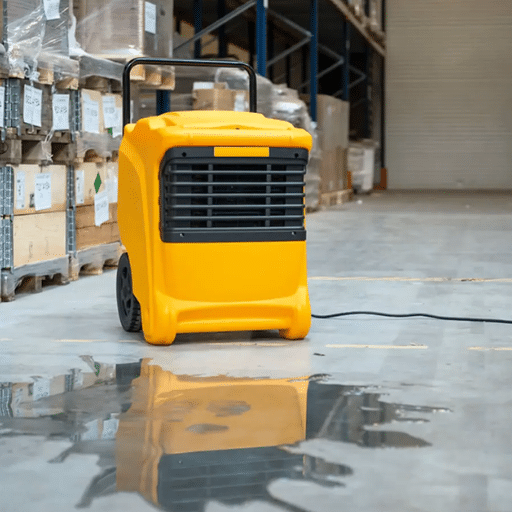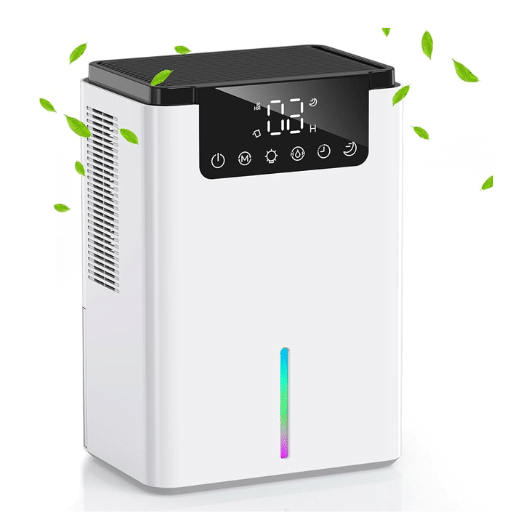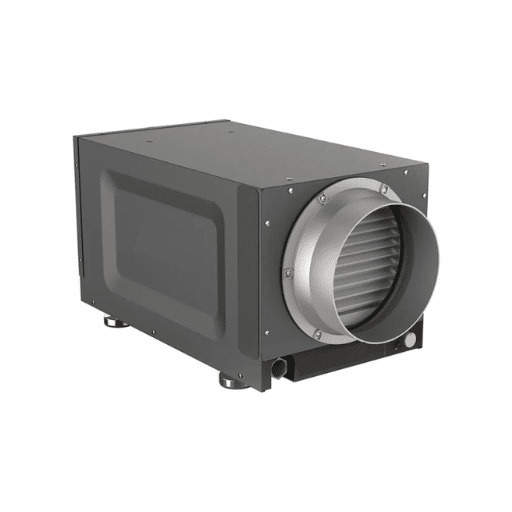
Dehumidifiers function as devices which decrease and manage indoor humidity levels to create more pleasant indoor conditions while safeguarding items and machinery from moisture-induced deterioration. The system operates by pulling in humid air to extract water vapor before it distributes dry air throughout the area. The devices effectively function in locations which experience high humidity because they stop mold and mildew and corrosion from occurring. Dehumidifiers maintain proper humidity levels which results in better air quality and material preservation and development of healthier and more productive spaces.
The Problem of High Humidity

The presence of high humidity creates major challenges for multiple environments because it impacts both human health and the operational performance of building systems. The growth of mold and mildew occurs under high humidity conditions, which leads to multiple health issues that include breathing problems and allergic reactions. The Environmental Protection Agency (EPA) reports that indoor spaces with humidity levels exceeding 60% create conditions that enable mold to develop, which damages architectural elements and furniture and fabrics. High humidity conditions enable dust mites to thrive, which makes allergy and asthma symptoms worse for affected individuals.
Humidity causes material degradation through corrosion and rusting of metals, which leads to shorter lifetimes for equipment and infrastructure according to economic analysis. The Centers for Disease Control and Prevention (CDC) reports that businesses and households spend billions of dollars each year on mold and mildew removal work. High humidity conditions create storage problems for agricultural operations, which leads to food spoilage and results in financial losses for these businesses.
The presence of high humidity causes health problems and material destruction, while also making energy systems work less efficiently. The humid climate forces HVAC systems to consume more energy in order to keep indoor spaces at comfortable temperatures, which results in increased electricity expenses. High humidity control measures protect both human health and property security while creating savings that reduce environmental damage and temporary costs.
EPA Warning:
Indoor spaces with humidity levels exceeding 60% create conditions that enable mold to develop, which damages architectural elements, furniture, and fabrics.
Benefits of Using a Large Capacity Dehumidifier
The process of moisture management becomes more effective through dehumidifier equipment which operates at high capacity when used in large area spaces. The devices provide an efficient solution to moisture problems in basements and spacious living areas and office spaces through their daily capacity to extract between 50 and 70 pints of water. The system maintains correct humidity conditions which stop mold development and dust mite populations and other allergens from existing in the space.
Improved Air Quality
The main function of large capacity dehumidifiers is to decrease excessive moisture which results in reduced mold growth and decreased dissemination of airborne pollutants. The presence of cleaner air leads to decreased chances of developing respiratory problems and allergies which establishes healthier conditions for residential and workplace environments.
Energy Efficiency
The majority of contemporary dehumidifiers operate as energy efficient devices because they require less electricity while maintaining their ability to remove moisture from indoor spaces. Research findings show that dehumidifier usage decreases HVAC system demands which results in a total energy use reduction between 10 to 15 percent and subsequent lower utility expenses during humid weather.
Protecting Property and Valuables
The presence of excessive humidity creates a risk of destruction to furniture and electronic devices and wooden floors and all paper materials. The dehumidifiers with large capacity protect valuables through their ability to create consistent environmental conditions which extend the lifespan of precious and valuable items.
Convenience and Ease of Use
The large capacity dehumidifiers provide essential user convenience through their built-in hygrometers and continuous drainage systems and programmable functions. Despite their large size many models produce minimal noise which makes them appropriate for use in both home and business environments.
Key Features of Large Capacity Dehumidifiers

- ✔Dehumidifiers with high dehumidification capabilities achieve their best performance through their ability to dehumidify large areas which include basements and warehouses and office spaces.
- ✔The product features Energy Star certification which enables it to reduce energy consumption while achieving maximum dehumidification results and generates lower electricity expenses without interrupting its operational capacity.
- ✔The dehumidifiers include accurate humidity control systems which enable users to establish their preferred humidity conditions between 30% and 90% to match various situations and requirements.
- ✔The large capacity dehumidifiers use strong materials which enable them to handle demanding conditions found in both commercial spaces and home environments.
- ✔The product offers multiple filtering choices which enable users to choose between washable and replaceable air filters that capture allergens and dust particles and other harmful substances, which results in cleaner indoor air and reduced humidity levels.
Pints per Day: Understanding Capacity Ratings
The most important aspect of choosing a dehumidifier with large capacity lies in its capacity rating which manufacturers express through their pint per day measurement system. The rating shows how much moisture the dehumidifier can extract from the air throughout a 24-hour period under particular operating conditions. The standard testing conditions for capacity evaluation require testing at 65-80°F combined with 60% relative humidity which simulates typical indoor humidity levels. Here’s a breakdown of common ratings and their appropriate uses:
The capacity of this system makes it suitable to handle small bathroom and laundry room and single bedroom areas which experience mild humidity problems. The models provide effective coverage for spaces that reach up to 1,500 square feet.
The system provides dehumidification solutions for living rooms and basement areas and apartment spaces which have medium-sized dimensions. The range offers effective coverage for spaces which reach a maximum size of 2,500 square feet and experience moderate moisture problems.
The system provides optimal performance for large areas which include basements and open floor plans and commercial areas. The high-capacity models provide effective performance in spaces which extend up to 4,500 square feet and in areas that experience extreme moisture problems.
The industrial spaces and commercial environments require these heavy-duty dehumidifiers which provide moisture control for extensive areas that experience extreme humidity conditions found in warehouses and gyms and swimming facilities.
The U.S. Environmental Protection Agency (EPA) states that three factors which include climate conditions and room dimensions and existing humidity levels should determine the suitable dehumidifier capacity selection. A house located in Florida’s humid climate needs a bigger pint capacity than a house located in a climate with low humidity. The larger spaces that experience high water ingress such as basements which are susceptible to flooding and leaking need dehumidifiers with bigger capacity for effective water removal.
You need to check product specifications against your room dimensions and dampness level requirements when you search for a dehumidifier.
Square Footage Coverage: Choosing the Right Size
The selection of a dehumidifier needs to match your room size because this choice will control its operational effectiveness. Dehumidifiers exist in multiple capacity categories which assess their daily power to remove atmospheric moisture. The required capacity for dehumidifiers connects directly to both room dimensions and existing humidity conditions.
Here is a general guideline for dehumidifier capacities based on square footage and dampness levels:
| Room Size | Sq. Footage | Recommended Capacity | Notes |
|---|---|---|---|
| Small Rooms | Up to 300 sq. ft. | 20–30 pints (slight damp); 30–40 pints (severe) | For a slightly damp room a dehumidifier with a capacity of 20-30 pints is suitable. For more severe dampness consider a model with a 30-40 pint capacity. |
| Medium Rooms | 300–500 sq. ft. | 30–50 pints; up to 50–60 pints for high moisture | A dehumidifier with a capacity of 30-50 pints will meet the needs of a room which has moderate dampness. For higher moisture levels up to 50-60 pints is recommended. |
| Large Rooms | 500–1,000 sq. ft. or more | 50–70 pints; 70+ pints for extremely wet areas | For effective operation in large areas that have moderate dampness a dehumidifier with 50-70 pint capacity functions well. Extremely wet areas of this size may benefit from models exceeding 70 pint capacity. |
The moist basement area of 1,000 square feet will require a dehumidification unit which can extract 70 pints of moisture every day to reach complete moisture control. Higher humidity conditions which occur during summer or in coastal areas will produce better outcomes when you choose equipment with capacities above recommended sizes.
The manufacturers display square footage recommendations on their products but you need to assess ceiling height and ventilation and extreme weather conditions because these factors will require a more powerful system. The information you have collected will enable you to make an accurate dehumidifier size choice which matches your environmental needs.
⚡ Energy Efficiency: Energy Star Ratings Explained
The Energy Star certification system provides trustworthy certification to products which achieve exceptional energy efficiency standards. The Energy Star certification marks products which fulfill U.S. Environmental Protection Agency (EPA) energy efficiency standards to deliver decreased energy use and financial advantages while maintaining peak operational efficiency.
Dehumidifiers which receive Energy Star certification consume 15% less electricity than their non-certified counterparts according to Energy Star standards. The EPA states that this leads to about 175 dollars in energy savings during the entire operational period of the equipment. Your carbon footprint decreases because reduced energy use leads to fewer greenhouse gas emissions.
The energy consumption of an Energy Star-rated dehumidifier should be evaluated in relation to its capacity when making a selection. The 50-pint Energy Star certified dehumidifier uses about 600 watts per hour based on its particular design while its non-certified equivalent consumes more electricity.
Selecting an Energy Star product helps the environment while bringing you direct financial benefits through reduced energy costs. Search for the Energy Star label when shopping for a dehumidifier to ensure you’re investing in an energy-efficient and environmentally friendly option.
Ideal Use Cases for High Capacity Dehumidifiers
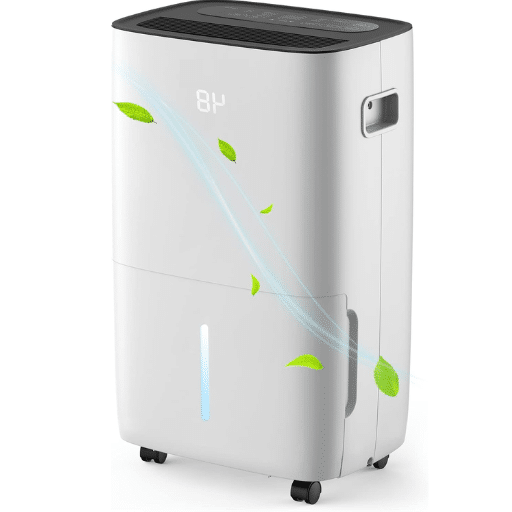
Dehumidifiers with high capacity function most effectively in large areas that experience high humidity conditions which occur in basements and garages and warehouses and commercial buildings. The units provide powerful moisture extraction capacity which makes them essential for environments that require humidity control to protect human health and building structures and process functions.
1. 🏚️ Basements and Crawl Spaces
Basements experience dampness problems because their underground location enables moisture to enter through their walls and floors. The high-capacity dehumidifier can remove between 70 and 90 pints of moisture from the air every day according to its specific model. The proper storage conditions require humidity control between 30 and 50 percent because this range protects stored items while reducing musty odors.
2. 🏭 Industrial and Commercial Spaces
Heavy-duty dehumidification systems become necessary for commercial buildings which include warehouses and factories and storage facilities. The industrial-grade dehumidifier models enable operation across spaces larger than 3,000 square feet and provide drainage systems that allow continuous function. The process establishes fundamental requirements for maintaining product quality especially in industries that handle perishable items or moisture-sensitive materials.
3. 💧 Post-Flood or Water Leak Cleanup
Rapid moisture extraction becomes crucial after a flood or major water leak because this process protects buildings from structural damage while stopping mold growth. The high-capacity dehumidifiers speed up drying processes by extracting multiple hundred pints of water each day during conditions of extreme moisture. The water damage restoration process becomes more efficient when customers use models which have built-in pumps that enable them to remove water directly from the device.
4. 🏊 Swimming Pools and Spa Areas
Indoor swimming pools or spa facilities generate high levels of humidity, which can lead to condensation, corrosion, or even damage to surrounding structures. A high-capacity dehumidifier can help maintain a balanced environment, with some advanced models designed specifically for areas with consistent water vapor production. Keeping the humidity around 50%-60% in these locations improves comfort and prolongs the life of structural components.
5. 🌿 Greenhouses
Greenhouses require specific humidity conditions because their environmental conditions create optimal conditions which enable plants to reach their full growth potential. The excessive moisture creates conditions which lead to fungal diseases and rot, while the low humidity levels prevent plants from developing correctly. Greenhouse managers use high-capacity dehumidifiers which contain humidistats to maintain precise humidity levels that support healthy growth of different plant varieties. The process of selecting a high-capacity dehumidifier requires you to select a model which meets the unique requirements of your location because this choice will lead to energy savings, asset protection, and creation of a healthier atmosphere.
Basements: Keeping Dampness at Bay
The underground nature of basements together with their design limitations on airflow creates conditions which result in extreme dampness throughout their spaces. The research demonstrates that basement humidity needs to be maintained between 30% and 50% because this range prevents mold growth and protects building materials from decay. Mold starts to grow when humidity reaches 60% which reduces air quality and creates health risks that include respiratory issues and allergies.
The advanced technology in modern dehumidifiers uses automatic humidity sensors together with energy-efficient compressors to maintain proper moisture control. The 70-pint dehumidifier has an air extraction capacity of 70 pints per day which makes it suitable for use in standard and large basement spaces. The units provide users with convenient features for product cleaning through their washable filters and continuous drainage options which enable users to maintain product performance during extended use.
When users fix wall cracks and establish better foundation drainage and install vapor barriers, their dehumidifier experiences increased performance. The combination of these factors together with advanced dehumidification technology enables the creation of a basement environment that remains completely dry and maintains optimal health standards. Homeowners can achieve protection for their properties while decreasing future upkeep expenses through proper tool selection and strategic planning.
🏢 Commercial Spaces: Protecting Your Assets
The establishments which operate commercial activities across their office and warehouse and retail space require special techniques to create ideal environmental conditions which will protect their important assets. The presence of excessive moisture in these spaces will result in structural damage and mold development which will harm stored products and create operational difficulties and financial losses for the business. The total annual expenses for U.S. companies to address mold problems in commercial properties reach approximately $2.5 billion according to industry research which measures restoration work and productivity losses.
The first step to reduce these threats requires organizations to invest in high-capacity dehumidifiers which commercial facilities use. The units demonstrate strong operational capabilities because they can manage spaces larger than 10,000 square feet while extracting up to 200 pints of moisture from the atmosphere. The smart humidity control systems enable users to monitor humidity levels in real time while the system automatically modifies environmental conditions to maintain the desired humidity range which the Environmental Protection Agency sets between 30 and 50 percent.
The manufacturing and logistics industries use controlled conditions because they want to prevent expensive interruptions which would disrupt their operations. The high humidity conditions in warehouses which store electronics and pharmaceuticals result in product spoilage and equipment breakdown. Business owners can safeguard their assets and financial performance by using advanced dehumidification systems together with building inspections which help them discover potential problem areas. The organization uses active management techniques which help them prevent legal actions while they follow rules about indoor air quality regulations.
Open-Concept Homes: Managing Humidity Levels
The increasing attractiveness of open-concept homes results in architectural designs which use natural light to connect their various living areas. The design of these spaces creates particular obstacles for maintaining proper indoor humidity control. The absence of walls and doors enables moisture to move freely between rooms which creates difficulties for solving particular moisture issues.
The climate data shows that ideal indoor humidity should be maintained between 30% and 50% according to local weather conditions and seasonal changes. High humidity levels create conditions that support mold growth and cause structural problems and make people feel uncomfortable while dry conditions create skin problems and respiratory issues and result in damage to wooden furniture. Centralized dehumidification systems and smart humidifiers provide efficient humidity control solutions for open-concept homes because they control moisture throughout the entire home space.
Air circulation serves as the essential component which controls humidity levels. The operation of ceiling fans and exhaust fans and HVAC systems creates continuous air circulation which stops moisture from building up in specific areas. Smart thermostats and humidity sensors function as modern technologies which track existing humidity conditions to adjust home settings for optimal user comfort. Smart humidifiers with app and sensor technology enable users to control their home moisture levels with precise accuracy according to modern design.
Homeowners can decrease their future maintenance needs by using moisture-resistant materials which include ceramic tiles and treated wood. Homeowners can protect their property against mold and mildew through these inspections which should be conducted in humidity-prone areas such as kitchens and bathrooms. Homeowners can achieve an aesthetically pleasing open-concept design through these techniques which utilize current technologies to create a healthy work environment.
Drainage Options for Large Capacity Dehumidifiers

Dehumidifiers with large capacity serve as effective methods for controlling excess humidity in big areas which include basements and garages and open-concept residential spaces. The selection of an appropriate drainage solution holds vital importance because it enables the system to function continuously while needing minimal operator intervention. The following list presents the most frequently used drainage solutions which include essential information and valuable insights about each option.
🪣 Manual Tank Emptying
Dehumidifiers typically include a water tank which stores moisture that the device removes from the surrounding atmosphere. Users must perform tank emptying tasks because the tank reaches its full capacity which triggers an automatic shut-off or alert system. The larger units possess tanks that can store multiple liters of water because their manual emptying process becomes difficult during extended usage or high humidity periods.
📐 Gravity Drainage
Gravity-based drainage systems allow continuous water removal by connecting a hose to the dehumidifier’s dedicated drain port. The water flows out naturally due to gravity, making it ideal for spaces where the hose can feed directly into a floor drain, sink, or outdoor outlet. Users should ensure that the hose is secure and not kinked to maintain uninterrupted flow. The solution represents a practical choice which most users prefer because it enables them to operate their systems without performing daily upkeep tasks.
⚙️ Pump Drainage Systems
High-capacity dehumidifiers include built-in pump systems and optional pump systems which actively push water through a connected hose. The option proves especially useful in locations where users need to drain water to higher elevations such as sinks and windows. The pump system enables flexible installation options while delivering reliable operation across different installation designs. Manufacturers provide pump capacity specifications which reveal that most models can lift objects to heights exceeding 15 feet.
📱 Smart Drainage Technology
Modern dehumidifiers come with drainage systems which work together with smart home technology. Some models have app-controlled timers which notify users when the drainage system faces potential blockages. The system provides performance updates which enable operational control, thus decreasing spillage risks and enhancing system efficiency.
The recent product testing from Frigidaire, hOmeLabs, and Honeywell shows that users prefer dehumidifiers with pump systems because they provide easier operation and greater operational freedom. The operational cost and energy efficiency of a system depend on its selected drainage solution because gravity systems offer the lowest costs yet lack the flexibility of systems which use built-in pumps.
Homeowners need to understand the advantages and disadvantages of each option because this knowledge enables them to choose the most suitable drainage solution which meets their dehumidification requirements while maintaining a dry and comfortable indoor space.
Built-in Pump vs. Gravity Drain
The selection of a dehumidifier system between built-in pumps and gravity drains requires evaluation of their operational efficiency and system capabilities. The comparison below presents five essential elements that define the two systems.
| Factor | ⚙️ Built-in Pump | 📐 Gravity Drain |
|---|---|---|
| Installation | The system requires basic installation because its water pumping ability enables vertical water movement to maintain operation in areas without direct drainage access. | The dehumidifier needs to be positioned at a height above the drainage point to function properly since the system depends on gravitational forces for operation. This setup typically involves placing the unit on a raised platform. |
| Flexibility | The system enables multiple installation locations because it can discharge water into faraway external drains which exist at higher grounds. | The system can only be installed in areas where drainage points exist because its operation depends on gravitational forces which need to be installed at elevated positions. |
| Energy Consumption | The pump needs to function for the whole built-in pump system, which makes it necessary to spend more money on electricity. | The system operates without requiring any additional power, which makes it the most economical option for energy consumption. |
| Maintenance | The system requires regular maintenance work to keep the pump operating at its maximum performance level when used in high-demand situations. | The system needs less maintenance work because it contains no parts that need mechanical functions, which decreases the chances of experiencing technical problems. |
| Cost | The system requires users to pay more money at the beginning because it includes a pumping system as part of its design. | The system requires users to spend less money at the beginning because it needs only a few essential parts for its assembly. |
Users can select suitable drainage solutions after assessing these essential aspects which will help them achieve effective dehumidification results within their budget. The system will provide an efficient dehumidification solution for their home.
Using a Drain Hose for Continuous Operation
The dehumidifier operates without interruptions when you use a drain hose because it enables continuous operation in locations that experience high humidity. The dehumidifier uses a drain hose to empty water into floor drains or sinks or other designated drainage points which eliminates the need for users to empty the water tank manually.
The following presents step-by-step guidance together with practical advice which will help you achieve the best results from your drain hose during extended usage.
- Choosing the Right Hose
Select a standard garden hose or a manufacturer-recommended hose that fits securely to the dehumidifier’s drainage port. The hose must display strong construction which prevents any formation of kinks or damages because this requirement guarantees the delivery of uninterrupted water. Many modern dehumidifiers support hoses with a 0.5-inch or 14mm inner diameter. - Proper Setup
The drain outlet of your dehumidifier emerges from its back or bottom section. The user must fasten the hose to the port with sufficient force which creates an airtight bond that stops any potential leaks from occurring. The user must direct the other end of the hose towards a proper drainage location which includes floor drains and sinks while making sure the hose descends to enable standard water movement. The user must position the equipment in a way that prevents any possible tripping accidents while maintaining an unbroken view of all work areas. - Ensure Sufficient Gravity Flow
People need gravity to remove their water because they lack a water pump system which helps them move water. The hose needs to have a downward slope for its entire length to achieve maximum efficiency. Backflow together with clogging occurs when pipes extend horizontally or uphill. The drainage point must be placed below the base of the dehumidifier water reservoir. - Maintenance and Monitoring
The user needs to check the hose regularly because it may develop blockages from mineral deposits or mold which will prevent water from moving through. The team needs to clean the hose system up to three times each year because this process will decrease their need for maintenance work. The user needs to inspect the hose connection at regular intervals to confirm that it stays fastened and does not have any leaks.
📊 Performance Data:
The latest research results show that dehumidifiers achieve up to 30% better efficiency through their continuous drainage system because this system stops operational breaks which occur when the water tank reaches its full capacity.
Water Tank Considerations: Capacity and Maintenance
The emptying needs of a dehumidifier depend on its water tank capacity. Small water tanks which hold 1 to 2 liters of water function most effectively in compact areas that have low humidity conditions. The larger tanks which have a capacity between 4 to 6 liters and above work best in basement environments and areas with high humidity because they need less frequent manual emptying. Users who function in locations with humidity levels above 60% face problems because the energy efficiency standards require them to empty their smaller tanks too frequently.
Dehumidifier systems require ongoing maintenance to sustain their operational efficiency throughout their entire lifespan. The tank needs weekly cleaning because mold and bacteria growth needs to be prevented to stop these substances which create bad smells from decreasing indoor air quality. The latest models feature tanks that have antimicrobial coatings which provide an extra layer of protection against this problem. Users should review the manufacturer maintenance instructions for each dehumidifier before selecting their devices because this document contains all required maintenance information.
The new device models include a full tank alert system which automatically shuts down the device to stop tank overflow, making it easier for users to operate their devices. A continuous drainage system with proper water tank maintenance allows heavy-duty operations to operate effectively in large spaces and difficult environments.
Comparing Top-Rated Large Capacity Dehumidifiers

| Model | Water Removal (Pints/Day) | Energy Efficiency | Noise Level (dB) | Tank Capacity | Recommended Room Size | Special Features |
|---|---|---|---|---|---|---|
| Midea Cube | 50 | 2.19 L/kWh | 54.1 | 34 pints | 600–800 sq. ft. | Large tank, compact design |
| Frigidaire FFAD5033W1 | 50 | 1.8 L/kWh | 70.2 | 16.9 pints | 800–1,200 sq. ft. | Reliable, fast moisture removal |
| Honeywell TP70WKN | 50 | 1.9 L/kWh | 68.6 | 14 pints | 800–1,200 sq. ft. | Durable, ENERGY STAR certified |
| hOmeLabs HME020031N | 50 | 1.9 L/kWh | 59.3 | 14 pints | 800–1,200 sq. ft. | Quiet, extended warranty |
| GoveeLife H7151 | 50 | 1.9 L/kWh | 63.8 | 16 pints | 600–800 sq. ft. | Lightweight, affordable |
Features to Look For in Heavy-Duty Models
When selecting a heavy-duty dehumidifier, there are several features that significantly enhance performance and usability. The following are five essential features which need to be evaluated.
- High Pint Capacity
The heavy-duty models need to remove between 50 to 70 pints of moisture from the environment because these units need to handle various room sizes. The situation requires this extensive capability because the space experiences extreme humidity conditions and contains larger areas. - Built-In Hygrostat
The dehumidifier uses its built-in hygrostat to automatically measure and control your preferred humidity setting. The system establishes a user-friendly operation which maintains optimal conditions in the environment without requiring manual work by the user. - Continuous Drainage Options
The continuous drainage options which many heavy-duty dehumidifiers provide enable their operation to continue without interruption. The system allows automatic water drainage which directs moisture discharge through a drain or sump pump, thus removing the need for users to empty the water tank. - Energy Efficiency (Energy Star Certified)
Energy consumption is a crucial factor when running a heavy-capacity dehumidifier for extended periods. The Energy Star-certified models perform efficient moisture removal which keeps energy costs to a minimum. - Durable Construction
Heavy-duty units require construction for durability because they must endure demanding operational environments. The unit achieves durability through its strong outer shell, high-quality industrial components, and materials which resist corrosion.
The complete functionality and user-friendly design of a heavy-duty dehumidifier depend on these essential features which deliver essential support for solving various humidity problems.
Popular Brands and Their Ratings
| Brand | Top Model | Water Removal (Pints/Day) | Energy Efficiency | Noise Level (dB) | Reliability Rating | Special Features |
|---|---|---|---|---|---|---|
| Midea | Cube | 50 | 2.19 L/kWh | 54.1 | High | Large tank, compact design |
| Frigidaire | FFAD5033W1 | 50 | 1.8 L/kWh | 70.2 | High | Reliable, fast moisture removal |
| Honeywell | TP70WKN | 50 | 1.9 L/kWh | 68.6 | High | Durable, ENERGY STAR certified |
| hOmeLabs | HME020031N | 50 | 1.9 L/kWh | 59.3 | Medium | Quiet, extended warranty |
| GoveeLife | H7151 | 50 | 1.9 L/kWh | 63.8 | Medium | Lightweight, affordable |
Cost vs. Value: What to Expect
The evaluation of a heavy-duty dehumidifier requires assessment of its operational expenses compared to the advantages it delivers. The investment value of a product becomes clear when you know its essential features and advantages because higher-priced products do not always perform better. The five essential elements which help assess cost-to-value assessments are listed below.
- Energy Efficiency
Most heavy-duty dehumidifiers receive energy-efficient certifications which include Energy Star certification. The energy-efficient models require a higher initial investment but this choice leads to greater savings on electricity expenses throughout their useful life. - Capacity and Coverage Area
The higher costs which accompany larger pint capacity units extend to their increased coverage area. The industrial spaces and locations with extreme humidity issues need these systems because they provide effective moisture control without operators needing to empty tanks or perform maintenance. - Durability and Build Quality
The heavy-duty models use industrial-strength components which include materials that resist corrosion. The high-cost items deliver value because they function in extreme conditions and provide extended service life for demanding applications. - Smart Features and Controls
The basic models provide Wi-Fi access combined with programmable timers and digital displays which offer humidity control options. These features can save time and improve operational accuracy, particularly in commercial settings. - Warranty and Support
Products with extended warranties or strong customer support might involve a higher initial expense. The extended warranties provide customers with security about repair expenses while they use the product, which results in greater product value throughout its lifetime.
The evaluation of these factors provides you with a complete understanding of both the initial expenses and the continuous worth which comes with heavy-duty dehumidifiers. The most effective purchase requires you to balance product cost with the necessary essential features.
📚 References
- Santa Fe Product Brochure: Discusses the Impact Series large-capacity dehumidifiers, highlighting their versatility and energy efficiency. PDF Link: Santa Fe Product Brochure
- Quest Dry 105, 155, and 205 Spec Sheet: Provides specifications for high-capacity dehumidifiers, including their coverage and water removal capabilities. PDF Link: Quest Dry Spec Sheet
- Santa Fe Ultra Aire Brochure: Highlights the largest capacity whole-house residential dehumidifier, suitable for large homes with high ceilings. PDF Link: Santa Fe Ultra Aire Brochure