Understanding Humidity and Its Effects

Humidity is the quantity of water vapor contained in the air, so when the humidity is high, it creates conditions that are suitable for mold and mildew to grow, and degrades wood and other materials, besides making the indoor environment uncomfortable in general. On the other side, dry air can result in the development of skin problems, respiratory issues, and destruction of furniture or fixtures due to cracking, among other things. Ensuring that the indoor humidity level is kept at the optimum level, which usually ranges from 30% to 50%, is very important in reducing these adverse effects and, at the same time, allowing for the preservation of the building and the comfort of the occupants.
What is Humidity?
Humidity is the amount of water vapor present in the air, and it is one of the most important meteorological parameters affecting the environment and, hence, physical conditions. Humidity can be measured in three different ways: absolute humidity, relative humidity, and specific humidity. Absolute humidity gives the actual amount of water vapor in the air, which is measured in grams per cubic meter. Relative humidity is the most common measure of humidity and indicates the percentage of vapor in the air compared to the maximum amount the air can hold at that temperature. Specific humidity is the proportion of the mass of water vapor to the total mass of the air in the sample. The influence of humidity on meteorology, comfort of people living in an area, and even the durability of materials, makes it an important factor in many fields, such as meteorology and building sciences.
How Humidity Affects Indoor Air Quality
Humidity plays a huge part in determining the quality of indoor air since it affects the levels of pollutants, the growth of mold, and the health of the respiratory system. High humidity, usually above 60%, makes the conditions very favorable for mold, mildew, and dust mites to grow, which can lead to the release of allergens and a drop in air quality. On the other hand, very low humidity, usually below 30%, can have a drying effect on the respiratory system, cause irritation to the skin, and discomfort, besides increasing the level of airborne particles due to static electricity. It is very important to keep indoor humidity within the range of 30-50% to limit the growth of microorganisms, enhance comfort, and improve the overall standards of air quality. Controlling humidity not only promotes the health of the people living there but also protects the building materials from getting damaged and the furniture from getting warped or cracked. Reaching this equilibrium requires the deployment of dehumidifiers, humidifiers, and appropriate ventilation systems that are designed for the specific indoor environment.
Signs You Need a Dehumidifier
Uncontrolled indoor humidity can bring a lot of troubles, consequently, ecologically and healthwise. Below are descriptions that the installation of a dehumidifier may be necessary:
- Constant Stinking Odors: A damp, smelly odor is usually a symptom of the air being too humid, causing mold and mildew to grow.
- Mold or Mildew Seen: Seeing mold spots on the walls, ceilings, or near windows means that the humidity level is too high and needs to be taken care of quickly to stop the spreading.
- Fogging on Windows: Constant fogging or condensation on the windows is a sign of the indoor air being too humid, more so when the outside temperature is low.
- Medical Problems: Chronic lung diseases, allergies, or asthma attacks may be caused or aggravated by the presence of mold spores and allergens in high-humidity areas.
- Water Damage or Stains: Stains on the wall, peeling paint, and warping of the wood are all visible signs of a long-term moisture problem.
- Wet or Tacky Air: If the air inside the house feels wet or tacky despite having air conditioning, this is a sure sign of excess humidity.
- Dust Mite Population: High humidity encourages dust mites to reproduce, and this is usually the cause of allergy symptoms getting worse.
In case you detect any of these symptoms in your house, a dehumidifier can be of great help in restoring the perfect humidity levels, thus turning the place into a healthier and more pleasant dwelling while at the same time safeguarding your home against moisture damage in the long run.
Types of Dehumidifiers

Refrigerant Dehumidifiers: The dehumidifiers work on the principle of removing the moisture from the air as the air is cooled to the point where the water vapor condenses. The devices function very effectively and can be commonly found stationed in houses, basements, and office spaces during the hot and humid times.
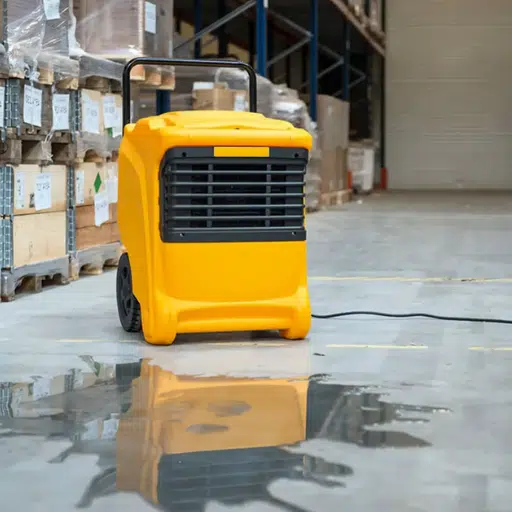
Desiccant Dehumidifiers: These machines operate with the help of a substance that absorbs humidity. The units are, thus, more suited to colder climates where refrigerant models are less efficient. They are frequently found in industrial applications or low-temperature storage areas.
Whole-House Dehumidifiers: These dehumidifiers, which form part of the HVAC systems of the house, control humidity for the entire house, making sure that all the rooms have the same moisture levels.
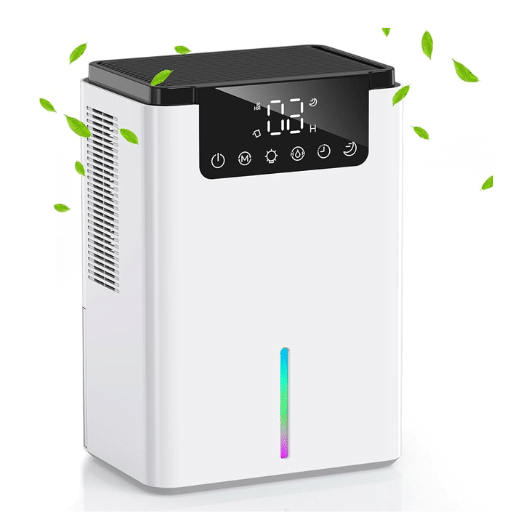
Portable Dehumidifiers: These are small, light, and easy to carry, making them suitable for single-room applications, and they can be moved whenever required. They are especially handy for solving moisture problems in places like bedrooms or bathrooms.
Portable Dehumidifiers
Portable dehumidifiers are multifaceted, eco-friendly appliances primarily for controlling humidity in specific rooms or limited areas. Usually, they come with humidity regulation options, an integrated tank for water collection, and a small size for easy moving around. These dehumidifiers perfectly serve bedrooms, bathrooms, and home offices where moisture control must be done locally. The more sophisticated models could offer features like automatic shut off, digital humidistats for exact regulating, and filters to further purify the indoor air by removing irritants like dust and pollen. Cleaning the water tank and the filter are the two main maintenance practices that help to keep the devices working perfectly and last longer. Portable dehumidifiers are a very effective way of getting rid of moisture from small areas without the need for elaborate installation.
Whole House Dehumidifiers
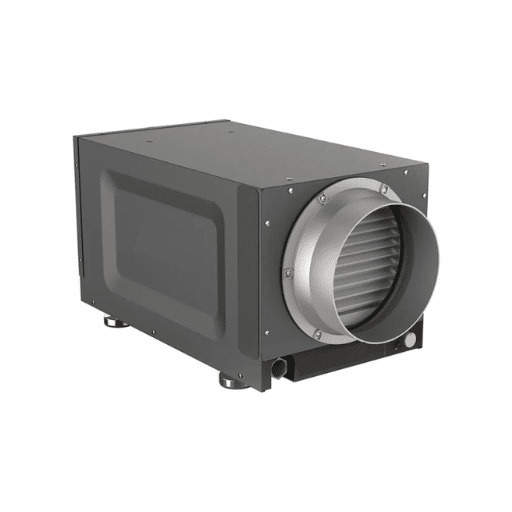
Whole-house dehumidifiers are built-in systems that take away extra humidity from an entire house. These units are very important in indoor air quality maintenance and also in the prevention of moisture-related problems. Usually, they connect to the home’s HVAC system and thus can make use of the present ductwork for even distribution of the dehumidified air throughout the space. In addition, they have high-capacity moisture extraction, programmable humidistats, and energy-efficient operations as the main features, which take care of the indoor humidity levels with precision.
Whole-house dehumidifiers, unlike portable ones, can cover much larger areas and are more efficient when operated non-stop. They will be there to help remove high humidity problems like mold, bad smells, and wood or drywall damage. Plus, having MERV-rated air filters in these systems is a common practice, which further contributes to better air quality as they trap airborne particles such as dust, pollen, and other allergens.
A whole-house dehumidifier installation is commonly done by specialists to make sure it works properly with the HVAC system and to set the right settings for the best performance. Filtering, draining the lines, and inspecting are some maintenance tasks that would be done regularly in order to keep the system efficient and long-lasting. The price for the direct purchase and installation of whole-house systems may be higher than that of portable units, but over time, such systems prove to be more economical since they preserve a stable humidity balance and reduce the electricity consumption that would otherwise come from an overworked air conditioning system.
Small Dehumidifiers for Specific Areas
Small dehumidifiers are made for localized use only and are intended for certain areas like bedrooms, bathrooms, or closets that have a significant issue with excess humidity. These machines are small, easy to carry, and often less pricey than whole-house systems, so they are perfect for moisture control in a limited area. The capacity of the small dehumidifiers usually falls between 20 and 30 pints per day, which is just right for small spaces but not so much for big rooms or open areas. In spite of their smaller size, these machines are normally outfitted with features like adjustable humidistats, auto shut-off when the tanks are full, and very quiet operation, which ultimately leads to greater convenience.
When you want to buy a small dehumidifier, keep in mind things like the size of the room, how bad the humidity is, and extra features like those that save energy and are easy to maintain. Even though their cost-effectiveness and portability are major plus points, you must perform regular tasks such as emptying the water tank, filter cleaning, and ensuring proper placement to get the best performance. If one of these machines is used in places where there is a lot of moisture, such as bathrooms after showers or small basements, it can be a very effective way to stop mold from growing, cut down on allergens, and improve air quality in the area.
Top Picks for the Best Dehumidifiers

Frigidaire FFAP5033W1
The model works with great efficiency and ideally for medium to large spaces, providing a fifty-pint capacity along with continuous drainage support. It has a digital control panel and a washable filter, which makes maintenance very easy to carry out.
HomeLabs 4,500 Sq. Ft. Dehumidifier
Large parts of the house can be covered easily with this unit, which gives strong moisture extraction. There is a built-in pump that allows continuous draining, like in the case of a water plant. Its green and silent operation is another pleasant feature that makes it a user’s favorite.
Vremi 22 Pint Dehumidifier
This small-sized dehumidifier is recommended for small to medium areas, great for dealing with humidity in the bedroom or a smaller basement. The device is still performing great and emits little energy, being certified as an Energy Star.
GE APER50LZ
For household use, including an ultra-modern control system and Wi-Fi connectivity, the 50 pint dehumidifier is the perfect option. It is capable of controlling humidity competently and can be well integrated with the current smart home systems.
All these models were the best-performing ones considered for their performance, trustworthiness, and user-friendliness. Effective moisture control for different requirements is thus assured. Always keep in mind the size of the room and the specific needs before making a purchase.
Best Portable Dehumidifier Options
Performance, portability, and advanced features are the three factors that should be considered while choosing a portable dehumidifier. According to the best resources, here are some products that are highly recommended:
Frigidaire FFAD2233W1
This small dehumidifier is perfect for small areas such as bedrooms or RVs. Though its capacity is 22 pints, it efficiently lowers the humidity levels without losing portability. It has a washable filter and easy-to-operate controls, which guarantee effective use.
Vremi 22 Pint Dehumidifier
This dehumidifier for medium-sized rooms is a lightweight unit that combines portability with power. It runs quietly, has a sleek design, and an automatic shut-off. It is energy-efficient and easy to install, which is why it is widely accepted.
Toshiba 20 Pint Dehumidifier
The Toshiba dehumidifier is a good choice if you are looking for a portable unit that has many functions. It has a handle with wheels, a compact design, and user-friendliness. The multiple settings for humidity give you a great deal of control and flexibility.
These dehumidifiers were selected based on their high output, easy carrying, and ability to adapt to different surroundings. Remember to select a device that corresponds in specs with the size and moisture conditions of the space for maximum efficiency.
Best Whole House Dehumidifier Models
When looking to find the most suitable whole-house dehumidifier, one must carefully evaluate capacity, energy efficiency, noise levels, and installation difficulty, among other things. Here are three models that are rated the highest according to performance, reliability, and customer opinion:
Aprilaire 1850 Pro Whole House Dehumidifier
The Aprilaire 1850 caters to a maximum floor area of 5,200 square feet and drains up to 95 pints of water per day. The machine consumes less power, has a fully automatic control system, and works together with the HVAC systems. The aluminum coils that resist corrosion give it more life, and the easy maintenance does not take much time at all. This unit is perfect for continuous usage in large areas.
hOmeLabs HME020031N
This appliance is very much suited for whole-house usage or for large basements, and it can now remove 50 pints of moisture per day under the new DOE standards. The unit is very quiet and has a user-friendly digital display showing the humidity level and allowing control over the humidity setting. The built-in pump makes continuous drainage hassle-free, and the dehumidifier has Energy Star certification, so it is cheap to run and does not affect performance.
Honeywell DR90A2000 TrueDRY
The Honeywell TrueDRY DR90A2000 is one of the most versatile options available, allowing spaces up to 3,000 square feet and removing 90 pints daily. Its ducted or free-standing airflow can be adapted according to the customer’s requirements, and it offers an easy-to-use digital control for accurate humidity modulation. The energy-efficient operation and solid construction make it a reliable choice for maintaining humidity at set levels.
These units are distinguished from others by their high-tech features, long life, and ability to fit into different home environments. It is essential that the dehumidifier you select is compatible with the size, floor plan, and humidity level of your home to achieve the best efficiency.
Best Small Dehumidifiers for Basements
It is important to focus on energy efficiency, the ability to work in a cold environment, and user-friendliness when choosing the small dehumidifiers for basements. The models below are the ones that are the most and the best according to the research done over a wide range of sources:
Frigidaire FFAD2233W1
The basement is small, to 22 pints of water a day. This dehumidifier is compact but powerful in moisture removal. It has an automatic defrost function to avoid freezing in cold weather, and a continuous drain option for maintenance-free operation. The fact that it is Energy Star rated means that it consumes electricity efficiently without increasing your electricity bill.
hOmeLabs HME020006N
This dehumidifier is designed for a 1,500 sq. ft. space, and it is very efficient as well as portable at the same time. The 3-liter tank, adjustable humidity settings, and quiet operation make it a perfect choice for all. Its lightweight enables easy carrying, and the auto-off feature gives safety assurance.
Vremi 22 Pint Dehumidifier
The Vremi is a small unit that can dehumidify; it can easily take excessive moisture out of a 1,500 square feet area. It has a turbo mode for quick dehumidification and features very user-friendly controls. Its modern look does not interrupt the basement design; the water drainage system implies that the unit does not require daily or regular attention.
These products are at your disposal for strong moisture control in a small area, thus creating a more pleasant and healthier environment. When selecting a small dehumidifier for your basement, take into account the space, maintenance level, and humidity specifications to match it up correctly with your needs.
Buying a Dehumidifier: What to Consider

- Room Size: Calculate the area in square feet of the location where the dehumidifier is to be placed. Then, pick a unit whose capacity is sufficient to deal with the moisture in the particular place.
- Humidity Level: Determine the mean humidity of the room. A basement, for instance, which is a high-moisture area, might need a more powerful unit that can take out more water.
- Energy Efficiency: Try to find models that are Energy Star certified since they will have lower operating costs and their performance will be eco-friendly.
- Maintenance Requirements: One of the options you can consider to ease maintenance is the continuous drain feature or an easy-to-empty water container.
- Noise Levels: In case the dehumidifier is to be used in a living area, you should go for a machine that has low noise output so as to avoid disturbances.
- Additional Features: The presence of features like adjustable humidity, a built-in hygrometer, or automatic shutoff, among others, can greatly contribute to the comfort and convenience of the user.
If you give these considerations priority, you will be able to buy a dehumidifier that not only satisfies your needs but also offers simplicity in operation and long-lasting dependability.
Size and Capacity (in SQ FT)
In the process of deciding on a dehumidifier’s size and capability, the square footage of the particular place and humidity levels are both very critical factors to take into consideration. The typical way to rate a dehumidifier is through its capacity, that is, giving the number of pints of moisture removed daily, and its coverage area indicated in square feet. A quick and easy reference is the following:
| Space Size | Square Footage | Recommended Capacity | Best For |
|---|---|---|---|
| Small Spaces | 300–500 SQ FT | 20–30 pints | Small rooms, closets, or bathrooms |
| Medium Spaces | 500–1,500 SQ FT | 30–50 pints | Bedrooms, living rooms, or home offices |
| Large Spaces | 1,500–3,000 SQ FT | 50–70 pints | Basements or open floor plans |
It is also wise to keep in mind that if the area has extreme moisture or humidity (for instance, 80% relative humidity or more), then you should go for the option of a higher-capacity unit. It is a good practice to follow the manufacturer’s instructions to be sure about the quality of performance in your particular setting.
Water Tank Capacity and Drain Options
The capacity of the water tank and the drainage methods represent key factors in the usability of dehumidifiers. Water tanks come in different sizes, and their capacity usually determines the frequency of emptying the tank — very small units have tanks of about 0.5 gallons, while large models sometimes have tanks of more than 2 gallons. To make the process easier, a number of dehumidifiers have an automatic shut-off feature that kicks in when the water tank is full, thus helping to avoid overflow.
For the purpose of continuous operation in high-humidity areas, the dehumidifiers with a built-in drain hose or pump are highly recommended. On the other hand, gravity-drain units need to be set up near a floor drain, while those with a pump can easily transfer the water to a sink or drainage area that is located further away from them. Always confirm the compatibility of hose types and that the drain system is suitable for your arrangement to avoid losing efficiency and convenience.
Noise Levels and Quiet Dehumidifiers
When it comes to choosing a dehumidifier, noise levels should be one of the very first factors to consider, especially for bedrooms, offices, or other quiet areas. The majority of the dehumidifiers’ noise level will be between 40 to 60 decibels, and usually, the smaller ones are on the lower side of this range. The larger ones with higher capacity may also produce more noise because they use powerful fans and compressors. If you want to make less noise, choose the units that are specially marked “quiet” or those that have noise-canceling technologies like two-speed fans and quiet compressors. Also, fan settings that can be adjusted give the user the option of lowering the noise while operating in delicate areas.
For the quietest operation, consider models having features like sleep mode or whisper-quiet operation. Always check product specifications and user reviews to know real-world noise levels, as manufacturers might subjectively label “quiet”. It is also essential to bear in mind that quieter operation might slightly decrease overall airflow or dehumidification speed, hence a trade-off has to be made between noise and efficiency depending on the case in point.
Features to Look for in a Dehumidifier

-
- Capacity – It is important to select a dehumidifier that has the right capacity for your room. In case of small areas, a dehumidifier having a capacity of around 20-30 pints will do fine, whereas the large or highly humid areas might require a unit having a capacity of 50 pints or even more.
- Energy Efficiency – Always check for the Energy Star certified models, which will help you in getting the lowest energy consumption possible, even while performing high-quality tasks.
- Humidistat – With the help of a built-in humidistat, the device gets to automatically maintains your desired humidity level, thus making the whole process more accurate and comfortable.
- Water Removal Options – It is recommended to get a dehumidifier with both a removable water tank and a continuous drainage option so that maintenance would be easy.
- Auto-Defrost and Auto-Restart – These features guarantee reliability in cold places and also allow the dehumidifier to continue from where it stopped with the previous settings after a power cut.
- Portability – Dehumidifiers with casters and lightweight designs are very easy to move around your home or office whenever needed.
- Filters – By having washable or changeable filters, the operation of the dehumidifier will always include the process of capturing dust and/or allergens, which will improve the air quality in the place.
Timer and Sleep Mode Functions
The functions of the timer and sleep mode are meant to save energy and provide comfort to the user. The timer function gives the user the opportunity to set the machine to run for a certain time or work at certain intervals, thus saving energy by stopping the machine that is not needed to run. This feature can be particularly effective in limiting the unit’s operation to the night when humidity is highest or when the house is empty. In contrast, the sleep mode adjusts the performance so that it is suitable for nighttime by reducing noise and regulating humidity to be comfortable without the air getting too dry. So, these functions not only make the dehumidifier easier to use but also help in making its life longer and operating it more efficiently.
Air Filters and Maintenance
To guarantee the effective operation and the longevity of the dehumidifier, the air filters must be regularly maintained. I always make sure to clean or change the filters according to the manufacturer’s recommendation, which is usually every two weeks or whenever necessary, according to the usage. Cleaning entails taking out the filter, washing it with light soap and water, and leaving it to dry completely before putting it back. By taking this approach, I stop the accumulation of dust and dirt that can block airflow and eventually lower the effectiveness of the unit. The right treatment of the air filters not only boosts the dehumidifier’s energy but also helps in providing a good quality of air indoors.
Desiccant vs. Compressor Models
The main difference between desiccant and compressor-based dehumidifiers is in the way they operate. The compressor dehumidifiers cool the air to the point that water comes out as a liquid. Hence, they are very effective in areas that are hot and humid. They also consume less power for the big volume of water they can take out and work best at temperatures above 65°F. On the downside, they can get less effective in winter and take up more space in the room because of the bulky internal parts for refrigeration.
A desiccant dehumidifier, on the other hand, uses a water-absorbing material, like silica gel, which is put into a rotor. They work fine in cold conditions, as their operation is not affected by temperature ranges, thus making them the best choice for basements, unheated places, or winter months. These machines are usually very quiet, small, and lightweight, but they consume more power than compressor dehumidifiers, especially in the case of large areas. Furthermore, desiccant units might dry up fast in the beginning, but then cannot be used for long-term, large-scale moisture removal needs.
Overall, the selection between the two mainly revolves around the climate. Where compressor dehumidifiers are used, they will work to their full potential and be the most energy-efficient. Conversely, in a colder environment, using desiccant dehumidifiers for small areas is the better alternative, since they are flexible and can perform consistently regardless of the outside temperature.
Reference Sources
Feasibility Analysis of Hybrid Dehumidifier–Air Conditioner Technology
Focus: Analysis of hybrid dehumidifier technology for small-scale household applications in tropical climates.
Research and Design of the Appearance Model of the Household Dehumidifier
Focus: Design and functionality of household dehumidifiers, including frozen dehumidification methods.
Solar Desalination by Humidification–Dehumidification: A Review
Focus: Review of humidification–dehumidification processes, including applications for home use.
Frequently Asked Questions (FAQs)
Midea Cube: Do you think Midea Cube is an excellent option for a home dehumidifier?
The Midea Cube is a dehumidifier that is very compact and has an adjustable fan speed and great performance in the removal of moisture from the air. It is good for use in bedrooms and small living areas where you want to keep the air moisture-free without a bulky whole-house unit. Its quality of build and silent operation are among the top-rated in comparison to other brands and dehumidifiers. However, if you are going to deal with gallons of water in a crawl space or basement, you may still prefer a 50-pint or a 70-pint model, or maybe a dehumidifier that has a condensate pump or drain hose for continuous removal of water.
Moisture absorbers: Crossing over when to use Spill absorbing products like Damprid or Eva-Dry against a dehumidifier?
Moisture absorbers are the likes of Damprid, Eva-Dry, and other similar products, which are best for small, enclosed spaces, closets, or RVs where humidity issues are localized and minimal. For large rooms, basements, or whole-home humidity control use, you will need a dehumidifier to remove moisture from the air more effectively and at scale. Moisture absorbers are cheap and easy to move, but they will not be a substitute for a new dehumidifier when you are dealing with humid air that produces gallons of water or causes mustiness.
Introduction: What are the major features offered by an Ivation dehumidifier, and how does it compare to other brands?
Ivation dehumidifiers typically come with features like digital RH control, adjustable fan speed, auto restart, and sometimes built-in pumps. When compared to other brands and dehumidifier manufacturers, Ivation usually has a competitive pricing structure and a decent build quality. When choosing, consider energy use per kWh, water bucket capacity, and whether you need a permanent drain hose or condensate pump for continuous draining.
Drain hose: Is a drain hose or condensate pump needed for continuous operation?
If you will be using a dehumidifier in a basement, crawl space, or any location that will require it for a long time, then a drain hose or condensate pump will save you from emptying the water bucket frequently. A gravity drain hose is fine when you can place the unit next to a floor drain or a duct return air path that is lower than the unit; a condensate pump comes in handy when the drain point is above the unit or more than about 2 ft away. Most of the 50-pint and the 70-pint, along with their models, come with a drain outlet or optional pump to take care of multiple gallons of water daily without interruption.
50-pint: Would a 50-pint dehumidifier be sufficient for my humid basement or whole home?
A 50-pint dehumidifier is often the first choice for rooms of medium to large sizes as well as for basements. It can drastically reduce the humidity level in the air, making it more comfortable and healthier, but the performance will depend on factors like the size of the room, the initial RH, and the airflow. For very damp basements or the whole house coverage, consider a 70 pint or a whole house dehumidifier system that works together with your air conditioner or duct system. Check the dehumidifier specs from the picks and manufacturer to know how many gallons of water per day and energy consumed per kWh.
New dehumidifier: What are some important factors to consider for a new dehumidifier purchase?
When selecting a new dehumidifier, give priority to capacity (pint rating, e.g., 50-pint or 70-pint), energy efficiency (cost per kWh), build quality, noise level, and functions like auto-defrost, adjustable fan speed, and setting humidity levels according to your needs. Think about the need for portability or a pump or a drain hose for continuous draining, and search for reviews of the dehumidifiers available in the market, and compare different manufacturers. Also, make sure to check if using an extension cord is advisable, as most manufacturers recommend plugging directly into a grounded outlet.
Damprid: Will Damprid alone be sufficient to eliminate a musty smell?
Damprid can contribute a bit to the reduction in surface-level moisture that is the cause of the musty smell in closed spaces like closets, but it won’t eliminate the humidity issues. If musty odors persist in the basement, crawl space, or large room, you are most likely in need of an electric dehumidifier to extract humid air and reduce humidity to a healthy level. Use Damprid or similar moisture absorbers in small spaces as a supplement or a temporary fix.