1
Wisdom

2015
Advantages
- High energy efficiency
- custom settings
- Durable
Disadvantages
- Industrial use
- Not applicable to companies that prioritize quality
2
Santa Fe

1977
Advantages
- Excellent moisture extraction
- Very durable construction
- Space-saving designs for small spots
Disadvantages
- High-end price
- Somewhat noisier working
3
ALORAIR
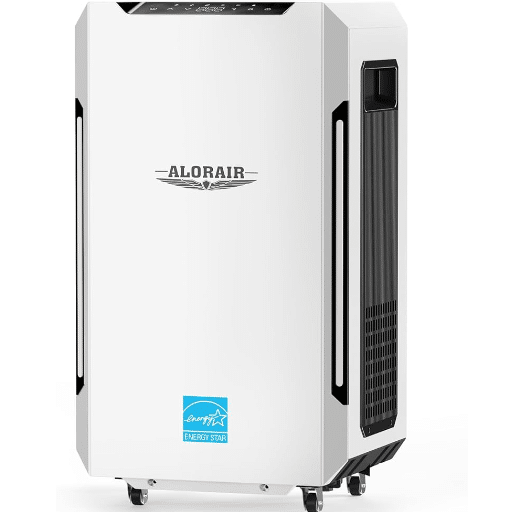
2015
Advantages
- Cutting-edge LGR technology
- Affordable price
- Straightforward setup
Disadvantages
- Fewer models available
- A less established brand that has a shorter history
4
Dri-Eaz
1980
Advantages
- Large water extraction capabilities
- Rugged construction for commercial applications
- An endorsement from the professionals
Disadvantages
- The price is high
- The product is not for the non-industrial user
5
Ebac

1972
Advantages
- Models that use less energy are very reliable
- Can be used in many different ways
Disadvantages
- Some areas have little to no stock
- High prices
6
BlueDri

2007
Advantages
- Budget-friendly restoration choices
- Excellent water extraction capacity
Disadvantages
- Simple functions
- No sophisticated control systems
7
Dehumidifier Corporation of
America
1995
Advantages
- Tailor-made creations for certain requirements
- Produced in the USA
Disadvantages
- Not so easy for home users to access
- Longer waiting times
8
Quest

2001
Advantages
- The environmental impact is low
- Suitable for moisture control in large areas
Disadvantages
- Professional installation is needed for the larger models that are bulkier
9
Phoenix
1994
Advantages
- Small-sized designs with high-power performance
- Many different uses
Disadvantages
- Pricy when compared to other restoration-grade models
10
Fral

1993
Advantages
- Very efficient
- Dependable
- Both for industrial and residential applications
Disadvantages
- More expensive
- Distributed only in specific areas
Quick Reference Table
| Brand | Founded | Website |
|---|---|---|
| Aprilaire | 1938 | www.aprilaire.com |
| Santa Fe | 1977 | www.santa-fe-products.com |
| ALORAIR | 2015 | www.alorair.com |
| Dri-Eaz | 1980 | www.dri-eaz.com |
| Ebac | 1972 | www.ebac.com |
| BlueDri | 2007 | www.bluedri.com |
| Dehumidifier Corporation of America | 1995 | www.dehumidifiercorp.com |
| Quest | 2001 | www.questclimate.com |
| Phoenix | 1994 | www.usephoenix.com |
| Fral | 1993 | www.fral.com |
Frequently Asked Questions (FAQs)
Basement: Which is the best industrial dehumidifier that would suit my basement?
When selecting a basement industrial dehumidifier, the most important factor is getting the right size, as it is a difficult decision. First, measure the square footage and the height of the ceiling to get the volume. Then, choose the dehumidifier with a pints-per-day rating capacity (the amount of moisture that can be removed in a day) that is equal to the volume of the area. For wet basements or crawlspaces, compressor-type dehumidifiers of high quality (50 pint units, 70 pint units, or greater) are recommended. If gravity drainage is not possible, then how about a dehumidifier with a pump, or going for a less expensive commercial dehumidifier with a pump? Drainage should be arranged where a hose extends from the basement to a floor drain. If you are looking for maximum performance, then check if the unit is Energy Star rated, how long the warranty is, read the reviews of dehumidifiers, and compare the top-rated dehumidifiers in terms of moisture removal power and reliability.
Humidity: What is the humidity range that I should maintain in my basement, and how does a dehumidifier help in that?
Maintaining humidity levels between 30% and 50% will not only repel mildew but also save the wood; actually, for the cellars, it is commonly nearly 45%. A good dehumidifier can remove a considerable amount of moisture every day (a 50 pint unit can remove water up to the pint rating, while the company’s standard is ‘pint per day’). Compressor-based and commercial dehumidifiers generally perform better in warm and humid basements, thus being more efficient than small or residential dehumidifiers. A hygrometer is needed for the continuous checking of humidity levels, and a dehumidifier must be selected that can cope with the size and moisture removal (pint rating of dehumidifiers like 35 pint, 50 pint, and 70 pint are the ones to consider).
Commercial dehumidifier: When is the commercial dehumidifier a better option than the residential model?
A commercial dehumidifier is the optimal solution in situations where continuous operation, the highest daily moisture extraction, and the capability to work in extreme conditions (like large basements, commercial areas, or drying after flooding) are required. Commercial dehumidifiers and dehumidification systems for business with pump or condensate pump options are built for long hours and can handle a much larger volume of water than a domestic dehumidifier can. If you have a very large basement (a few hundred square feet) that suffers from heavy water infiltration, or you need a dehumidifier for a construction site, then our high-end commercial dehumidifier or gallon commercial dehumidifier is the perfect selection.
Dehumidifier with pump: Are the pump models worthwhile for a basement, and what are the advantages of a built-in pump?
If your basement doesn’t have a drain where the water can exit, and you also want to discharge the condensate, maybe even to the sink or through a higher window, then a dehumidifier with a pump or one with a built-in pump would be the best choice. The integrated pump for the condensate is automatic; it pushes the condensate to the place that was chosen beforehand, and therefore, it does not need to be emptied manually, which also reduces the possibility of overflowing. If you go for the model without a pump, a hose is needed to transport the condensate away from the unit. Dehumidifiers, which use a pump, demand a higher initial investment, but they significantly reduce the maintenance that is usually required when internal buckets or external drain hoses are used for basement drainage.
Best commercial dehumidifier: What brands and features do top-rated dehumidifiers for basements contain?
For basements, the best dehumidifiers are compressor-based and commercial-grade from big-name manufacturers. Such dehumidifiers should be considered that can remove high points per day, have strong compressors, come with built-in pump options, and have sturdy casings. On the other hand, Frigidaire, as well as other consumer brands, have also come up with efficient home use options (35-pint dehumidifier, 50-pint models); however, the latter are still not as powerful as the commercial ones. When it comes to industrial basements, one should rather refer to dehumidifier reviews for commercial units where the aspects of moisture removal, performance, and moisture in pints per day are evaluated, along with ease of draining (condensate pump or drain hose) and long warranty periods.
Humidity level: How many pints per day do I need, really—a 50 pint unit or a 70 pint unit will do?
The selection of a dehumidifier is made according to the size of the room and the volume of moisture present in it. As a rule of thumb, for moderately damp basements, a 50 pint dehumidifier will extract 50 pints of water daily (this is under standard conditions); however, if the basement is very wet or bigger than usual, the recommendation is to go for a 70 pint (70 pint units) or a commercial unit with a bigger capacity. If you are facing a situation of heavy condensate due to HVAC problems, leaks, or floods, then compressor-based or community units with higher pints per day than normal residential recommendations should be considered.