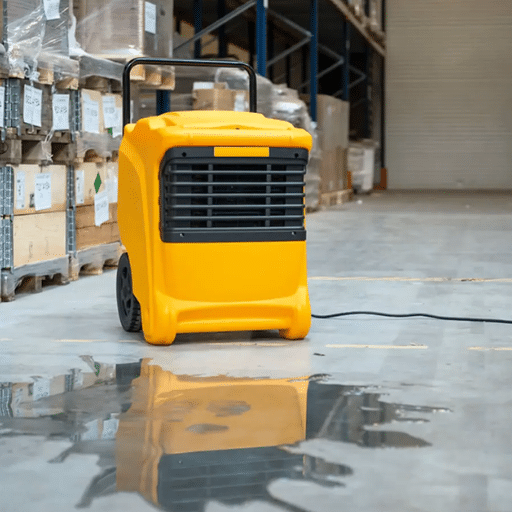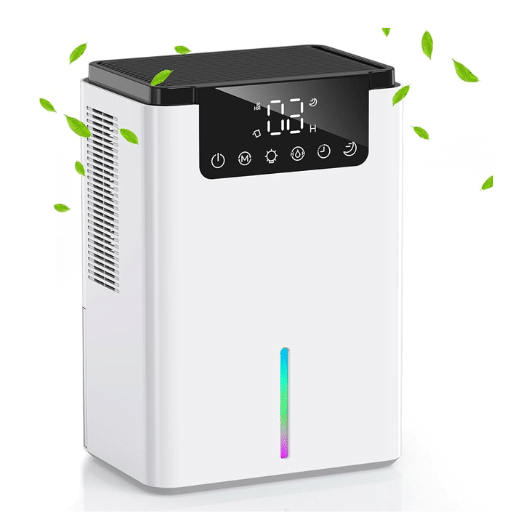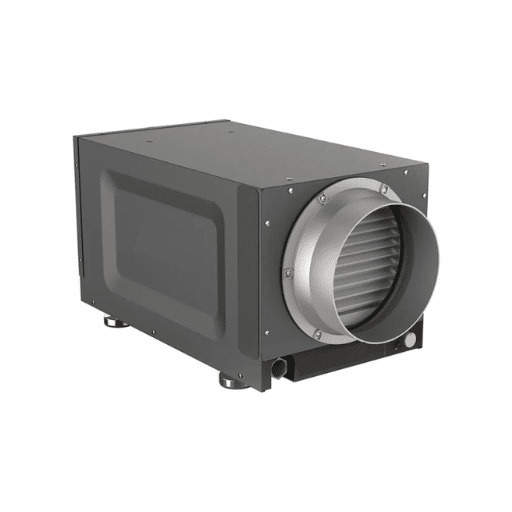
In industrial areas, it is very important to control humidity and keep it at the right level since to moisture being too much moisture, for example, might cause equipment breakdowns, damage buildings, and large quantities of products losing their quality. Industrial dehumidifiers that are portable offer a very strong and flexible solution for companies that are dealing with the same problems. These powerful tools, which are specifically built to last in harsh settings, can be found in almost every factory, warehouse, site, and other places where the problem of humidity needs to be sorted out. This article not only discusses but also highlights the features, applications, and advantages of portable industrial dehumidifiers while providing you with the needed information to make good choices concerning humidity control.
Understanding Dehumidifiers

The main function of a dehumidifier is to maintain the air moisture at a desirable level, and they perform that by taking up the extra moisture through condensation. The dehumidifiers take in the air, and send it through a cooling coil where the water vapor is condensed to its liquid state and then either collected in a holding tank or piped off. This whole procedure works to combat conditions that are usually associated with high humidity, like mold spores, fungus, metal rust, and decay of materials, etc. The industrial dehumidifiers are specially manufactured to handle and support high-volume demands in areas such as storage facilities, factories, and wherever else the conditions are tough and staying at right humidity has to be the top priority.
What is a Dehumidifier?
A dehumidifier is a machine that decreases and keeps the humidity in the air. Normal uses are for health and comfort, while others are for protecting materials and equipment from moisture harm. The device is, in fact, a sort of air processing machine; it pulls in air, cools it to the point where moisture gets collected and removed, and then reheats and discharges the drier air back into the environment. Dehumidifiers find their applications in homes, offices, and factories, where they are the solution to the problems of mold growth, condensation, and rust. Areas with high humidity levels, where dehumidifiers are used, will notice the dramatic change in the atmosphere as it becomes more stable and controlled. Today’s dehumidifiers are available in many sizes and with different technologies, from small portable units for living rooms to heavy industrial systems for multitasking purposes.
Types of Dehumidifiers: Commercial vs. Industrial
The main distinctions among commercial and industrial dehumidifiers lie primarily in their capacity, design, and application. Commercial dehumidifiers are targeted for medium-scale usage like offices, retail spaces, and small warehouses. Generally, they are movable, energy-efficient, and allow for the removal of a range of 50 to 100 pints of moisture per day, depending on the model chosen. These units usually come with humidity controls built in and help in comfort maintenance and in the prevention of moisture-related issues in small-scale environments.
On the contrary, industrial dehumidifiers are made for large-scale or specific tasks in places like manufacturing plants, storage areas, and construction sites. They are made to endure the highest levels of humidity and can get rid of hundreds of pints of water daily. Among the features of industrial units are: continuous drainage systems, rough construction for longevity in challenging environments, and coupling with HVAC systems for large-scale, gradual climate control. Generally speaking, commercial models may be enough for daily use, while industrial dehumidifiers‘ effectiveness is guaranteed even in the most demanding situations for moisture management.
How Dehumidification Works
Dehumidification is a process through which excessive moisture in the air is removed mainly by the method of condensation. Generally, the systems apply a fan for sucking the humid air over the cold coils in the dehumidifier. While flowing through these coils, the air’s temperature is lowered, leading to the condensation of water vapor into liquid. The liquid water is then either collected in a reservoir or drained away. Before the drier air is released back into the environment, it is reheated to a comfortable temperature. In the case of sophisticated devices, they might utilize desiccant substances that take up moisture directly from the surrounding air, which, after being heated, release the water and regenerate the desiccant. The performance of the dehumidification process is determined by the air temperature, relative humidity, and the size of the dehumidifying unit, among other factors. The use of this process is not only to stop mold and mildew from developing, but also to maintain the integrity of the building materials and to improve the air quality in the indoor areas.
The Importance of Humidity Control

For an indoor environment that is both safe and pleasant, humidity control is a must. High humidity can result in the formation of mold, damage to the building, and poor air quality. On the other hand, low humidity may bring about dryness, which is harmful to human beings as well as to the objects around them. Correct humidity regulation not only preserves the integrity of buildings but also prevents respiratory problems and supports energy conservation. What is more, the use of dependable dehumidifiers or humidifiers can be of great help in maintaining the suggested indoor humidity levels of 30-50%, which in turn guarantees a balanced and healthy atmosphere.
Effects of Excess Humidity on Environments
Mold, mildew, and bacteria are some of the living microorganisms that come to thrive in areas with high humidity levels, and they can be the ones responsible for the decay of the building’s materials, like wood, drywall, and insulation, among others, which ultimately leads to the weakening of the structure and the chance of expensive repairs. In addition, high moisture content in the air opens up the possibility for the terrible indoor air quality, which in turn causes people suffering from respiratory issues, allergies, and asthma due to the presence of indoor allergens and microbial growth. Besides, high humidity also causes condensation, which might, on the one hand, lead to the breaking down of the metal structures by means of rusting and, on the other hand, the decaying of the wooden parts through the process of rotting.
On the other hand, the excessive humidity is actually an extra load on the HVAC systems as they are then required to work harder to keep the room at a comfortable temperature, thereby, there is a concomitant rise in energy consumption as well as operational costs. In order to lessen these consequences, it is very important to adopt and implement proper ventilation systems, put the dehumidifiers to use, and also make sure that the moist areas, such as windows and foundations, are well sealed off. The environment gets benefits from these actions, and at the same time, it becomes a healthier place for living or working.
Benefits of Controlling Humidity in Industrial Settings
Humidity management is a crucial factor in industrial applications as it directly influences product quality, equipment performance, and the safety of workers. Excessive humidity may cause the proliferation of fungi, decay of machine parts, and deterioration of rare materials, which in turn hamper the smooth running of operations and the quality of the products. On the other hand, excessively low humidity may lead to the accumulation of an electric charge that can damage electronic parts and increase the risk of accidents.
Key Benefits
By controlling the humidity levels, the production conditions are kept very close to ideal, and waste is minimized. Also, the industry standards are met. For instance, in the manufacture of pharmaceuticals, the control of humidity stops the chemical reactions that can change the effectiveness of the drugs. Likewise, in the food and drink industry, it aids in retaining the flavor, aroma, texture, and shelf life of the product. Moreover, the proper humidity levels mean less energy consumption since the HVAC system runs more efficiently, which in turn results in lower operating costs. The use of such technologies, such as industrial dehumidifiers and monitoring systems, also contributes to workplace comfort, minimizes production stoppages, and promotes eco-friendly practices in the industry.
Relative Humidity: What You Need to Know
Relative humidity (RH) is the ratio between the current volume of water vapor in the atmosphere and the maximum volume that can be held in the same atmosphere at a certain temperature, represented by a percentage. It is a major factor in various ecosystems, such as comfort, industrial processing, and long-term storage of materials. The negative effects of high humidity compound the already existing heat stress, thus making it more uncomfortable; on the other hand, the low humidity creates a conducive environment for the proliferation of molds and eventually results in improper functioning of the manufacturing operations. On the contrary, the very low RH can dry up the air, accumulate static electricity, and ultimately cause the destruction of sensitive materials like wood and paper.
Optimal RH Levels
Keeping the optimal humidity level depends on the use and the surrounding environment. For instance, a home setting usually requires a range of about 30% to 50%, which provides comfort and works against allergens. Industrial processes would need even stricter and tighter RH control, such as in the case of drug storage, where the exact levels are used to keep the substances from degrading. The advanced monitoring equipment can know precisely what the RH is, while humidifiers, dehumidifiers, and HVAC systems are among the regulating methods that are most effective. The RH management understanding is, hence, a prerequisite for an organization to enjoy increased productivity, reduced risks, and a more sustainable ecosystem that lasts for a long time.
Portable Industrial Dehumidifiers

Portable industrial dehumidifiers are the most necessary machines to handle humidity in different places like warehouses, building sites, and water damage repair. Such dehumidifiers are made to work over the top and take moisture out of the air, and in doing so, they stop mold, rust, and damage to structures from happening. Such machines have been made with strong construction, high moisture extraction capacity, and user-friendly controls for operation in the toughest conditions. Being portable allows the machines to be moved around easily, thus they are a perfect answer for both the temporary and permanent dehumidification process.
Features of Portable Industrial Dehumidifiers
High Moisture Removal Capacity
Industrial dehumidifiers, which are designed to handle vast volumes of air, are capable of withdrawing the moisture in huge quantities daily and therefore are apt for the places where the humidity is very high, like warehouses, construction sites, and factories.
Durable and Robust Construction
These units are built to endure the toughest conditions and are made of corrosion-resistant materials; moreover, they have reinforced parts to ensure that they last long even in tough industrial environments.
Advanced Control Systems
They come with user-friendly controls, for example, digital displays, and programmable settings, giving a precise humidity reading, and users can also make small changes to the humidity level to keep it at the desired level.
Portability and Flexibility
Portable industrial dehumidifiers that are often designed to be compact and have heavy-duty wheels can be rolled and moved easily to different places to dehumidify them as per the need of that particular place.
Energy-Efficient Operation
The majority of the models make use of energy-saving technologies, for instance, automatic defrost systems and environment-friendly refrigerants, allowing them to lower operational costs while still being able to perform at the best level possible.
Wide Operating Range
Dehumidifiers of this type are made to work efficiently in a broad spectrum of temperatures and humidity situations, thereby ensuring that they provide dependable service in various settings.
Optional Features and Customization
Some machines present extra options like inbuilt pumps, HEPA filtration systems, and remote monitoring features, which enable users to tune the machine to the specific operational needs.
Such features make it easier and more reliable to control moisture on a large scale with portable industrial dehumidifiers in demanding situations.
Choosing the Right Capacity: Pints Per Day Explained
In determining which portable industrial dehumidifier to purchase, it is very important to have a good grasp of its capacity, usually expressed in pints per day (PPD), so that the performance will be at its best. PPD is the number of pints of moisture a dehumidifier can take out of the air within 24 hours under pre-defined conditions, usually at 80°F and 60% RH.
To help decide the right capacity for you, think about the following factors:
Space Size
In the case of bigger spaces, a higher PPD capacity is necessary so that the moisture extraction will be sufficient. For instance, a small room that is about 1,000 square feet could require a unit that is rated for 50-70 PPD, while areas larger than 2,500 square feet may need dehumidifiers that can handle 100+ PPD.
Moisture Levels
Places with very high humidity, like basements, flood-affected regions, and industrial areas, might need dehumidifiers with high PPD ratings since the air is very rich in moisture.
Environmental Conditions
The temperature and the humidity level have direct effects on the efficiency of a dehumidifier. You should check for products that are made to work in low temperatures or that are very effective in cold climates.
When the PPD capacity is adjusted to fit the size, humidity level, and environmental conditions of your application, then you have a choice of a unit that can give you effective, energy-efficient moisture management that is specifically designed for your operational needs.
Energy Efficiency in Heavy-Duty Industrial Dehumidifiers
When it comes to efficiency in large-scale industrial dehumidifiers, one of the factors to be considered is the energy aspect, which will ultimately be the most important for the customer. This refers to the incorporation of modern-day technologies, which are meant to reduce energy consumption without affecting performance. The main aspect of the use of variable-speed compressors, which adapt the machine’s operation to the current dehumidification needs, thus cutting down energy consumption to a large extent, is an important feature to be noted along with the others. Furthermore, the recycling of exhaust heat for preheating or other operational functions through energy recovery systems can substantially increase efficiency in industrial areas.
Expect that a unit with the installation of the high-efficiency heat exchangers will be able to get the best or the most thermal transfer and the least energy loss during the dehumidification process. Certifications like Energy Star, where it is applicable, are good indicators of meeting the requirements of very stringent energy-efficiency standards. Furthermore, periodic filtering and coil cleaning are a must-do for maintenance; otherwise, it can lead to performance reduction and energy demand increase over time. If you go with the models that incorporate these features and that you maintain optimal operating conditions, businesses would successfully control moisture at a lower operational cost.
Popular Brands and Models

Honeywell TP Series
This series, which is dependable in performance and energy-saving, is suitable for both residential and commercial use. Heat and light are dissipated in different ways through the use of different models, as they are all Energy Star certified and come together with user-friendly digital controls.
Frigidaire High-Efficiency Dehumidifiers
It is a basic hygiene practice to buy nothing but with great durability and high efficiency properties; in addition to that, these dehumidifiers provide advanced humidity control and great energy-saving features, which have earned them to be among the best-selling products.
Aprilaire Whole-Home Solutions
This company mainly deals with large-scale and whole-house dehumidification, and they deliver professional-grade, super-productive units that can cater to huge areas.
GE Dehumidifiers
GE models come at a price that is good for the average homeowner, as they combine cost-effectiveness with effective dehumidification performance and good durability.
The manufacturers are not only taking precautions to ensure the products are of top quality, but they are also taking measures to make the products available to all and to guarantee that the right product is delivered to the right customer by having their performances being depicted in different applications.
Top Brands for Portable Industrial Dehumidifiers
Dri-Eaz
The Dri-Eaz portable dehumidifiers are extremely reliable and durable, and are thereby very much appreciated in industrial applications. These devices manage to siphon the moisture even from rough places like construction sites and water-damaged areas, thanks to their high water extraction capacities, low-grain performance, and built-in pump options for continuous drainage, among others.
BlueDri
BlueDri is famous for its portable dehumidifiers, which are versatile and efficient at the same time; hence, they are perfect for restoration projects and big moisture control. The dehumidifiers are made from strong materials and thus can tolerate industrial use very easily; moreover, they have user-friendly digital controls, heavy-duty wheels, and superior energy efficiency.
AlorAir
The technology and portability of AlorAir dehumidifiers made them popular in industrial and commercial settings. The models come with high-efficiency performance, humidity sensors, and automatic defrosting systems that help in keeping the moisture at bay in low-temperature environments and under prolonged usage conditions.
These brands are the embodiment of excellence in portable industrial dehumidification and, at the same time, meet the demands of professionals who need both performance and durability in a variety of applications.
Comparative Review of Leading Models
The best portable industrial dehumidifiers have been compared, and three models that have scored highly based on their performance and user reviews are always on the list:
| Model | Daily Capacity | Key Features | Best For |
|---|---|---|---|
| Model A | 150 pints per day | Advanced humidity sensors, rotary compressor, automatic defrost feature (works down to 33°F), strong construction | Large warehouses and construction sites |
| Model B | 120 pints per day | Energy-efficient with environmentally safe refrigerants, smart control panel, built-in pump for continuous drainage | Constantly moist areas such as crawl spaces and basements |
| Model C | 135 pints per day | Compact design, rugged metal body, excellent filtration system, multi-speed fan options | Various industrial and business applications require air quality improvement |
The three models mentioned above have different features, but they all come with reliability and efficiency. Nonetheless, experts are still recommending the choice of dehumidifiers by taking into account the area size, climate conditions, and application requirements for getting the best performance.
Replacement Considerations for Dehumidifiers
When a dehumidifier is being replaced, certain key elements have to be kept in mind so as to be sure of the device’s effective operation and longer life. Start with the assessment of the unit’s capacity, which is specified in pints of moisture removed per day, and make sure it is in line with the size and the humidity level of the room. On top of that, energy efficiency should be one of the factors in the selection process of the dehumidifiers, where those with ENERGY STAR certification should be highly considered because they consume less power but still work at the same level as the best.
Then, the durability and reliability of the dehumidifier should be evaluated. Features such as, among others, good construction, strong compressors, and high-class parts that are able to bear the strain of constant use should be the ones aimed at. Noise is another factor that must be checked, especially in residential or office settings, in order to make sure that the device does not interfere with the daily routine.
Lastly, when to replace and cost-effectiveness are very important. If the costs of the repairs get higher than 50% of the cost of a new appliance or if the appliance has already lived its typical lifetime of 5-10 years, then recycling it is the right choice. Maintenance and filter changes can be the new device’s life span and performance enhancers, thus they are to be conducted regularly.
The Future of Dehumidification Technology

The technology behind dehumidification is making significant improvements by focusing on the areas of energy efficiency, durability, and environmental friendliness. Smart technology is going to be a part of the future models, whereby a user can monitor and even control the humidity levels from a distance via a mobile app. It is also predicted that the reduction of noise levels to a very small extent in households or offices will happen due to the use of the latest materials and design techniques that have been invented. As part of their continuous effort to be eco-friendly, manufacturers are working on using refrigerants that are less harmful to the environment and making their products compatible with renewable sources of energy. These changes are very much in line with the manufacturers’ intention of providing dehumidification solutions that are effective yet have less negative impact on the environment.
Innovations Expected by 2026
The year 2026 will see the application of advanced sensor technologies in dehumidifiers for real-time, accurate tracking of humidity, air quality, and temperature. The cooperation with AI is likely to result in the development of a machine that can learn and adjust its settings to continuously maintain the most comfortable indoor climate while using the least possible energy. Also, smart connectivity will become an integral part of the devices, making it easy to control them from IoT platforms and through voice assistants.
Moreover, compact and modular designs will give the dehumidifier portability and efficiency, which will make it suitable for small indoor spaces without sacrificing its performance. Also, the innovations in compressor technology and the use of thermoelectric cooling will facilitate lower noise emissions and more energy-efficient operations. Manufacturers are also pushing the envelope on the use of eco-friendly refrigerants, like hydrofluorocarbon-free (HFCs), that comply with laws and regulations around the world. All these advances will together provide the consumers with greater convenience, save the manufacturers from operating costs, and contribute to a greener planet in the long run.
Environmental Considerations in Dehumidifier Design
In approaching dehumidifier design, I would prioritizeenergy consumption reduction and eco-friendly material selection as key environmental factors. Among other things, the application of modern technology, such as low-global-warming-potential (GWP) refrigerants and compressors with high energy efficiency, is necessary for mitigating the environmental impact. Besides, designing for recycling and adopting environmentally friendly production methods would not only comply with global environmental standards but also enhance sustainability over time.
Trends in Heavy-Duty Industrial Dehumidifiers
Heavy-duty industrial dehumidifiers keep evolving along with the above-mentioned trends, i.e., higher energy efficiency, smart technology incorporation, and sustainability. Manufacturers are installing up-to-date control systems that bring about humidity control and monitoring at the same time. Such systems usually depend on the Internet of Things (IoT) technology, which makes it possible for remote operation, predictive maintenance, and more advanced data analytics to be a part of the performance optimization process. Moreover, the reduction of operational costs and impact on the environment is strongly reliant on the use of energy-efficient parts like variable-speed compressors and ultra-efficient fans.
Sustainability comes next as a major concern, with several dehumidifiers being made of recyclable materials and engineered to pass the strictest environmental standards. Moreover, climate-friendly refrigerants have become the norm, which not only eliminates concerns over global warming but also complements the worldwide initiative to limit the release of greenhouse gases. Furthermore, modular designs have become fashionable, which gives more versatility in the industrial sector and makes maintenance of the device easier. All these trends are testimony to the industry’s drive for innovation as well as its environmental responsibility, and that the dehumidifiers are capable of meeting the ever-changing requirements of the contemporary industrial milieu.
Reference Sources
Eco-friendly Pressure Drop Dehumidifier: An Experimental Study
Key Findings: This study explores the energy consumption of dehumidifiers, ranging from 720 W in residential settings to 3150 W in industrial applications. It highlights the advantages of desiccant dehumidifiers, which create a lower partial vapor pressure, making them more efficient in industrial environments.
Experimental Investigation of Dehumidification Process Using Thermoelectric Modules
Key Findings: Developed a portable thermoelectric dehumidifier (TE-D) tailored for China’s climatic conditions. The study measured the overall water collection efficiency and energy consumption.
Solar Desalination by Humidification–Dehumidification
Key Findings: Investigates a dehumidifier integrated with a solar desalination system. The system uses a single duct with a condenser to generate unsaturated air, demonstrating potential for sustainable industrial applications.
Frequently Asked Questions (FAQs)
How does a portable dehumidifier help in restoration after a flood in 2025?
Industrial portable dehumidifiers are very efficient in quickly absorbing humidity from indoor areas following a water disaster, and thus, the chances of damage caused by water, such as decay, rust, and mildew, are reduced. In such situations where restoration takes place, they will be used together with pumps and air movers for drying the concrete floors, the stock, and the electronic equipment—usually on a still high-capacity cycle to fulfill even the most demanding drying targets. In the case of 2025 works, selecting units with sufficient cfm and desiccant dehumidifier options is advantageous in the case of cold storage facilities or in places where the refrigerant models lose their efficiency.
What does a commercial dehumidifier do in a warehouse or storage facility?
A commercial dehumidifier regulates humidity in the warehouses and storage rooms, thereby saving the inventory, the quality of the end product, and the infrastructure. These systems not only prevent the occurrence of rust on machines and electronic devices but also reduce the chance of mildew developing on the goods stored and minimize expensive downtimes. For these tough environments, the capacity requirements should be calculated according to the area, ambient humidity, and transport or handling patterns in order to select and install a suitably sized, high-capacity unit.
Can the technology of desiccant dehumidifiers manage to dry the cold storage rooms and indoor areas effectively?
Yes. Desiccant dehumidifiers perform exceedingly well in low-temperature ambient conditions where machines based on refrigerants do not perform well. They get rid of moisture irrespective of the temperature, thus making them a perfect choice for cold storage rooms, concrete curing cycles, and indoor areas with strict FDA or quality control requirements. In fact, desiccant systems are so often used when there is a need for strict moisture control that it is necessary to avoid failure or contamination of a product.
In what ways do industrial dehumidifiers prevent corrosion and protect electronics?
Industrial dehumidifiers operate at lower RH levels, thereby preventing corrosion on metallic parts and the failure of sensitive electronic devices. By maintaining stable air conditions, they prevent moisture from condensing on circuit boards and structural steel, which protects the manufacturing process and thus costly equipment. This is very important in factories where even a little moisture can cause the product to be rejected in the final inspection.
What are the factors that are taken into account when sizing a portable industrial dehumidifier for a facility?
The sizing process should include the size of the room, the amount of moisture (flood recovery or ambient control), the number of openings, how porous the concrete is, and the time required for drying. Determine the required capacity in pints per day or by cfm and take into account the safety margins for inventory and high-demand processes. It is also important to decide whether a desiccant dehumidifier or high-capacity refrigerant unit is more suitable for your climate and what the regulatory expectations in 2025 are.
Are portable industrial dehumidifiers intended for preventing structural damage in large facilities?
Definitely yes. Well-placed and properly used dehumidifiers for industrial areas minimize water movement into the building components, thus preventing the occurrence and spreading of fungus, rotting, and cracking of the concrete. For the long-term protection of plants, you can incorporate the moisture control into the HVAC planning, keep an eye on the humidity in the environment, and use machines with enough airflow to cover the big floor areas and complicated layouts to avoid costly repairs and downtime.
What are the maintenance and operating practices that guarantee proper moisture control in very demanding environments?
Changing filters regularly, managing condensate, cleaning coils periodically, and keeping track of the condition of the desiccant rotor (if it is applicable) are things that will make your units operate at their maximum efficiency. Preventive maintenance should be scheduled to ensure that no one is caught off-guard by breakdowns, maintenance procedures should be available and staff trained to execute them, and cycles should be documented for quality audits. In very strict environments like FDA-regulated plants, logs showing continuous control of air conditions should be maintained.
What is the effect of portable industrial dehumidifiers on cost, delivery, and deployment for time-sensitive projects?
The high-capacity portable dehumidifiers can reduce the total time that can be and is associated with the drying process, while in the worst case, still preserving the rental or purchase cost in urgent restoration projects. Fast delivery or free shipping options in the U. S. and stock availability that can serve the tightest schedule should be part of your supplier search. Total cost assessments should include energy use, installation, and possible savings through avoidance of product loss or structural damage.