Often overlooked, garages help to preserve cars, tools, and equipment from harm due to high moisture levels; all the more reasons to consider keeping optimal atmospheric conditions within them. Anything above a normal humidity range translates to the harmful presence of rust, mold, and mildew growth, and building structural decay that could weaken the integrity of materials that occupy space within, at the risk of some disgusting health hazards. This review is how a dehumidifier can be the cornerstone in regulating humidity levels to provide a cleaner and safer environment for your garage. Knowledge of how moisture affects and how a dehumidifier functions will offer you insight in terms of whether to meet the garage and its contents.
Understanding Humidity in Your Garage

The high humidity in a garage is primarily caused by water getting inside from various sources, like unsealed doors, cracks in the walls, or poorly insulated windows. Moreover, activities like parking wet cars or storing wet items can introduce significant moisture. Environmental factors such as high outdoor humidity or proximity to water sources can also exacerbate the situation. This excess humidity can lead to condensation, ultimately leading to mold growth, rust, and decay of the material if there is no proper ventilation or moisture control. So, the abovementioned sources must be given tight attention for maintenance of garage environments in the best possible way.
What is Humidity and Why It Matters
The humidity is a concentration of water vapor in the atmosphere, which has the most substantial impact on comfort, safety, and the sustainability of various environments. When attempting to regulate the evaporation rate of your body’s water-cooling system, humidity (particularly relative humidity) influences what is felt like the ambient temperature and how different materials might react under environmental conditions. Too much humidity inside enclosed spaces (e.g., garages) offers a perfect medium for the formation of mold, rusting, and wood warping. With low humidity, materials may crack and turn brittle. Proper care for humidity, using the applicable options of ventilation, dehumidification, and observation, is essential for the longevity of the structure, the evolving health hazards, and the safety of the goods being stored.
Signs of High Humidity in the Garage
Moisture exposure in the garage may become noticeable via any number of processes. High humidity can lead to moisture-related issues. A primary symptom of this kind of exposure is localized condensation on the window or door of a metal garage when warmer air collides with cooler surfaces. Another by-product of high humidity underscores a source of musty or damp stench popularized by mold or mildew growing. Signs of impending damage from the higher humidity in the garage would be visible mold or mildew staining on walls, ceilings, or the contents that are stored in an area that receives inadequate ventilation. The appearance of warped wood, peeling paint, or corrosion on tools and metal fixtures would manifest as stronger evidence that the air is saturated with moisture. Detection of these early indicators holds the key to lessening the effect of high humidity while minimizing the extent of damage to property or anybody’s health. Regular monitoring, along with humidity gauge use, will help to recognize that appropriately and resolve the problem.
Key Warning Signs to Watch For:
- Condensation on windows and metal surfaces
- Musty or damp odors
- Visible mold or mildew staining
- Warped wood and peeling paint
- Corrosion on tools and metal fixtures
Effects of Excess Humidity on Garage Items
A garage’s excess humidity is known to hasten the deterioration of various items and materials stored therein. For example, moisture encourages the corrosion of metal components such as tools, hardware, and vehicle parts, where rust forms and may impair their functionality. Any wooden items made from timber, like furniture or storage units, when exposed to moisture over a long period, might warp, swell, or crumble with a lack of structural stability. Cardboard boxes and paper goods can become moist in humid environments, leading to mold infestations or complete disintegration. Even some electronic devices and appliances may be at risk, as moisture can wreak havoc on internal circuits and cause misbehavior. Storing things the right way in air-tight containers and using dehumidifiers by keeping available fresh air will obviate many of these risks and ensure the preservation of stored goods.
Do You Need a Dehumidifier in Your Garage?
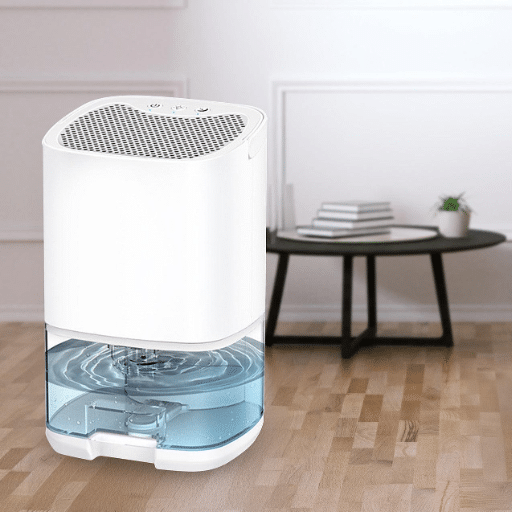
Yes, a dehumidifier may help a lot of times in your garage, especially when it is too humid. Extra moisture may lead to aspects including mold, rust, and damage to your goods, vehicles, or equipment. One other reason for installing a dehumidifier is if the garage is poorly ventilated or if you reside in a damp climate. In this way, both the structure and its contents can be protected by maintaining the moisture level. If you notice any of the warning signs, it is most probable that a dehumidifier is required. Practice good judgment by reading the humidity on a regular basis–anything above 60% usually indicates that a dehumidifier may be called for.
Reasons to Consider a Dehumidifier
Preventing the Growth of Mold and Mildew
If you have high humidity levels, mold and mildew are just going to spring up and take hold if you let them on your walls, your furniture, and other belongings, posing a very serious health hazard. By reducing the amount of moisture in the air, a dehumidifier stops mold and other growth in its tracks.
Protecting your Property and Structure
Warped wood, rusting metal, and malfunctioning electronics are all problems associated with excess humidity in an enclosed space. Equilibrium will prevail with the proper moisture level, which will keep the structure of the garage intact while fending off its most valuable equipment, even when humidity problems are indicated.
Environmental Quality Improvement
Dry coolness will reduce the presence of dust particles in the air, particularly microscopic bacteria such as mold, releasing allergens into the air. Increased comfort and enjoyment in places where inhabitants experience respiratory issues or allergies.
Comfort and Energy Advantages
Damp-proofing your garage with a dehumidifier ensures the length of life, health, and comfortable living, while also preventing damage from expensive outlays.
Assessing Your Garage Environment
The first step in deciding if your garage needs to be dehumidified is to evaluate whether your garage is currently suffering from excessive humidity conditions. Essential factors to be considered in this regard are the average humidity levels, potential points of water intrusion, and the presence of mold or mildew. Start by taking some dampness readings by means of a suitable hygrometer. Above 50% indicates high humidity levels. Therefore, take an all-around inspection of the structure – look for obvious gaps, like those between doors or windows and flooring, through which water or air could be leaking into the room. Also, the aforementioned mussiness smell or molding – early indicators suggesting humidity issues – needs to be kept in consideration. Make an assessment of these changes to act upon targeted styles of efficient dehumidification for the future.
When to Use a Dehumidifier
If your house has humidity levels more than 50% for much of the time, it is a must to have a dehumidifier since that is favorable to the growth of mold, dust mites, and structural damage. Typical conditions that could need the dehumidifier include damp basements, areas affected by water leaks or flooding, or even when there is a seasonal spike in humidity. Condensation on windows, a musty odor, or moldy areas are physical signs that suggest it is high time you got a dehumidifier. Such removal would prove helpful in homes already having substantial insulation, resulting in closed-up divisions lacking ventilation, and also walls with insignificant airflow, including bathrooms and laundry rooms. Dehumidifiers will do a great job in maintaining your home more comfortable and thus, healthier through the extraction of excessive humidity from the air.
Choosing the Right Dehumidifier for Your Garage
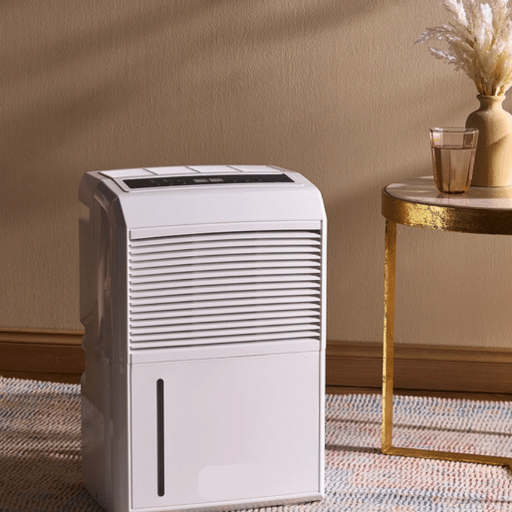
If you’re really serious about picking the right dehumidifier for your garage, you must consider factors like storage space size, average humidity, and unit capacity. First, calculate your garage’s square footage and then choose a dehumidifier with an appropriate pint capacity. For garages located in more humid zones, go for larger units that can handle excess moisture. Make sure most dehumidifiers have a tough construction to cope with reverse temperature disturbances and encounters with dust or debris. Extra features like auto-restart, continuous modes for drainage, and energy efficiency are also conducive to your convenience and pocket ease. Choose built-in controls with in-built humidistats for ideal and easy control of humidity levels.
Types of Dehumidifiers: Which One is Best?
Dehumidifiers can be classified primarily into three types depending on the technology and purpose they serve:
Refrigerant (Compressor-Based) Dehumidifiers:
Refrigerant dehumidifiers are the most common and highly effective in warm and humid environments. They work similarly to air conditioners, whereby they allow the humidity to condense on refrigerated coils. Refrigerator dehumidifiers are recommended mainly for basements and large rooms and work best at temperatures above 65°F. However, the frost buildup in cold temperatures can affect the performance of these dehumidifiers. Opt for dehumidifiers that come with auto-defrost functions for the occasional fluctuation in temperatures and better performance.
Desiccant Dehumidifiers:
Desiccant dehumidifiers work on entirely different principles. They work with material that absorbs moisture, which works well in cold environments where refrigerant dehumidifiers are less efficient. Desiccants are generally quieter and lighter and would do well with smaller spaces like garages and unheated spaces. Nonetheless, they consume a lot more energy and are generally for specialized use rather than for general household purposes.
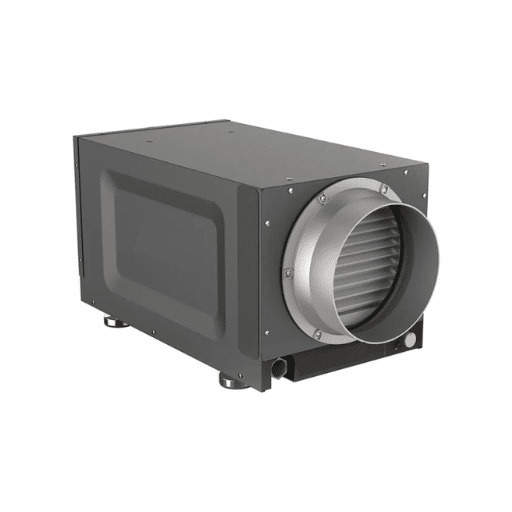
Whole-House Dehumidifiers.
They deal with high-volume integration with your HAVC system for managing humidity levels throughout the entire house. Hence, it is preferable for areas prone to chronically high humidity where the requirement to treat high volumes of air exists. With a higher initial cost, a whole-house system can be considered an energy-efficient long-term solution for extensive coverage.
The best units vary depending on room size, room use, moisture levels, and hyalophages. In the case of a moderately low-moisture climate during most of the year, refrigerant units appear to be relatively unacknowledged if one just wants humidification. However, desiccant units may be preferable in cooler situations. On the other hand, whole-house units are best for total integration across large properties. While selecting such machines, use the ER (Energy Efficiency Ratio) ratings, sound ratings, and other special features, particularly if you need programming.
Features to Look for in a Garage Dehumidifier
There are certain essential features you should consider when shopping for a garage dehumidifier in order to ensure its performance.
- Capacity: Buy a humidity remover with a capacity enough to cover the square footage of your garage. These humidifiers come rated in pints per day, and bigger models should be considered for bigger or more humid spaces.
- Operating Temperature Range: Garages will experience changing temperatures, especially in the colder months. Look for properties that work efficiently in lower temperatures. This could involve an anti-frost or auto-defrost feature.
- Moisture Control Settings: Adjustable humidity controls allow you to set and maintain desired moisture levels within the range of 30% to 50% normally, which is advantageous to keep your garage mold and rust-free.
- Addon Drainage System: Your car would love it when you buy a model of a garage humidifier with continuous drainage options, which means models with a hose connection should be considered to reduce the pain of manually emptying the water tank very often.
- Durability and Portability: Ease of movement and longevity from rough construction and design are enhanced by features such as carrying handles or caster wheels.
- Energy Efficiency: A great long-term energy-saving point! A good choice would be Energy Star appliances or similar energy efficiency ratings.
- “Silent” in Practice: For extensive garage use, the noise of a dehumidifier is an important aspect, especially because the garage is attached to your house. Look out for quiet units!
- Extra Features: Also, you certainly want to have dehumidifiers wherein you can program timers for them, or automatic air filters, or automatic shut-off protections which deal with automated collection.
Implementing most of these factors—the unit, the specific requirements of your room—will make sure you get a maintenance-friendly, efficient garage dehumidifier that meets all the criteria while preserving the integrity of your storage space.
Energy Efficiency: Understanding Energy Star Ratings
Energy Star labels are the most important set of energy indexes that come in refrigerators–so in garage dehumidifiers. These appliances have the Energy Star label; then, by then, the related energy efficiency criteria guided by EPA and DOE are fulfilled. Such verified and chosen appliances consume less power than those with a lower scale of proper functioning, converting to reduced electrical charges and still underlining the other green The signing of EollarationsGreen is only to serve as an investment in one’s own productivity.
In terms of dehumidifiers, one widespread approach to establishing the energy efficiency is through the energy factor (EF) or integrated energy factor (IEF). This Energy Factor, or IEF, is measured in liters based on the amount of water extracted per kilowatt-hour (kWh) of electric current consumed. The higher the EF or IEF values, the more energy-efficient the dehumidifier is. In general, there will never be an element of inefficiency in an Energy Star-rated dehumidifier because the process of both meeting and maintaining efficiency is subject to stringent scrutiny.
An optimum energy-efficient dehumidifier should always be preferred where the unit capacity, the amount of space to be covered, and the energy consumed in different operating modes are highlighted. These Energy Star-certified units bring savings in energy costs and eventually pave the way for sustainable living.
Installation and Maintenance of a Dehumidifier in Your Garage
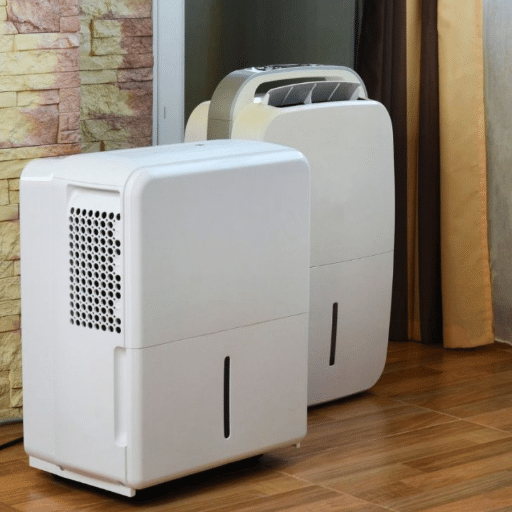
To install a dehumidifier in your garage, first make sure the appliance is out of the box and placed on a flat surface, and not leaning towards a wall or object that can obstruct the airflow. It’s strongly recommended that it be placed close to a power outlet for easy access, while attentive consideration should be taken with email to a possible site above which might host the rarity of a water drain. Specific installation instructions—if necessary—should be consulted in the manufacturer’s instruction manual.
Once the unit is operational, maintenance is the most rigorous stage. Empty the water reservoir regularly, if not draining it off the ground. The filter should be cleaned or replaced in the manner envisioned by the maker to complement effective running. The coils should be checked occasionally to make sure they do not have dirt multiply upon them; ideally, the coils should be washed if necessary. Remember to unplug it all at once before maintenance, for safety’s sake. Properly placed and maintained dehumidifiers give optimal results and longer life.
How to Install a Dehumidifier in a Garage
-
Choosing the Best Location
The humidifier should be set in a central position of the garage where air movement is not obstructed. Keep the appliance at a distance of 6-12 inches from all walls or other objects so that ventilation can occur effectively.
Resist placing the machine close to sources of dust or dirt—that could all make the machine bug down.
-
Energy Supply Requirements
Ensure that there is a compatible electrical outlet in the garage that can supply the required power to the dehumidifier. Check if the voltage and current ratings of the Power outlet can match those of the appliance. And try not to use extension cords, as they may cause overheating
-
Drainage Setting
Choose either built-in reservoirs or continuous draining. With a garden hose, connect the unit to the drainage port. Make sure the hose slightly tilts down to ensure the correct movement of collected water to a floor drain or any appropriate outlet.
Plug the unit into the power and set up the desired humidity level, which pretty much differs from one application to the next but in general falls between 30% and 50% for garage use. Consult the manufacturer’s guide for recommended startup settings.
-
Assessing the Initial Operation
Keep your dehumidifier on for a few hours and observe its performance. You must ensure that moisture is not at levels favored by molds and that the drainage system is working.
Following these instructions, you have really well installed your dehumidifier now, which is very much needed to tackle moisture and, of course, curb over-humidity in your garage.
Using a Dehumidifier with a Drain Hose
A dehumidifier with a hose adds simplicity to the functionality by removing water continuously. Installing a hose requires the following steps:
Finding the Drain Outlet
Probably, it is around the water tank where the outlet of the drain can be found. However, you must consult the manual for hose compatibility and the precise location of the outlet.
Attach th’ Hose
Fasten a standard hose that fits the outlet of the drain flush; hoses ranging from half an inch to five inches in diameter have always served the previous models. The best way is to refer to the user manual for better advice. Please make sure to attach it in a straight line without twisting the tube.
Examine the Direction of the Hose
Enough slope should remain on the drain line to let water flush out freely at a place with a drainage option like a floor drain, sink, or window. Unlike in specified cases, bathroom dehumidifiers never come without a pump.
Confirm and Observe that Everything Works Properly
After having connected the dehumidifier to the drain hose, operate the dehumidifier and ensure that water is flowing correctly toward the hose. If any leak or blockage is noticed, adjust the hose’s position to fix it.
Preserve the System
It is recommended to regularly monitor the drain hose and clear any debris that may not normally be seen by the eye, like the mild growth of mold and other debris. This small detail stresses the system a lot, and it makes for effective pastime, which can result in considerable water damage over time.
By working in that line, you will ensure the dehumidifier with the drain hose works at its best, which removes the excess moisture and helps keep the area comfortable and dry. It is important to get information from the manufacturer for further tips, which will be area-specific to your dehumidifier model.
Regular Maintenance Tips for Longevity
Here are the most useful practices to ensure that your dehumidifier has optimal effectiveness and an extended lifespan:
Clean Your Air Filter or Replace It on an Occasional Basis
Manufacturers often provide dehumidifiers with an air filter to serve as an allergen and dust-catcher. Try cleaning the filters at about every two to three weeks with warm water and mild detergents. Replace the filter if it looks pretty bad or is worn out according to the manufacturer’s instructions to ensure good airflow and efficiency.
Inspect and Clean the Coils
The dirty coils are responsible for drastically reduced efficiency and so produce poor cleanliness over a long period of time. Unplug the unit to start off, and use a mild-temperature cloth to clean it with a vacuum to clean off some dirt. Steer clear of abrasive materials, as they could further damage the coils.
Clean and Rinse the Water Collection Bucket
Those dehumidifiers that contain water in a tank instead of using a drain hose should have the tanks emptied daily or as necessary and cleaned weekly in a bucket with a solution consisting of water and white vinegar in an attempt to prevent bacterial and mold build-ups.
Check for Hose Clogging
In order for dehumidifier drain hoses to work well, the hoses will have to be checked to ensure they’re free of coils or clogs that could prevent water from flowing. Periodically break the connection of the hose and flush water through it to prevent any buildup.
Monitor the Humidity Sensor and Settings
Verify that the humidity level settings are functioning with a correctly operating sensor. Over time, sensor readings can vary; the user manual gives instructions for test settings and how to recalibrate or replace sensors if necessary.
Keep the Unit in a Well-Ventilated Area
Dehumidifiers should be left at a distance of 6-12 inches from walls or furniture at all times to provide proper room for free airflow. Good ventilation around the unit will keep it working at optimum efficiency.
To be included: Schedule Professional Maintenance Periodically
It can be beneficial to have a professional check the dehumidifier for failure every 12 to 24 months for maximum efficiency. The technician is rated or trained to look for possible glitches in the internal components of the dehumidifying system: compressor, fans, in addition to other components.
Industrial and Portable Dehumidifiers for Garages
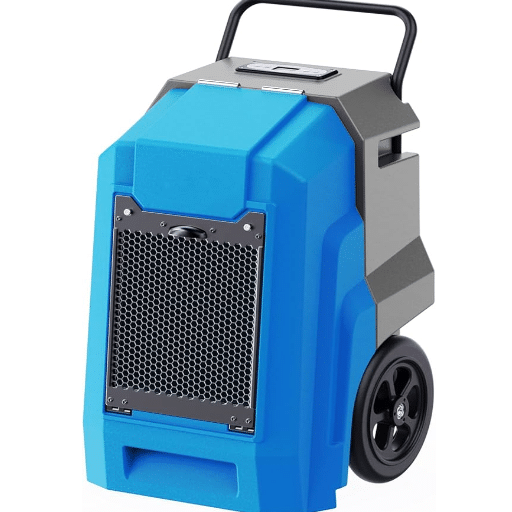
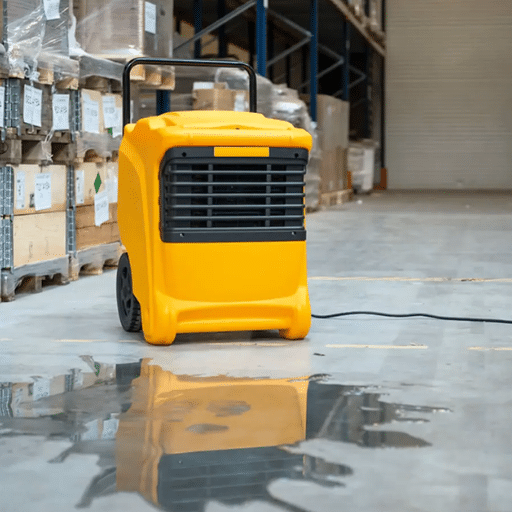
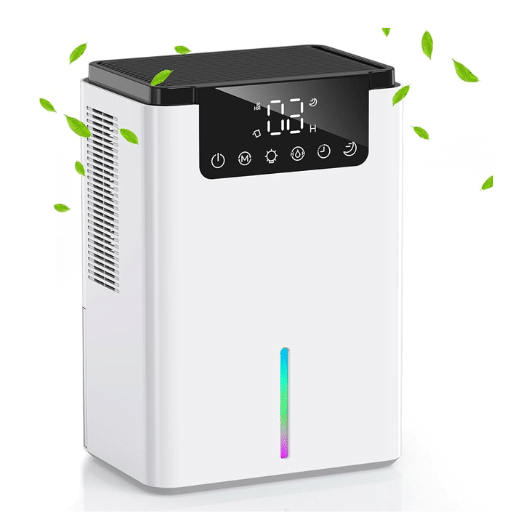
When choosing dehumidifiers for a garage, whether portable or industrial types, it depends on the size of the space and the degree of moisture control needed. Industrial dehumidifiers are made to address larger spaces or severe humidity cases, as they possess higher capacity and strong performance. Industrial dehumidifiers are generally rugged and capable of continuous operation. On the flip side, for small garages and moderate humidity levels, portable dehumidifiers are ideal without any concern. They are lighter and less energy-consuming compared to the industrial types. Moreover, they are more mobile.
For many standard regulation-size garages, high-capacity portable dehumidifiers with the choice of manual control should be adequate. However, in the case of bigger sites or where there are excessive issues of moisture, a commercial-grade dehumidifier would be appreciated since it is highly effective and very stable. Look at the unit’s moisture-removal-in-pints-per-day rating and match it to the specific conditions your garage offers for optimum energy efficiency.
When to Use an Industrial Dehumidifier
Without an industrial dehumidifier in these environments that face perpetual high humidity, extreme moisture, or water damage, such units are designed to handle areas larger than standard dehumidifiers fail to cover, such as huge garages, workshops, or attics. Due to their large space capability, they can handle moisture-heavy places fast, accompanied by very-poor-ventilation environments, as in attics, with moderate spaces of condensation. All these are conditions under which mold may cover any structure or items stored in these premises. Whenever your premises are mostly above 60% RH or are entirely dealing with water damage cleanup and restoration, an industrial dehumidifier is the workhorse that will stand up to this line of duty, with efficiency and stamina filled to the brim. Better go for models with a high airflow and pint-dehumidifier capacity to hit the highest productivity level.
Benefits of Portable Dehumidifiers
Portable dehumidifiers are quite versatile and well-suited for various applications, as they can easily be moved around and placed, perfect for controlling moisture levels throughout different spaces. They are cost-effective and efficient at offering highly efficient humidity control without the need for various machines’ permanent installation. Models can also cover a wide range of concerns related to damp basements, bathrooms, and storage areas; they are also energy-efficient and user-friendly. Additionally, with intuitive controls and easy-to-maintain models, investing in portable dehumidifiers could prove most gratifying in a user-friendly sense, as these models operate at reduced operational and maintenance costs.
Comparing LGR Commercial Dehumidifiers with Pump
LGR commercial dehumidifiers with pumps stand out when compared to different types. They have ancient advantages, especially performing in a bit demanding environment. The dual cooling coils featured in LGR consequently bring about a much lower dew temperature in the air. It is a good incubator for extracting humidity effectively, even at low humidity content. No wonder they are as good when it comes to construction drying, water damage restoration, or if there is a need for some building science control.
When they have a pump for auto-draining, there is some cooling on the edge of extraction, since water drops will go straight into the designated location without the user having to attend to the draining process. What a relief to such overseers. See it in such an instance, what would happen if it needs to remain on all the time? Or when linguistically hidden away somewhere, say, between the walls of a building.
On account of their rugged design, LGR Dehumidifiers are very efficient and durable. Living up to industrial situations, this makes these machines are reliable under prolonged use. It goes to a great extent in reducing operational expenditures owing to the energy-efficient systems, which balance the performance of the units with power consumption. If users can handle moisture-related problems, they must regard the cost, in terms of convenience features, digital control systems, onboard diagnostics, and ease of maintenance.
Reference Sources
Investigation of Energy Impacts of Whole-House Ducted Dehumidifier Location
This study evaluates the energy impacts of ducted dehumidifier systems located in attics, garages, or conditioned spaces.
Impact of Residential Mechanical Ventilation on Energy Cost and Humidity Control
This research examines the role of dehumidifiers in residential mechanical ventilation systems and their energy efficiency.
This report discusses methodologies for dehumidification and energy-saving applications in residential settings.
Frequently Asked Questions (FAQs)
The dehumidifier in the garage is working to maintain the relative humidity level in the garage.
A dehumidifier placed inside the garage helps regulate the moderate temperature of the air and decrease in humidity in the humidity. Reducing the proportion of air moisture is conducted in practice by these means. The wet air gets pulled out of the enclosed and isolated garage into the appliances, hopper windows, or venting ways as vents. How do I find the right dehumidifier to use in my garage?
Will a compact and noiseless desiccant dehumidifier work for the first instance in the garage or crawl space?
Desiccant dehumidifiers are effective in cold temperatures and also tend to be compact and successful in not making much noise; hence, the units can be worth buying for an unheated garage space or a crawl space. A crawl space dehumidifier or desiccant dehumidifier can help control humidity where traditional refrigerant units lose efficiency. So if you live in a colder place, where your garage would have low temperatures, the desiccant in a dehumidifier will perform well. As a valid alternative, this setup is also utilized now.
Is it worth it for a garage application to buy an Energy Star 2025 and run it?
If you are going to vent much of the lovely, damp, hot gas into the cool air contained within the cold walls of your garage, you’re two mistakes ahead—garages are not only colder but smaller than parlors. Mind that an Energy Star dehumidifier uses less electricity, making it possible to remove the same amount of moisture, all of which goes towards decreased operational expense if you need it to run consistently in the garage. Standard models may save you from dropping your hard-earned cash outside in cold garages if you seldom use Energy Star.
How can one place a dehumidifier in the basement or garage to dehumidify the garage with the best effectiveness?
Positioning of the dehumidifier is an important issue: make sure it is centrally located within the garage at a place with good airflow and clear of any walls leading to the intake of air and exhaust of it. For attached garages with overhead doors, the best positioning would be right in front of the door so that opening the door will not be a problem. If the garage is attached through a crawl space or a basement, account for where the humidity transfer takes place to reduce moisture buildup from affecting the things within the garage or other areas nearby.
Will a dehumidifier help with humidity buildup in my garage and things in storage?
Yes-dehumidifier will help in bringing the humidity down to 40% where condensation would be reduced to save your vehicle, tools, and stored items from damage. Keeping your humidity level under control protects your garage area from corrosion and mildew attack, which is especially important if you store items in your garage or use your garage as a workshop. Monitoring humidity levels periodically and ensuring you size the dehumidifier right for long-term protection.
Do basement dehumidifiers require heavy-duty temperatures, such as 4500 square feet dehumidifiers or commercial-grade Alorair commercial dehumidifiers?
If you have a very large garage, high ceilings, or severe moisture problems, consider a powerful dehumidifier or commercial-grade dehumidifier, such as an AlorAir commercial dehumidifier or a 4500 sq ft dehumidifier rating. These units offer higher capacity, better durability, and features like a commercial dehumidifier with pump drain or a dehumidifier with 113 pint capacity to manage humidity in large or heavily damp spaces.