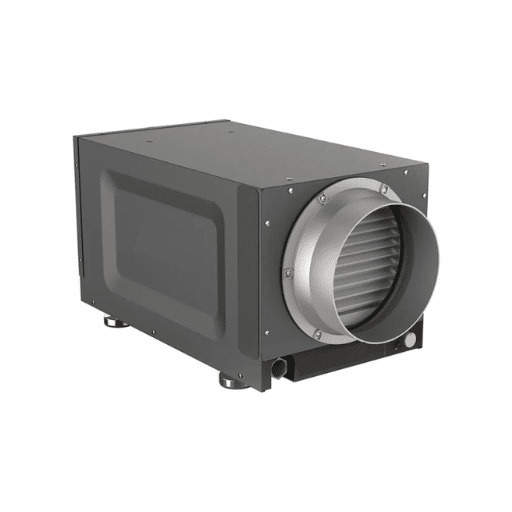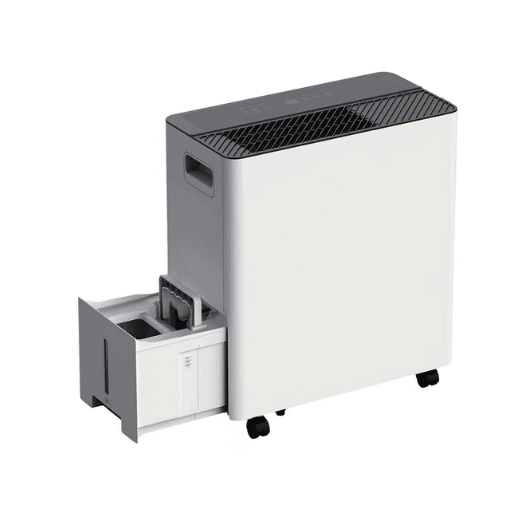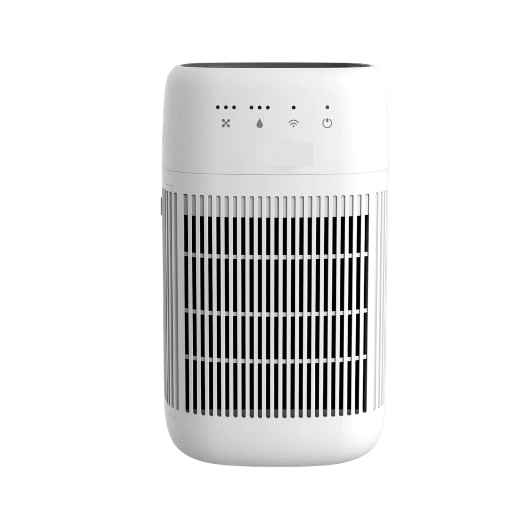
Dehumidifiers are often installed in expensive buildings to manage humidity, as it can cause the malfunction of the equipment or goods stored. Nevertheless, the energy conservation agenda is and has always been a key focus in any industry, and this is because these devices need to be working day and night over a wide area. So, exactly how much electricity does an industrial dehumidifier use? The purpose of the essay is to explain how much energy is used by industrial dehumidifiers, what factors influence this amount of energy used, what methods can be applied to estimate this energy consumption, and what the improvement of efficiency is. If another purpose of the company is cost estimations or going environmentally friendly, then one will need to be aware of the industrial dehumidifiers and understand their power consumption.
Understanding Dehumidifier Energy Consumption

The operation of an industrial gamma dehumidifier for over an hour can result in a wide range of energy consumption from 0.5 to 5 kWh, depending on the size, capacity, and most importantly,y the operating settings of the machine. In this regard, how much electricity an industrial dehumidifier uses depends on a certain group of factors, including the humidity, size of the area, the dehumidifier, and the policies of the manufacturer. The largest dehumidifier unit intended to handle large amounts of humidity in large areas will naturally consume more electric power than smaller units. Usage is calculated by multiplying the power of the equipment in one working day (KW or Wattage) by the number of operating hours in a day. For example, a 2 kW dehumidifier used for 8 hours will use 16 kWh in a day. Please consult the manufacturer for the correct energy consumption figures.
What is a Dehumidifier?
A machine that has to use electricity to help remove the moisture from the air is a dehumidifier. However, it also serves other purposes, such as helping to resolve the problem of molds, dust mites, and forestalling structural damage that are usually due to dampness. This is where the working of an air dehumidifier comes in, where it allows in the moist air, cools the air to turn out water, and then lets out the dry air. For this reason, these devices are malleable and serve in many homes, offices, and even industries as solutions for air cleaning. They are used in situations where the level of humidity in that area needs to be controlled, and apart from the user friendliness, they also have ratings and automatic switches on and off functions. This is the reason behind the fact that they can control the level of moisture in the air. Most people may prefer your product when, in fact, there are a few hundred machines that perform similar functions. The only thing that varies is how much electricity an industrial dehumidifier uses efficiently.
How Does a Dehumidifier Work?
A dehumidifier works through a pump and fan that removes moisture from the air. A fan pulls in air through the air ventilation or duct through the filtering system and passes it over to a chiller or refrigerant side. This chiller cools it rapidly to liquid saturation such that all the moisture that the air carries is within a liquid state, all of which drips to a water tank or is directed outside activity by way of pipes. Warm air is used to dry the collected air before it is discharged in some manner. Desiccant Dehumidifiers contain no compressors as they absorb the moisture and work efficiently in cool temperatures. The main frame of the dehumidifier often contains the compressor, condenser, evaporator, half or one amp fan, and even the collection pan or some sort of drainage system. Many uses of dehumidifiers include the reduction of excessive moisture levels, prevention of high levels of humidity, inhibition of mold growth, and an increase in air quality.
Types of Dehumidifiers
It is possible to overly simplify a dehumidifier’s functions. There are three main types of use-based dehumidifiers:
Refrigerant Or Compressor Type Dehumidification
These machines function by passing warm, moist air over a chilled coil that precipitates the moisture from the air to either a tank or a drain. This is similar to the working of a refrigerator. For this reason, their effectiveness is noticed most in areas having the least developed warm spring cold air imaginary, in which case they use basement and interior spaces, as they have the least harmonious ratio of moisture. However, the amount of water produced by the equipment will decrease as well once the temperature falls below freezing, which occurs due to the formation of frost on the coils.
Dehumidifier with Desiccants
Desiccant dehumidifiers contain water-absorbing material such as silica gel. Unlike refrigerant units, the desiccant ones work even in relatively low temperatures and very well in garages or ceiling and they even work well in industrial areas. They are even lightweight and simple, and so can be used as portable dehumidifiers or to address other specific dehumidifying demands.
Thermo-Electric or The Peltier Effect
Thanks to the Peltier effect, air is run through these thermoelectric hydro fans to a cooler’s element, where, due to condensation, moisture is formed and collected. The thermo-electric module consumes little power and is compact in design, but is most suitable for use in circuit work in bedrooms and bathrooms, or small closets.
Different types of dehumidifiers cater to different wants and needs, and therefore, a particular type is suitable depending on the specific room size or temperature, or relative humidity of the area of use.
Factors Affecting Energy Consumption

Multiple factors, but not limited to the size of the room, affect the energy consumption of industrial dehumidifiers. Most of these include:
- Room Dimensions: The greater the size of the room, the more energy it will take to dry it. This explains the importance of acquiring the correct capacity dehumidifier relative to the room size.
- Moisture Content: In times when the relative humidity in the environment is high, the operations in the dehumidifiers need to cycle more, which in turn raises electricity consumption.
- Operating Conditions: In general, it is easier to dry the air in warm climates, which lowers the power usage of dehumidifiers. If the temperature is low, other interventions such as defrosting may be necessary, which inevitably increases the energy consumption.
- Power Consumption Index: Appliances labeled with high power-saving logos (like the ENERGY STAR appliances) are designed to offer the same output at a lower consumption of power.
- Frequency of Use: It is obvious that dehumidifiers that work endlessly or are on and off often draw more energy. Energy consumption can be managed helpfully with the use of timers that are operated manually or intelligently.
Size and Capacity of the Dehumidifier
The capacity of the dehumidifier is critical as it dictates how many and how long it operates for a particular environment. All conditions stated are about how the room dehumidifier is rated since its capacity of moisture removal in a day is rated in terms of pints per day. The amount of moisture that can be removed from a room is influenced by, among other factors, the room size and the dampness of the room. For spaces that are about half a 500 square feet and are not very moist, a unit that approaches 20 to 30 PPD is adequate. Layers or volumes of bigger and much more wet areas, like the wet areas, part of the house which can be as big as or larger than 1,500 square feet, for which such a unit sheds moisture at the rate of 50 to 70 PPD and more will be called for.
The relative air moisture in the environment is another aspect that should be taken into account. In situations where there is a high level of humidity, usually, larger capacity units would be more efficient when it comes to eliminating moisture, even over a longer period of time. Choosing the wrong capacity can also cause the unit to work longer than intended and cause damage or decreased effectiveness in the long term. Therefore, proper selection of the dehumidifier should be made so that its capacity is appropriate for the purpose it is employed to serve.
Humidity Levels and Environmental Conditions
The proper humidity level in a house is a health benefit and does not allow the growth of mold, dust mites, and other irritants that could be destructive to persons or the structure. The range is primarily around 30 to 50%, as it is able to be achieved by most structures. Also, how much electricity does an industrial dehumidifier use?
If in the recent past, the use of mountain climbing and Many enveloped and damp areas exposed to cold, which results in warm, damp air cooling the basement that has been in the area. They will tend to overheat humid air, which also needs to be controlled. In contrast, a medium-range or even adjustable dehumidifier would be appropriate for the space. Again, one must consider the time of the year because during the seasonal extremes, that is, winter and summer, the nature of the wetness or dryness changes, and hence the control measures should also change.
Finally, understanding where to place the dehumidifier will be important. Install the device in an area with the highest humidity, make sure there is no obstacle in front, and clean the filters often to improve its performance. Using precise measuring instruments, including hygrometers, can allow checking the humidity level in a room, which is beneficial in dealing with any changes without having to wait for the effects.
Frequency of Use and Operating Time
How long and how frequently the dehumidifier is on air comfortably varies according to the levels of humidity that are desired for the space, the dehumidifier in question, and the weather. It is most effective to operate dehumidifiers for 10–12 hours each day under mild conditions. Nonetheless, very elastic conditions could compel one to run the tenacious or reversible working until the concealed spirit of the air is at thirty-five percent relative humidity. Few dehumidifiers with a built-in humidistat will have a turn ON/OFF cycle based on the existing room humidity level, thus offering more action for less power consumption.
Locations with higher frequencies of humidity, like basements, toilets, and washing rooms, may need the machines more often. Also, it’s best to use the dehumidifier in higher regions’ dewpoints, including early mornings or after it rains. It is advisable that attention is paid to the humidity inside the house, and adjustment of the operating time thereafter will decrease wearing out of the machine as well as enable it to accommodate the conditions inside the house.
Energy Usage of Industrial Dehumidifiers

Industrial dehumidifiers, such as those located in factories, normally consume more power than those found in homes as they have greater capacity and work for longer hours. Industrial dehumidifiers operated per hour use, on average, between 1,000 and 2,000 watts per hour, depending on the size of the machine, efficiency, and features the appliance has. In order to save energy, it is crucial to choose a unit that is the right size for the room and allows optimal functioning by ensuring that filters are clean and air flows freely to the unit. Additional energy efficiency can be achieved without compromising performance through the use of energy-efficient models approved by bodies such as ENERGY STAR.
Average Power Consumption
It is important to know that climate room conditioning units, particularly when intended for households, will not use more than 500-1500 watts per hour for small room air conditioners. Conversely, bigger machines such as central air conditioners have power consumption averaging 2000-5000 watts relative to the unit size, configuration, static efficiency, etc. Industrial-grade equipment, on the other hand, requires much more energy in operation, and its consumption level is between 1000 watts and 10000 watts per hour; all dependent on requirement and/or specifications. For example, appropriate insulation, cleaning the filter – coil systems, or choosing a model that incorporates energy-saving possibilities are strategies that work towards energy conservation. Also, the usage of intelligent temperature limiting devices and pre-programmed shut-off times reduces wastage of energy and ensures fans and compressors are engaged to the required levels. This way, the system is supplied with less power, energy utilization is cut down, and bills demanded by the operating systems are diminished, impelling the air conditioning systems towards a more economical path over time.
Energy Efficiency Ratings
The energy efficiency rating is a vital consideration when it comes to air conditioners in regard to their performance and the cost of operating the unit. The two most commonly used methods of determining this are the Seasonal Energy Efficiency Ratio (SEER) and the Energy Efficiency Ratio (EER). SEER evaluates the performance of the air conditioner across a complete operation season or cooling season and how it performs in terms of energy use, and a higher SEER means a more energy-efficient unit. On the same note, EER provides the efficiency of the air conditioner at a particular temperature outdoors, and usually, it is the highest temperature of 95°F. Air conditioners that have a high SEER and EER rating tend to use less power; thus, the electricity costs are not too high, nor is the impact on the environment. In addition, several other titles, such as ENERGY STAR, provide objective assurance regarding effectiveness as measures are in place to ensure that only certified units that meet performance criteria are purchased by consumers.
Comparing Energy Use of Different Models
In order to make appropriate comparisons between the energy consumption of various HVAC units, there are several factors that should be taken into consideration. One of the most common metrics used is the Seasonal Energy Efficiency Ratio SEER which means that the greater the SEER, the more efficient in energy terms the equipment will be during the average cooling season. In modern high-performance equipment, this index is usually equal to 16 or more; there are even units with more than 20 indices. At the same time, the EER or Energy Efficiency Ratio allows one to evaluate how well the cooling equipment works in high temperatures, such as 95 degrees Fahrenheit, and it has become popular in regions characterized by constant heat.
Apart from SEER and EER, other qualifying metrics, such as all relevant certifications, including an ENERGY STAR specification, which identifies those models designed to reduce energy consumption compared to the non-qualifying models, are very important. Whenever an HVAC system has an ENERGY Star rating, it usually comes with increased functionality due to, e.g., compressors that operate at a variable speed to be able to maintain the desired temperature with the least energy consumption by the unit. Equally important is the system’s energy utilization, in kilowatt-hours (kWh) per year being used by the systems which can be directly compared with others to give the relative spend of different units. Viewed together with the first cost, maintenance, and service life, these metrics are instrumental in assessing the energy consumption of a unit in order to choose the best possible option available.
Calculating the Cost of Running a Dehumidifier
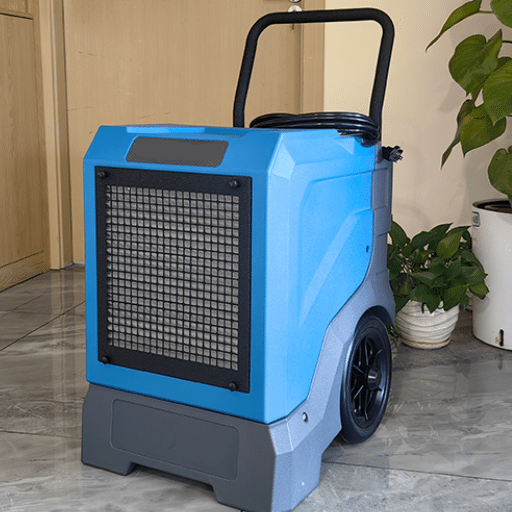
In order to work out how much it will cost to use a dehumidifier in one’s home, one has to first check how much electricity this device uses, what the power capacity of the model is, and the cost per unit charged by the power company. The first step is to check the exact wattage of the dehumidifier. This information is usually available either on the product itself or in the accompanying user guide. Convert the wattage to kilowatts by dividing the wattage by 1,000. Then, assume how many hours the dehumidifier is switched on in a day and obtain the kilowatt figure in order to obtain the daily energy consumption in kWh. Then multiply the daily kWh consumption by the cost of electricity (invariably expressed in cents per kWh) and the desired number of days for which the dehumidifier is to be used to estimate the entire substantial cost of operations, or for that matter, the cost of operation. Let us consider a situation where this dehumidifier uses 0.5 kWh per hour and runs for about 8 hours a day, with a consumption rate costing $0.12 per kWh. This amounts to a total cost of $0.48 per day, 0.5×8×$0.12 per unit.
Understanding Energy Costs
The energy costs of a device can be properly measured through several steps. In the first one, the power rating of the device, which is normally denoted in Watts (W), will be looked at since it can either be found in the product or the manual that comes with the product. This should then be converted to kilowatts (kW) by dividing the value in watts by 1,000. The kW value should then be multiplied by the number of hours of the daily usage of the device to get the daily energy consumption in kilowatt hours (kWh). After calculation of the daily kWh, it is then multiplied by the amount charged for a unit of electricity in the area in question (which is often an amount per kWh or $/kWh). This number will be multiplied by the day count during which the device will be operated.
Example Calculation:
A device drawing 1500 watts of energy four hours a day in a place where the electricity charge is at $0.15 per kWh would result in a daily expense of $0.90 (1.5 kW x 4 hours x $0.15).
In order to lessen energy economy expenditures, effort should be taken to utilize energy-saving machines, minimize the number of working hours, and optimize operation times linked to hours when energy costs are low, if possible. Minimizing energy wastage and expenditure is certainly achievable by facilitating consumption more rationally.
Estimating Monthly Electricity Bills
In order to work out your expected electricity expenses each month, the first thing you need to do is work out the overall energy use of the appliances, and then you simply multiply that figure by the local price of electricity. Here is a guide:
- Knowing Wattage: Search for the wattage (in watts) of each appliance – normally on the chassis or in the user guide.
- Daily Power Consumption: Every device’s power rating should be multiplied by the average number of hours used per day and then divided by one thousand for kWh. As an example, using a 1200-watt device for three hours each day uses 3.6 kilowatts daily (1.2 kilowatt x 3 hours).
- Overall Usage: Calculate all the devices’ KWh of usage per day in order to get all the KWh per day used.
- Projected Monthly Expenses: Now, take the total daily usage, you will always assume 30 days, and after that multiply it by the prevailing unit cost of electricity rate of your location e.g $0.15 per unit kWh. For example, for 20 kwh of daily consumption, the monthly cost is 20 multiplied by $10.5, i.e., $90 (20 kWh x 30 days x $0.15)
To give you a better idea, how much electricity does an industrial dehumidifier use? Given 180 liters dehumidifier empties tank twice a day, 0.55 cents in one day, i.e., each carbon usage costs 0.275/day.
This approach assists in providing an accurate assessment and can even flag the devices that are responsible for the highest energy bills. Likewise, if these calculations are combined with energy conservation strategies, such as the use of energy savers, programmable thermostats, and the disuse of idle equipment, your energy efficiency will be improved, and costs will also be reduced. Finally, have the real electricity bill results on hand and incorporate them to make your estimate more precise.
Ways to Reduce Energy Costs
Energy savings is something that encompasses a variety of approaches, including being energy efficient, modernizing equipment, implementing energy-conserving regimes, etc. Some very practical approaches, as noted by different experts, include the following:
Exchange Inefficient Equipment
Less electricity is needed to operate modern appliances that have been graded the ENERGY STAR than those using obsolete designs. An example would be purchasing a new refrigerator that is able to save at least 15 percent in energy compared to an existing one that is ten years old.
Adjustment of Air Conditioning
Change to programmable or smart thermostats so that temperatures are more appropriately maintained in accordance with presence and time. Continual inspection and maintenance of HVAC equipment and ducts reduce chances of leaks and ensures desired efficiency.
Enhance Home Insulation
Adequate insulation of the different parts of a building, such as the walls, ceilings, and floors, limits heat exchange, therefore avoiding unnecessary heating or cooling. Using caulking or weather stripping to seal doors and windows in these spaces also helps in combating energy wastage.
Use Lights that consume less Electricity and Save Money
Using incandescent bulbs may provide lighting, but the economic benefits are very low. However, replacing them with light-emitting diode bulbs will potentially use as 75% less electricity.
Renewable Sources
Renewable energy through solar panels available in the market today makes it possible and easy for homes to use electricity without endangering any “fuel release” emissions.
Adopt Alternative Use Of Energy
Washers that use cold water, avoiding dryers for washing laundry, powering down vacated rooms, and powering off other unnecessary electrical devices are some of the cost-effective changes that can be carried out over time. Moreover, electric power bars help avoid draining amp hours when cold appliances such as refrigerators are not in use.
Also, this allows for a considerable drop in how much electricity an industrial dehumidifier uses, aside from undertaking the environmental responsibility.
Benefits of Energy-Efficient Dehumidifiers

There are many advantages to using energy-saving dehumidifiers. It is their economic consumption, through which the normally high humidity inside is decreased, with a correspondingly marked reduction in the energy bills as well. Such high humidity conditions have enabled those bodies have been able to provide optimal levels of performance in produced silence for quite a long time. They also keep the furniture and electronics safe, preventing the introduction of moisture, which leads to mould growth and associated damage to furniture, walls, and electronics. Besides, these air conditioners even purify the indoor air, making it healthier for the occupants. While decreasing the running costs of every option, careful consideration of eco-friendly individuals or institutions always leads to a choice that helps maintain the ecology.
Long-Term Savings
Eco-friendly technology in the context of household appliances provides a meaningful reduction in power consumption, which in the long run permits lowered costs. Leading sources, such as Energy.gov and other favored energy-saving sources, confirm that these appliances generally allow energy savings from 10% to 50% in comparison to regular appliances. This translates into energy cost savings for the user during the entire period of using the device. Furthermore, a significant number of energy-efficient appliances come with rebates, tax credit or other incentive programs by authorities or utilities that lower the price of the appliance. An additional aspect is the durability along with functionality of these appliances, as a result of which maintenance and replacement charges are lower. Together, they contribute to better returns, making such eco-friendly choices both financially and environmentally friendly.
Environmental Impact
It is important to be concerned about the environment, I wish to outline the fact that an energy-efficient appliance reduces the rate at which greenhouse gases are emitted since they use less electricity. Use of energy-efficient appliances means reduced energy needs, which in turn means less utilization of fossil fuels. Thus, directly addressing climate change issues and the ease of resource management practices. This is because energy-efficient products help reduce my impact on the environment and promote the well-being of people environmentally in the future at the same time.
Choosing Energy Star-rated models
Several benefits can make Energy Star-rated models a better alternative, especially for energy-savvy customers. These appliances are new against the benchmarks endorsed in the United States by the Environmental Protection Agency (EPA), and they are certified by a third party. Energy Star products employ a lot of energy-saving devices with low water consumption levels in comparison to the traditional ones, which saves consumers utility costs in royalties as they use the appliances. Not only that, but they also lower the levels of pollutants that result in the warming of the Earth’s atmosphere, hence contributing to the global fight against climate change.
Energy Star-rated products not only save money and conserve the environment but also perform better and are more durable. These products are usually equipped with ergonomic and useful features that improve comfort and user-experience while reducing electricity demands. If you’re contemplating replacing your fridge, laundry machine, or even your HVAC system, everyone will agree that it is a clear and better choice to opt for Energy Star products, as they not only meet but also provide better service in the long run. So, for anyone who feels like they want to make a difference in the world and save a buck or two, Energy Star products are very much worth the investment.
Reference Sources
Improving the Energy Efficiency of Dehumidification Technology at a Large Facility in Florida
This paper examines energy use and management in dehumidification systems, providing insights into energy efficiency.
This research explores energy impacts and cost variations in dehumidifier configurations, relevant for industrial applications.
Investigation of Energy Impacts of Whole-House Ducted Dehumidifier Location
This study investigates how the location of dehumidifiers affects energy consumption, offering valuable insights for industrial setups.
Frequently Asked Questions (FAQs)
What is the electrical consumption status of an industrial dehumidifier (power consumption of a dehumidifier)?
Every industrial dehumidifier has an efficient consumption rate depending on its dimensions and the design, within the limit from differentiated capacities of energy consumption ranging from 500 watts in smaller indoor units and increasing to a few kilowatts in bigger buildings. To calculate how much electricity an industrial dehumidifier uses, you simply multiply the watts of a system by the number of hours it works and the electricity costs in your area. In case the machine is a new model, the actual power consumption is displayed in the datasheet. This helps to compute the power that will be consumed per month and whether it will be a large or a small duty cycle.
What factors affect the energy consumption of the dehumidifier and the wattage of the dehumidifier?
The amount of electrical energy usage, measured in watts, that a dehumidifier consumes can be directly linked to several factors, such as the unit’s capacity (pints or liters in 24 hours), outside climatic conditions, temperature, and humidity, difference in dehumidifier constructions – refrigerant or desiccant, and the load on the appliance. Refrigerant devices are generally more economical to run in warm environments, whereas desiccant and industrial-scale dehumidifiers tend to consume more power. It is therefore imperative to select the appropriate dehumidifier for use and to ensure its efficiency so that the amount of energy consumed is minimized.
Can the use of your dehumidifier affect your industrial dehumidifiers’ power consumption?
The electricity consumption increases by the same factor and in proportion to the working hours when it comes to running your dehumidifier continuously. Active dehumidifiers have a defined operating cycle where the compressor or the heater remains working, and this process depends on the setpoint and the surrounding environment. Practical practices such as using setpoints for humidity, time switches or timers, control systems, and so on, so as to avoid the unnecessary running of the dehumidifier, help in the reduction of the overall power consumption while maintaining performance.
Do electric refrigerant dehumidifiers consume more power than the other dehumidifier types?
Owing to their comparatively high temperatures of operation, a refrigerant dehumidifier can devise an energy consumption model that makes more energy-prudent use of resources than many desiccant dehumidifiers, especially when the air condition is cool or wet. However, when the temperature is too low or industrial applications demand large volumes of water vapor, the use of a refrigerant-type dehumidifier becomes undesirable. Different types of dehumidifiers are appropriate for different conditions, refrigerant dehumidifiers have lower per-unit energy consumption than the other types when conditions are favourable, and this affects how much electricity a dehumidifier use
How does the power consumption Quanta (energy efficiency) of a 50-pint and a business dehumidifier?
Getting an appropriate wattage range, say 600–800W, for a 50-pint consumer dehumidifier and economic estimation, such as such that this is 600 Wh/day, can help compute electricity utilization. This should be calculated in watt-hour (Wh) every day and in kWh as well, i.e., 0.6 kWh when converted. The next calculation involves considering the cost of energy. Especially while applying commercial-use dehumidifiers, account for higher cycle and in some cases increased electric power of the dehumidifier because of its loaded condition.
Can an Energy Star dehumidifier minimize the consumption of a dehumidifier?
In comparison to a dehumidifier without certification units, an Energy Star dehumidifier, however, is built in such a way that it proves more effective in that exact amount of water is withdrawn while using less power. Most of the times and, during operations that have a routine where the dehumidifier is turned on and off a lot, an Energy Star dehumidifier is not always able to reduce the electric consumption associated with the dehumidifier. Check certifiable power consumption levels when simulating the dehumidifier and dimensions against power consumption in contrast to the space for the dehumidifier, and fine compare against the capacity and power of the unit in question.
What are the smart care and usage habits that enhance energy efficiency for dehumidifiers?
Regular care and proper usage of a dehumidifier lowers the costs of its energy utilization: always clean coils and replace filters especially if the dehumidifier has been used for a long time, keep all doors and windows closed, install a dehumidifier Hygrometer which helps to maintain the active dehumidification only when there is much humidity, confirm refrigerant level especially if refrigerant dehumidifier is used and also avoid frequent cycles of the dehumidifier. It is quite clear that the appliances that are well kept do not strive harder to perform their duties, and in this manner, energy consumption is reduced. In the case of commercial dehumidifiers, such procedures of preventive maintenance are essential in cutting down on dehumidifiers’ power usage.
How do changes in the local electricity prices and the size of the dehumidifier influence electricity savings on my dehumidifier, please?
For the cost impact of energy dehumidifier’s use, it is the local electricity supply levels that will determine this, whereas the capacity of a dehumidifier determines the same as moisture removal per hour of the unit; this capacity can be related to power consumption. An industrial dehumidifier with a higher capacity may draw more current; however, it may still be more economical in removing moisture. It is easy to get carried away with regards how much electricity an industrial dehumidifier uses efficiently. It is necessary to take into account the capacity and wattage of the dehumidifier, as well as the electricity rates in your area, to calculate the cost of ownership and select the right and most efficient dehumidifier.