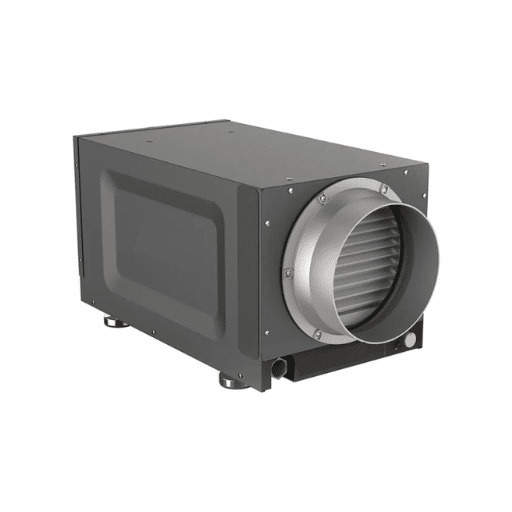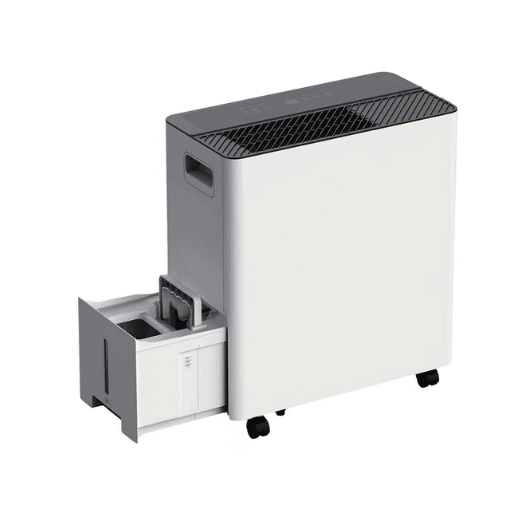
The energy efficiency of dehumidifiers serves as an essential factor which decreases energy usage and enables users to achieve reduced utility expenses. Energy Star-certified dehumidifiers are designed to use significantly less electricity than standard models while maintaining optimal performance. These units apply sophisticated technology to decrease power consumption throughout their entire functioning period. By choosing an Energy Star-certified dehumidifier, homeowners can tackle humidity problems while also protecting the environment and lowering long-term costs.
30%
Reduction in global greenhouse gas emissions possible through energy efficiency improvements
25–30%
Energy savings from Energy Star-certified products vs. traditional appliances
$500B+
Annual savings worldwide from energy-efficient building systems
Energy efficiency helps national energy security by decreasing fossil fuel dependency while increasing renewable energy resource usage. This responsibility goes beyond environmental protection — it creates a financial opportunity that delivers benefits lasting many years.
Overview of Dehumidifiers and Their Role in Humidity Control
Indoor spaces require dehumidifiers as essential equipment which maintains appropriate humidity conditions. High humidity creates problems including mold development, building damage, and human discomfort, while low humidity results in dry conditions and health complications. Dehumidifiers remove moisture from suspended particles in the air, creating spaces that enhance health and comfort.
5 Key Benefits of Dehumidifiers
🛡️
Prevention of Mold & Mildew
A dehumidifier keeps humidity below 60%, effectively preventing mold and mildew growth that leads to health risks and structural damage.
🌬️
Improved Air Quality
Decreased humidity reduces indoor dust mite and mold spore allergens, improving air quality and reducing allergy and asthma symptoms.
⚡
Energy Efficiency
Modern dehumidifiers consume minimal electricity. Lower humidity also enables air conditioning systems to function better, decreasing overall energy use.
🪑
Protection of Belongings
High humidity damages wooden furniture, electronics, and books. A dehumidifier prevents moisture-related deterioration of your valuables.
😌
Comfortable Living Conditions
Excessive moisture makes spaces feel sticky and uncomfortable. Dehumidifiers restore humidity to normal levels for a more pleasant indoor environment.
How Energy-Efficient Dehumidifiers Work
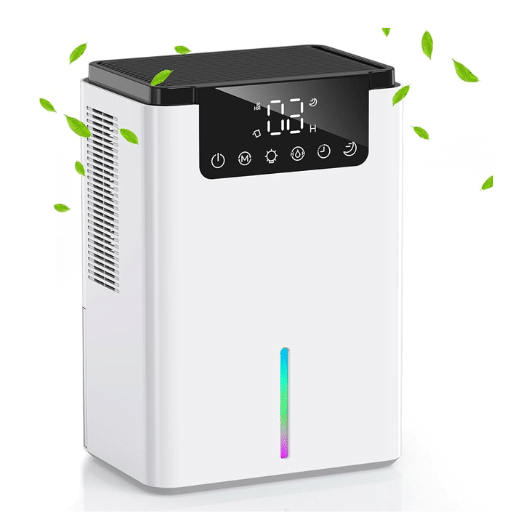
Energy-efficient dehumidifiers provide economical moisture extraction using either the refrigeration cycle method or desiccant technology. Standard refrigerant dehumidifiers use a fan to pull in humid air, which passes through cooling coils. The system converts humidity into water droplets that accumulate in a storage tank or drain away, and then the dried air is reheated before returning to the room.
⚙️ What Makes Modern Units More Efficient?
- Energy Star certification confirms energy usage 15% below standard dehumidifiers
- Replacing a standard 50-pint model with an Energy Star unit saves approximately $20 per year on electricity
- Prevents carbon dioxide emissions equivalent to burning 100 pounds of coal
- Adjustable humidity settings, timers, and automatic shutoff for smarter energy management
- Smart Wi-Fi-enabled models allow remote monitoring and adjustment via smartphone
- Advanced heat pump dehumidifiers reuse extracted heat to improve moisture-removal performance
Understanding Energy Star Ratings
The Energy Star program, created by the U.S. Environmental Protection Agency, helps consumers locate products that achieve strict energy efficiency criteria while delivering outstanding performance. Energy Star certified appliances use 10 to 20 percent less energy compared to non-certified products.
💡 Key Fact: Energy Star certified dehumidifiers allow users to save approximately $20 on annual energy costs while preventing about 2,800 pounds of greenhouse gas emissions over their entire operational life. These models use advanced refrigeration coils, fans, and compressors to achieve maximum efficiency — making the Energy Star label a reliable guide for consumers choosing eco-friendly home equipment.
Key Components of Efficient Dehumidifiers
Energy-efficient dehumidifiers achieve their performance through a combination of advanced components working in harmony. Here is a breakdown of the most important elements:
How Humidity Levels Affect Performance
Humidity levels are an essential component for assessing dehumidifier performance and energy consumption. Here are the five primary ways humidity levels influence operation:
| # | Condition | Humidity Level | Impact on Performance |
|---|---|---|---|
| 1 | High Humidity Efficiency | 60% or higher | Maximum moisture removal — unit works at full capacity but uses more energy continuously |
| 2 | Low Humidity Conditions | Below 30% | Reduced efficiency — unit struggles to reach targeted moisture extraction |
| 3 | Compressor Stress | Permanently high | Increased operational demands — leads to gradual equipment degradation; regular maintenance essential |
| 4 | Optimal Energy Efficiency | 30%–50% | Best performance — reduced energy requirements and maximum eco-friendly operation |
| 5 | Water Collection Rate | Varies by level | At 80% RH, extraction rate can be 2–3× higher than at 40% RH |
Buying Guide for Energy-Efficient Dehumidifiers

When choosing an energy-efficient dehumidifier, several vital factors must be assessed. Use this checklist to make the best decision for your space and budget:
✅ Dehumidifier Buying Checklist
☑ Energy Star Certification
Always select models carrying the Energy Star label — they operate 15–30% more efficiently than standard models, reducing both your costs and environmental impact.
☑ Capacity & Room Size
Capacity is rated in pints of moisture removed per day. 20–30 pints for rooms up to 300 sq ft; 50–70 pints for spaces up to 1,500 sq ft. Match capacity to actual humidity levels and dampness.
☑ Humidity Control Features
Look for built-in hygrometers and programmable settings. Advanced units maintain indoor humidity between 30%–50%, achieving better comfort and lower energy use.
☑ Energy Efficiency & Wattage
Premium units consume 300–400 watts; older or less efficient models use 600–700 watts. Lower wattage can generate annual electricity savings of up to 35% under identical conditions.
☑ Defrost Mode (Cold Climates)
For cold-weather regions, select a unit with automatic defrosting. Frost accumulation reduces efficiency; auto-defrost maintains steady operational capacity in freezing conditions.
☑ Water Tank Capacity & Drainage
Larger tanks (1–2 gallons) require less frequent emptying. A continuous drain hose connection enables uninterrupted operation over extended periods — ideal for basements.
☑ Noise Level
For bedrooms and home offices, select units with a noise rating of 50 dB or lower. Quieter operation ensures greater comfort without sacrificing performance.
☑ Smart Features (Wi-Fi / App Control)
Modern units offer Wi-Fi connectivity for remote scheduling and humidity monitoring via smartphone — perfect for tech-savvy homeowners seeking full control.
☑ Estimated Cost & Savings
Energy-efficient models range from $150 to $400. An energy-saving model that reduces power usage by 20% can deliver approximately $50–$75 in annual savings, offering a strong long-term return.
🏆 Top Energy-Efficient Models at a Glance
| Model | Daily Capacity | Power | Key Feature | Price Range |
|---|---|---|---|---|
| Frigidaire FGAC5044W1 | 50 pints | 450W | Smart Wi-Fi remote management | $300–$350 |
| hOmeLabs HME020031N | 35 pints | ~48 dB | Auto frost removal & continuous drain | $200–$250 |
| Midea Cube 20-Pint Smart | 20 pints | <250W | Stackable compact design + Wi-Fi | $180–$230 |
Features to Look For: Programmable Timers, Auto-Defrost & Drainage
⏰ Programmable Timers
- Schedule operation times to reduce energy usage during planned periods
- Set personal time intervals in hourly increments
- Combine with night modes for silent, power-saving overnight operation
- Limit equipment use during off-peak hours to extend operational lifespan
🌡️ Auto-Defrost System
- Activates when temperature drops below freezing to protect internal coils
- Eliminates need for manual defrosting — saving time and energy
- Prevents frost accumulation that restricts airflow and reduces efficiency
- Protects internal components, extending device operational lifespan
- Monitors temperature and frost levels continuously for full functionality
💧 Large Water Tank vs. Frequent Emptying
| Advantage | Large Tank | Frequent Emptying |
|---|---|---|
| Maintenance Frequency | ✅ Less frequent | ❌ More demanding |
| Uninterrupted Operation | ✅ Extended run time | ❌ Stopped frequently |
| User Convenience | ✅ Better for busy environments | ❌ Requires daily attention |
| Overflow Risk | ✅ Lower with auto-shutoff | ⚠️ Higher if unmonitored |
🔧 Understanding Drain Hose Options
Drain hose options create an effective system that automatically removes water without requiring manual tank emptying. Here are the two main approaches:
⬇️ Gravity Drainage
Relies on natural downward water flow. The dehumidifier must be positioned higher than the drain, with a clear downward hose slope. Energy-efficient but limits placement options. Most dehumidifiers support standard 5/8-inch garden hoses.
⬆️ Pump Drainage
Uses a built-in condensate pump to push water uphill through the hose. Ideal for basements without a natural slope or gravity drain. Offers maximum flexibility in unit placement.
Cost-Benefit Analysis: Efficient Models vs. Standard Models

| Key Point | ✅ Efficient Models | Standard Models |
|---|---|---|
| Energy Consumption | 20% less energy usage | Higher energy usage |
| Upfront Cost | $50–$150 more | Lower initial cost |
| Annual Operating Cost | $50–$100 savings | Higher operating costs |
| Payback Period | 1.3–2.0 years | No payback period |
| 10-Year Lifespan Savings | $400–$600 | Minimal savings |
| Environmental Impact | Reduced carbon footprint | Higher emissions |
| Refrigerant Type | Eco-friendly R-32 | Older R-410A |
| Performance | Consistent + smart features | Basic functionality |
| Rebates / Incentives | Eligible for rebates | Rarely eligible |
| Certification | ENERGY STAR certified | Often uncertified |
💡 Quick Cost Comparison Tips
- Purchase Price: Efficient models cost 20–30% more upfront, but pay back the difference in under 2 years.
- Energy Consumption: Efficient models reduce annual energy use by 15–40%, creating substantial electricity bill reductions.
- Maintenance: Advanced build quality means fewer repairs and lower maintenance costs over the product lifetime.
- Lifespan: Efficient models last 10–15 years vs. 8–10 years for standard models — adding significant long-term value.
Rebate Opportunities for Energy Star Dehumidifiers
An Energy Star-certified dehumidifier not only decreases energy usage but also qualifies you for multiple rebate programs across the United States. Rebates come from utility companies, state energy offices, and federal programs, with typical values between $20 and $100.
🏛️
Federal Incentives
The Energy Efficient Home Improvement Credit may cover qualifying Energy Star appliances. Visit the Energy Star Rebate Finder at energystar.gov to find federal programs in your area.
⚡
Local Utility Rebates
- PG&E (California): Up to $50
- National Grid (Northeast): $30–$75
- Xcel Energy (CO & MN): Available for qualifying units
🗽
State-Specific Programs
- NYSERDA (NY): Up to $50 for certified models
- Mass Save (MA): Utility-partnered rebate programs
🏷️
Manufacturer Promotions
Brands like LG and Frigidaire offer direct rebates through their Energy Star partnerships. Check manufacturer websites regularly for promotional offers.
📋 Steps to Claim Your Rebate
- Purchase an Energy Star-certified dehumidifier from an authorized retailer.
- Keep your purchase receipt and record the model and serial number.
- Visit your utility provider website or the Energy Star Rebate Finder to find the appropriate rebate form.
- Complete and submit the required documentation either online or by mail as directed.
- Await confirmation and receive your rebate by check or bill credit.
💡 Tip: Always check local utility company websites for the most accurate and up-to-date rebate information in your region.
Top-Rated Energy-Efficient Dehumidifiers for 2026

Technological developments in 2026 have produced advanced eco-friendly dehumidification systems. Here are the highest-rated models excelling in both performance and energy efficiency:
📈 2026 Industry Trends & Innovations
- Widespread smart technology integration for full remote smartphone control
- Higher Energy Star certifications achieving greater energy reductions than previous years
- Lower noise profiles designed to blend into modern residential environments
- Sustainability focus with eco-friendly refrigerants and recyclable build materials
User Reviews & Ratings
Here’s what real customers are saying about the most popular energy-efficient dehumidifier models:
Frigidaire FFAP5033W1
4.6 ⭐
Based on 2,300 reviews
✅ Pros: Quiet operation, effective moisture removal, easy-to-use built-in pump
⚠️ Cons: Some users desire a larger water tank capacity in high-humidity conditions
hOmeLabs HME020031N
4.5 ⭐
Based on 1,800 reviews
✅ Pros: Attractive design, great room coverage, praised for reducing electricity bills
⚠️ Cons: A few users report initial setup challenges with the continuous drain hose
Vremi VRM010184N
4.4 ⭐
Based on 1,500 reviews
✅ Pros: Fast dehumidification, easy controls, lower noise than competitors
⚠️ Cons: Some customers note heat output during prolonged operation
TOSOT 50-Pint Energy Star
4.7 ⭐
Based on 2,400 reviews
✅ Pros: Stylish design, auto-defrost works reliably, excellent for medium-to-large spaces
⚠️ Cons: Some reviewers feel the initial price exceeds comparable products
Honeywell TP70AWKN
4.5 ⭐
Based on 1,300 reviews
✅ Pros: Excellent smart home integration, high-capacity, Wi-Fi a standout feature for tech users
⚠️ Cons: Some users face minor challenges when replacing the air filter
Best Options for Basements & Large Areas
Humidity control in basements and extensive spaces requires dehumidifiers that balance high performance with energy efficiency. Here are the top picks based on user reviews and recent data:
- hOmeLabs 4500 Sq. Ft. Energy Star Dehumidifier — Covers up to 4,500 sq ft, removes 50 pints/day, includes a built-in pump, and is Energy Star certified for efficient basement operation.
- Frigidaire 60-Pint Dehumidifier with Effortless Humidity Control — 4,500 sq ft coverage with 60 pints/day capacity, three humidity control modes, continuous drainage, and a washable allergen-reducing filter.
- TOSOT 4,500 Sq. Ft. Dehumidifier with Internal Pump — Stealth operation under 48 dB, 50 pints/day, internal draining system. Best for basements where noise is a concern.
- Aprilaire 1830 Pro Basement Dehumidifier — Professional-grade unit covering 3,800 sq ft, extracting 70 pints/day. Operates in low-temperature environments (crawl spaces, basements) with a corrosion-resistant aluminum coil.
- Honeywell 70-Pint Energy Star Dehumidifier — Covers 4,000 sq ft with 70 pints/day capacity, caster wheels for mobility, continuous drainage, and a precise digital humidistat.
📊 Performance Metrics Comparison
| Model | Coverage Area | Daily Capacity | Key Feature | Noise Level |
|---|---|---|---|---|
| hOmeLabs 4500 | 4,500 sq ft | 50 pints | Built-in pump | Moderate |
| Frigidaire 60-Pint | 4,500 sq ft | 60 pints | Washable filter | Moderate |
| TOSOT 4,500 | 4,500 sq ft | 50 pints | Quiet operation | Low (<48 dB) |
| Aprilaire 1830 | 3,800 sq ft | 70 pints | Professional-grade design | Moderate |
| Honeywell 70-Pint | 4,000 sq ft | 70 pints | Smart digital humidistat | Moderate |
When selecting a dehumidifier for basement and large-space use, assess three critical factors: room dimensions, existing humidity levels, and special requirements such as silent operation or automatic drainage. The models listed above consistently deliver results that create healthier, more comfortable living spaces.
Frequently Asked Questions (FAQ)
Start Creating a Healthier, More Efficient Home
Selecting the right energy-efficient dehumidifier is a long-term investment in your health, comfort, and financial well-being. Always prioritize Energy Star certification, match capacity to your room size, and take advantage of available rebate programs to offset upfront costs. Your path to a sustainable, lower-energy home — with better air quality and no musty odors — begins with a single well-informed purchase.
✅ Energy Star Certified
💰 $50–$75 Annual Savings
🌱 Reduced Carbon Footprint
🏠 Healthier Indoor Air
📚 References
- ENERGY STAR Most Efficient 2025 Criteria — Official criteria document outlining energy efficiency standards and product eligibility for dehumidifiers. PDF
- Dehumidifier Standards: Saving Energy & Money — NRDC fact sheet discussing energy savings and cost benefits of updated dehumidifier standards. PDF
- Friedrich Dehumidifier Brochure — Friedrich Air Conditioning Co. insights into energy-efficient dehumidifiers and ENERGY STAR compliance. PDF