Unpleasant and damaging conditions in a basement are the result of excessive relative humidity. Mold, rot, and trapped air are some of the consequential problems that may arise from this issue. Proper installation of a dehumidifier is the best solution to safeguard your house and make it a breathable and livable place. In this narrative, we shall guide you to an informed choice through an elaborate examination of the factors affecting the selection of a dehumidifier for basements with a high level of humidity. We will cover everything from the selection of capacity and energy efficiency to the identification of the necessary features. Thus, you will be prepared to find the right unit that not only takes away the unpleasantness but also protects your area. The article will not only discuss possible solutions for upcoming wetness caused by seasons, but also for the whole humidity issue. So, get the necessary insights from this guide depending on your particular situation.
Understanding Humidity Levels in Basements
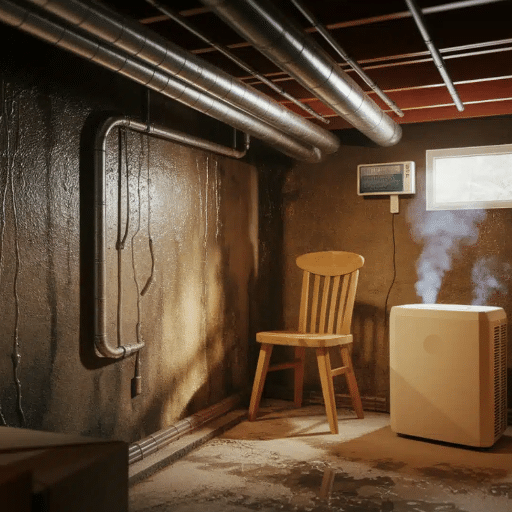
Basements are typically subject to higher humidity levels, as they are placed below the ground where moisture can easily pass through walls and floors from the surrounding soil. The lack of good air circulation and the presence of little to no sunlight make it possible for humidity to build up in the basement area. The ideal range for humidity in basements is 30%-50%, which, if exceeded, would create a conducive environment for mold growth, deteriorating the structure over time, and causing air quality to worsen. So, it is necessary to keep track of the humidity level with a hygrometer regularly, and it is important to fix any leak or drainage problem that arises to keep the place dry and healthy.
The Importance of Monitoring Humidity
The measurement of humidity is a very important factor in the maintenance of buildings, the control of air quality, and the prevention of health problems that might be caused by the presence of moisture. A good indoor humidity range, which is generally between 30-50%, not only reduces the chances of mold development that likes moisture above these levels but also prevents other problems related to high humidity. Such humidity can ruin the wood, cause painting to peel, and insulation not to work effectively, all of which will require expensive repairs. On the other hand, low humidity can lead to dry skin, coughing, and the occurrence of static electricity in the house.
The use of a hygrometer makes the process of measuring humidity much easier, as one gets current information about the situation in the house, thus making it possible to spot a deviation from the recommended values. Addressing these fluctuations means everything from using dehumidifiers or humidifiers, closing up spaces or plugging leaks, and even improving the airflow in the house. In short, the upholding of good humidity levels by the individuals not only leads to the improvement of their living conditions but also saves them on future maintenance costs and promotes a healthier environment.
Ideal Humidity Levels for Basements
It is essential to maintain a proper level of humidity in basements to stave off problems like the growth of mold, damage to the structure, and deterioration of air quality. The usually recommended level of basement humidity is between 30% and 50%. It is more or less ideal for the levels to be around 30%-40% during the winter months to prevent condensation of water on windows and other surfaces. Beyond 60%, the level of humidity is said to be high enough for the growth of mold and mildew, which might lead to the health risks that are commonly associated with the fungi, as well as property damage.
In order to get and keep these humidity levels, the use of a dehumidifier is often deemed necessary, especially in those areas that experience high moisture levels. The foundation cracks can then be sealed, and the insulation of pipes can be done in order to stop the ingress of moisture. Moreover, the presence of sufficient airflow through ventilation or mechanical systems will act as a factor to maintain the humidity and stable environmental conditions. Using a good hygrometer to monitor the humidity will allow a continuous assessment and adjustment that will protect the basement’s structural integrity as well as the health of the people living in it.
Effects of High Humidity on Indoor Air Quality
Along with the formation of allergens and irritants, excessive indoor moisture can greatly diminish the quality of the air. The high humidity levels facilitate the growth of mold and dust mites, which are among the most common indoor allergens. When such microorganisms are present, most people, especially the very young, very old, and those with already strained lungs and allergies, may experience problems with their respiratory system, develop allergy symptoms, or even asthma attacks. Also, off-gassing of volatile organic compounds (VOCs) from surfaces like paint and flooring becomes more pronounced as the humidity level remains high, thus the air is further polluted. The situation becomes worse due to the dual impact of the living pollutants and the chemical emissions; indoor humidity must be carefully controlled for air quality to be good and safe. One approach to tackle this problem is through the use of dehumidifiers, along with providing adequate ventilation and air quality monitoring.
Types of Dehumidifiers for Basements

Refrigerant Dehumidifiers
Refrigerant Dehumidifiers are very powerful at removing moisture from the air through condensation by using the cooling coil system. They are usually used in basements where the temperature stays over 60ºF, as they work best in warm, humid conditions. They are not, however, good at all in cooler climates.
Desiccant Dehumidifiers
Desiccant dehumidifiers extract humidity using moisture-absorbing materials, like silica gel. This drying process in the air and the cooling basements is quite opposite to the capability of refrigerant units that consume more power but are less effective in drier areas.
Whole-House Dehumidifiers
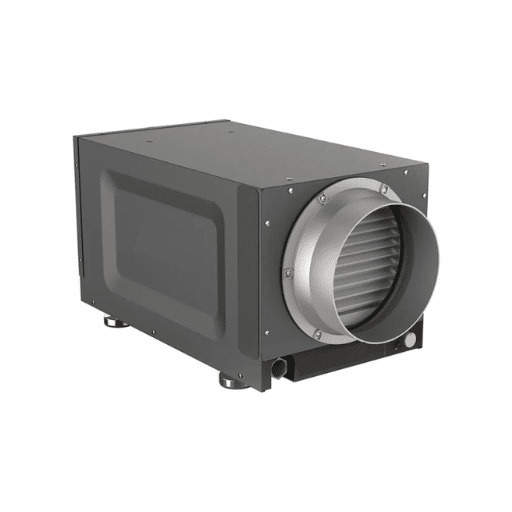
Whole-house dehumidifiers are connected to HVAC systems and are intended to regulate humidity throughout a building, including basements. They are not the cheapest solution as they involve a higher initial investment and professional installation, but they can be regarded as the most effective due to their ability to control humidity consistently.
Portable Dehumidifiers
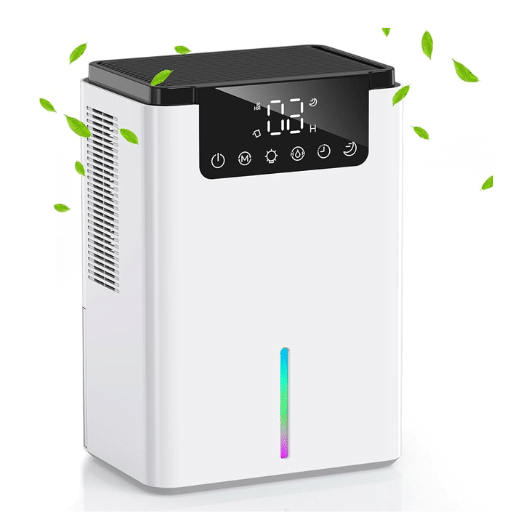
Portable dehumidifiers are good for small spaces like basements or for specific targeted spaces. They are also flexible and affordable. They can be moved around very easily, thus giving the users more options on which areas to treat. But they might not be able to hold as much moisture as larger devices can.
Portable Dehumidifiers
The portable devices are good devices that effectively remove moisture in particular spaces. Their light weight and easy movement are the pros that make them very suitable for local applications such as dehumidifying small basements or single rooms. The majority of the models come with humidity controls that can be adjusted and built-in hygrometers, which enable the users to set and keep the most favorable conditions according to their requirements. Moreover, the new devices usually come with energy-saving technology, thus reducing the amount of power consumed while still providing reliable performance. On the downside, their smaller water collection capacity compared to the non-portable ones means that you have to empty them more often, and they might not work efficiently in a very humid environment or in a large space. Therefore, the selection of a portable dehumidifier should be done by considering the factors such as capacity (usually expressed in pints per day), noise level, and other features like an auto shut-off, continuous drain options, and air filters for better air quality.
Whole House Dehumidifiers
Whole-house dehumidifiers function as a single point of control for the whole house, dealing with the humidity, thereby giving the household the possibility of having the best air quality everywhere. These units are connected to the existing HVAC system, which results in a more efficient moisture control in the entire house rather than using several separate devices in different rooms. They are usually more powerful than portable units and have the capacity to extract over 90 pints of water per day, depending on the model and size of the house.
Among the factors to take into account when choosing a whole-house dehumidifier are the capacity of the unit (in pints per day), which is determined by the area and humidity level in the house, energy efficiency ratings, and whether it matches your HVAC system or not. Moreover, most units now come loaded with features like automatic humidity sensors, built-in air filtration for better indoor air quality, and low-maintenance needs. Although their initial investment and installation costs are higher than portable units, whole-house dehumidifiers are a long-term solution with less operational hassle, thus being perfect for places with frequent high humidity, like coastal or subtropical regions.
Commercial Dehumidifiers
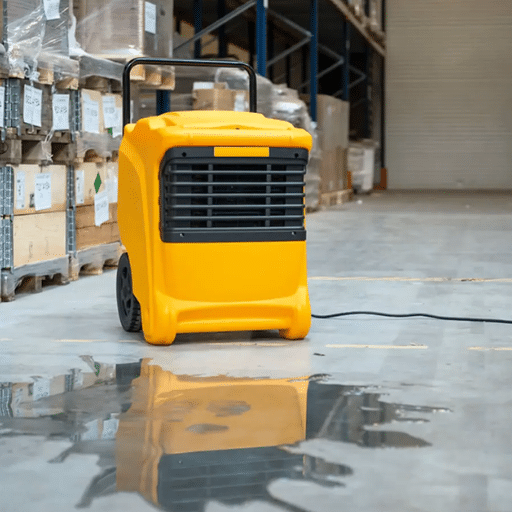
Commercial dehumidifiers are used in large places with high moisture, like warehouses, factories, commercial kitchens, and gyms. They offer strong construction and high-capacity performance to manage very tough conditions, so they are very durable. Commercial dehumidifiers, on the other hand, are able to take out much more moisture from the air than residential models, sometimes even over 100 pints a day, which depends on the model and settings.
Among the main features are the advanced humidity controls, heavy-duty condensate pumps for continuous drainage, and high-efficiency compressors intended for prolonged operational use. Moreover, a lot of models are equipped with antimicrobial filters that trap airborne contaminants, which means they can be used in areas where air quality is extremely important. They can be moved easily thanks to caster wheels and ergonomic handles, which help their portability within large spaces.
When you are choosing a commercial dehumidifier, you should take into account the area to be covered, the required humidity control level, and the general operating environment as some of the factors. Besides, these units give moisture management that is so effective that they could be used in a factory or a commercial setting without worrying about mold growth, material degradation, and equipment breakdown. Despite the fact that initially they are costly, their effectiveness in keeping humidity at the right level can lead to huge savings in the long run when it comes to operational costs.
Features to Look for in a Basement Dehumidifier

In case you want to buy the best basement dehumidifier, some crucial characteristics need to be examined closely before you purchase to guarantee the best performance and proper adaptation to your basement:
Capacity – Check the unit’s capacity in pints per day, so you are sure it can cope with the moisture in your basement. A bigger unit will most likely be needed for a larger basement or a very wet situation.
Energy Efficiency – A unit with the Energy Star label is a good choice for saving on energy use and operating costs during its life span.
Defrost Capability – Having a dehumidifier with an auto defrost feature assures that the unit will work in colder basements, as no ice will form on the coils, thanks to the defrost.
Drainage Options – It is important to factor in whether a unit has continuous drainage or a built-in pump, as this simplifies water disposal and reduces the chance of manual intervention.
Durability and Build Quality – A dehumidifier made to last in humid conditions and to be corrosion-resistant, especially in permanent installations, should be selected.
Noise Levels – Keep the noise rating in mind to make sure the device does not make much noise, particularly if the basement is used for living.
Humidity Control Features – Go for those that come with adjustable humidistats and precise humidity sensors, as they are the most customizable and consistent.
Ease of Maintenance – Look out for filters that are easy to access and cleaning that is convenient, so you can maintain the unit’s performance with very little effort.
The features that fit your specific needs perfectly will guarantee efficient operation, increased life expectancy, and effective moisture control in your basement environment.
Energy Efficiency: Energy Star Ratings
Dehumidifiers that have the Energy Star label are made to be more efficient in their operation and energy utilization; thus, they use almost 15% lesser energy than their unmarked counterparts. It is a two-way benefit, i.e., the reduction in electricity consumption and the monetary savings over the long run. These units rated Energy Star are the efficiency kings because they make use of high-performance compressors, fan motors, and built-in sensors that help to avoid overworking. When selecting a dehumidifier, the Energy Star logo should be your guide as it signifies the product’s adherence to the rigorous energy performance standards laid down by the Environmental Protection Agency (EPA). Moreover, choosing an energy-efficient unit can give about $30 a year in energy bill savings, depending on the usage and the environmental conditions, as well as the total carbon footprint being less.
Capacity: Choosing Between Pint Sizes
The dehumidifier pint size that fits best is determined by two main aspects – the space size and the humidity that is present there. Usually, the units are rated by their capacity to extract moisture in pints per day (PPD). In case of places with very low humidity, a 22-pint dehumidifier may commonly be sufficient for areas under 500 square feet, like bathrooms or laundry rooms. In contrast, big areas like bedrooms or living rooms that are up to 1,500 square feet might need a 35-pint unit if the moisture content is quite high. When it comes to large basements or garages, or spaces over 2,000 square feet, a 50- to 70-pint dehumidifier is usually the best choice to cope with the problem of excess moisture.
If you are facing extremely humid conditions, for instance, in the case of water damage or in places with naturally high humidity, it would be wise to go for a bigger unit size so that you can get the best performance. Sizing guides are often provided by manufacturers that take into account both the dimensions of the room and the amount of moisture present, which can really help you in selecting a model that fits your needs. By getting a dehumidifier with the right pint size, you will not only remove moisture efficiently but also save on electricity bills and prolong the life of the appliance.
Drainage Options: Continuous Drain vs. Manual Drain
The method of drainage you choose for the dehumidifier is usually dictated by your preferences, how often you use it, and what is most convenient for you. Manual drainage consists of emptying the internal reservoir regularly after it gets filled, which becomes less cumbersome if the dehumidifier is used occasionally or if the humidity level in the area is lower. On the other hand, it requires constant checking to ensure that everything is functioning properly and the reservoir does not overflow.
In contrast, continuous drainage has the advantage of being a hands-off solution as it simply connects via a hose to a drain or sink and lets the water flow go directly. This option is very useful for large moisture areas or places where continuous dehumidification is required, as it totally avoids the hassle of frequent emptying. Continuous drainage-dehumidifier models often need the unit to be placed slightly higher so that gravity can help the water flow, or they might be equipped with a pump for added convenience.
Evaluate your space’s specific conditions and the maintenance ease of each method to make a wise choice. Continuous drainage is commonly more effective with longer operation, while manual draining may be enough in less severe environments.
Top Brands and Models of Dehumidifiers for Basements

To choose a dehumidifier specifically for the basement, it is necessary to pay attention to several brands that are dependable, effective, and have modern features:
Frigidaire FFAD5033W1
This particular model is famous for its superior moisture extraction capability and low-energy consumption. It is furnished with a continuous draining system and a filter that can be cleaned and is thus a leading selection for large basements.
hOmeLabs HME020031N
This dehumidifier is perfect for medium to large basements and offers ease of use and performance in a single device. Quiet operation, a user-friendly control panel, and a 50-pint capacity are features that make it suitable for long use.
Vremi Moisture Maniac 22 Pint
Small but powerful, this dehumidifier is the best choice for small basement spaces. Its features include auto shut-off, a continuous drain hose option, and an energy-efficient design, resulting in low operation costs.
Aprilaire 1850 Pro
This machine is built for the toughest dehumidification jobs and can easily take on bigger areas. Besides, its ducted installation and solid structure enhance performance in hard-to-work places.
TOSOT GDN50BA-A3EBA2E
Modern look and useful features are combined in this model, which allows for great drainage flexibility, such as gravity drainage and pump compatibility. It can be used in average-sized basements.
All of these models are great for different basement situations, for example, high humidity and a lack of air circulation. Among dehumidifying capacity, maintenance requirements, and energy consumption, choose the best one for your needs.
Best Dehumidifier Brands: Midea, Frigidaire, and Aprilaire
Midea is a top-notch manufacturer that, through its inventive and sustainable designs, has become a leader in the market of home dehumidifiers. The company’s products, such as the Midea Cube, are noted for their customizable water tank volumes, brilliant Wi-Fi connectivity, and wonderful evaporation rates that go as high as 50 pints a day. Consumers adore Midea for its small-sized products and noise-free operation, thus making it suitable for less room without losing power.
Frigidaire is a name that is always associated with heavy-duty and reliable home appliances; thus, it is a manufacturer that proposes large-dimension dehumidifiers for big areas. User-friendliness is enhanced owing to features like continuous drain options, automatic shut-off, and easy-to-clean washable filters, which these models possess. Besides, installations of Frigidaire dehumidifiers are marked by Energy Star certification, which guarantees cost-effective operation and long-term savings on electricity bills.
Aprilaire, as a company, has specialized in whole-home dehumidifiers, particularly those meant for homeowners looking for durable solutions with wide-ranging coverage. The entire range of their products is harnessed in HVAC systems, where they quickly dissipate the humidity that could pose a threat to comfort. Durability and performance are the main reasons why the Aprilaire models get high ratings; in addition to the fact that their maintenance is minimal, and they can work even in various climate areas. Thus, they are very effective in ensuring indoor air quality in extensive areas like basements, attics, or multi-room spaces.
Different brands have different strengths and weaknesses, which are aligned with customers’ diverse needs. Therefore, when buying a dehumidifier, it is very important to define the characteristics of the room (size, humidity level, and special features needed) in order to maximize comfort and efficiency.
Comparing the Midea Cube and Alorair Dehumidifiers
Midea Cube
The Midea Cube is known for its small, modular design and unique operation without a bucket. It can pull out a lot of water daily (50 pints max), making it perfect for small and medium spaces. One of the main features is the smart app connection, which gives you the possibility to operate it remotely and also to see the humidity levels in real time. It can be piled up for storage so that it does not take up space when stored, and the automatic shut-off feature takes care of the safety during the operation. But it is not for the most extreme cases of humidity or very large industrial areas.
Alorair Dehumidifiers
Alorair models, for instance, the ever-popular Sentinel series, bear the hallmark of heavy-duty applications such as crawlspaces, basements, and commercial areas. They are known to last long and even work in low-temperature environments because of their Hot Gas Defrost technology, among other features. In fact, they provide extraction rates as high as ninety or more pints of water per day, the reason why they are preferred in areas with extremely high humidity. Some of their units come with added remote control operation and a washable filter. This, however, makes them more demanding cleaning-wise but powerful nonetheless. High-quality construction is often behind high price tags, and there is also more noise in operation compared to compact models.
Summary
If you are looking for a dehumidifier that is easy to carry, has smart features, and operates efficiently in residential spaces, Midea Cube is the right choice. It is a cost-effective and versatile option. On the contrary, Alorair dehumidifiers are the best ones for high-performance applications, specifically when heavy-duty humidity control is needed in bigger or tougher places. It is a moot choice between these two brands that necessitates a consideration of the intended space’s specific needs, together with budget and maintenance factors.
Review of 50 Pint and 70 Pint Dehumidifiers
The main point of difference between 50-pint and 70-pint dehumidifiers is their moisture removal capacity and different room sizes or humidity levels where they can be used. The 50-pint dehumidifier works best in moderate spaces, generally wiping out moisture in the range of 1,000-2,000 sq. ft. It can control the humidity in a house without the need for a more powerful machine and, therefore, is very efficient for residential use, including basements, bedrooms, or smaller living spaces, where humidity control is essential without too much power consumption.
On the other hand, a 70-pint dehumidifier is made for big rooms, up to 2,500 sq. ft., and for spaces with high humidity levels, like flood-prone basements or poorly ventilated areas. These machines are good at quickly reducing moisture and preventing mold and mildew even in very humid conditions.
When making a decision about these two sizes, think about the room size, humidity level, energy efficiency ratings, and maintenance required. A 50-pint is usually more compact and easier to move than a 70-pint gas, which is bulkier but powerful enough for the toughest conditions. Also, both sizes now come with humidity controls that can be programmed, energy-saving designs, and easy maintenance options, which keep the operating costs low.
Installation and Maintenance Tips

Placement: For the best air circulation, place the unit in a central and well-ventilated area. Do not place it next to walls, curtains, or furniture that can block airflow.
Setup: The dehumidifier should be on a flat surface and plugged into a properly grounded outlet. If there is a continuous drain option on the unit, make sure to connect the hose tightly and check for proper drainage.
Filter Cleaning: The air filter should be cleaned often, according to the manufacturer’s guidelines, so the efficiency level remains high and the dust is not allowed to accumulate.
Water Tank Maintenance: The water tank should be emptied and cleaned daily or as soon as it gets filled to avoid the growth of bacteria and mold.
Coil Inspection: The coils should be inspected from time to time, and any dust or dirt removed to allow the unit to operate efficiently.
Storage: If the dehumidifier is not going to be used for a long time, make sure to clean and dry all parts and then store them in a cool and dry place.
Routine care not only guarantees that the unit is effective but also extends its lifespan. It is always advisable to check the manufacturer’s manual for detailed guidelines.
Setting Up Your Dehumidifier for Optimal Performance
In order to convene the dehumidifier, the first thing I do is to position the unit on a flat surface that can hold its weight and in a place where the air can circulate freely. Not only do I ensure that there’s a clearance of 12 inches or more in all directions, but I also verify that the space is completely enclosed by checking if the doors and windows are closed so that no new moisture can come in. Then I plug the device and set the humidity level I want, which is normally around 30-50% depending on the room. Lastly, I either periodically empty the water collection tank or connect a drainage hose if continuous operation is required.
Regular Maintenance to Ensure Longevity
The dehumidifier’s regular maintenance is a must if you want to have it last for a long time and work at its best. The first thing you should do is to clean or change the air filter every two or three weeks, depending on how much you use the unit. This will keep the air filter from getting clogged by dust and debris. The coils should also be checked for dirt or frost buildup from time to time, since this can reduce the unit’s efficiency. A soft brush or a vacuum can be used to clean the coils gently. If there is ice build-up, allow the unit to defrost completely before switching it back on. When you check the water collection tank, also clean it to avoid mold or bacterial growth. For dehumidifiers with a continuous drainage hose, make sure that the hose is connected correctly and is not blocked. N. B. Do not lay the unit down when putting it away; keep it upright and do not run it at temperatures below the manufacturer’s specifications, as this will cause the internal parts to be damaged. Following these maintenance practices will not only extend the life of your dehumidifier considerably but will also guarantee its reliable operation throughout the entire period.
Reference Sources
University of Minnesota Extension – Moisture in Basements: Causes and Solutions
This resource discusses the role of dehumidifiers in managing basement humidity and provides insights into moisture control strategies.
Cornell Cooperative Extension – Selecting a Dehumidifier
This guide explains how to choose the right dehumidifier based on capacity and environmental conditions, specifically for spaces like basements.
NYSERDA (New York State Energy Research and Development Authority) – Dehumidification
This document provides information on whole-house dehumidification systems and their efficiency, including applications in basements.
Frequently Asked Questions (FAQs)
What is a dehumidifier for a basement and crawl space, and how does it work?
Basically, a dehumidifier for a basement pulls in humid air and passes it through cooling coils, where the moisture in it turns to liquid and either gets collected in a water tank or sent out through a drain hose for continuous drainage. You may be required to pick either a small dehumidifier for such places as a crawl space or unfinished basement, or a large capacity whole-house model, depending on the area to be covered and the amount of moisture removal required to avoid musty smells, wood decay, and mold.
At what point in time do I need to decide between a 35 pint and a 50 pint dehumidifier for the basement?
The 35-pint dehumidifier is to be used in small, finished basement rooms or damp basement areas that do not exceed moderate square footage; the other alternative is the 50-pint or 50 pint dehumidifier, which is to be used in a larger basement, with severe humidity or when you want to get the moisture out faster. Do not forget about tank capacity and whether you prefer manual drainage or a dehumidifier with a pump or a built-in pump for continuous drainage to a floor drain or utility sink.
Would a dehumidifier with a pump or one that has a built-in pump be able to cater to basement drainage needs more efficiently than a gravity drain?
A dehumidifier with a pump or one that has a built-in pump makes it easy to handle the requirement of having to move water up to a sink or out of a window; this way, you are not limited to the option of using a gravity drain that requires a lower floor drain. A built-in pump makes it more convenient in basements that do not have easy access to a floor drain or garden hose outlet, and it also helps to reduce the frequency of having to empty the water tank.
Is it worth the cost of an energy-star-rated dehumidifier or an energy-star-certified model for the basement and home use?
Though an Energy Star dehumidifier uses less power, it effectively still removes moisture, which results in energy savings and lower operating costs—this is especially important when the dehumidifier has to run for long periods in the basement. Often, Energy Star-certified products come equipped with features that include an adjustable humidistat and an efficient compressor design, thus making them a smart investment for both finished basement rooms and whole-house dehumidification.
How can I remove the musty smell in my basement, even if I already have a dehumidifier there?
The musty odor will be greatly reduced, and the risk of mold formation will be eliminated if you set the humidity level in the basement at the right range (usually 30–50% relative humidity) through the use of a dehumidifier. The size of the unit should match that of the basement in square footage; small dehumidifier models can work for tight spaces, while large-capacity or whole-house units handle bigger basements. The combination of appropriate airflow, leak sealing, and a dehumidifier with a humidistat will help to keep the humid air and musty odors in check.
With a water tank, should I use a dehumidifier in the basement or set up continuous drainage with a drain hose?
It is acceptable to use the built-in water tank for small dehumidifiers or for occasional use, but for continuous operation in a damp basement, continuous drainage via a drain hose to a floor drain, utility sink, or a garden hose outlet is more practical. If it is impossible to route a drain hose downhill, then you may want to consider a dehumidifier with a pump or a built-in pump to elevate the gallon water output to a higher drain point.
What maintenance does a compressor dehumidifier need to keep my basement and home dry?
Compressor dehumidifiers need regular cleaning of filters and coils, emptying or checking the water tank capacity if not using continuous drainage, and periodic checking of the drain hose or pump. Always make sure the airflow around the unit is clear and keep an eye on the humidistat to make sure it is maintaining the target humidity; this will prevent excess wear and increase efficiency in both finished basement and whole-house applications.
Is Waykar or another brand small dehumidifier any good for a finished basement or crawl space?
Waykar is just one of the brands that have small dehumidifier options that are suitable for limited areas, such as crawl spaces or a finished basement; review the specs for the gallon water output, tank capacity, and whether the unit can accommodate a garden hose or gravity drain. For larger basement use, consider upgrading to a 50-pint dehumidifier or a large capacity model, especially if you are dealing with widespread dampness, humid air, or concerns about wood rot and musty odors.